Thursday, September 27, 2012

MAPUCHE HUNGER STRIKE AND STRUGGLE CONTINUE IN CHILE


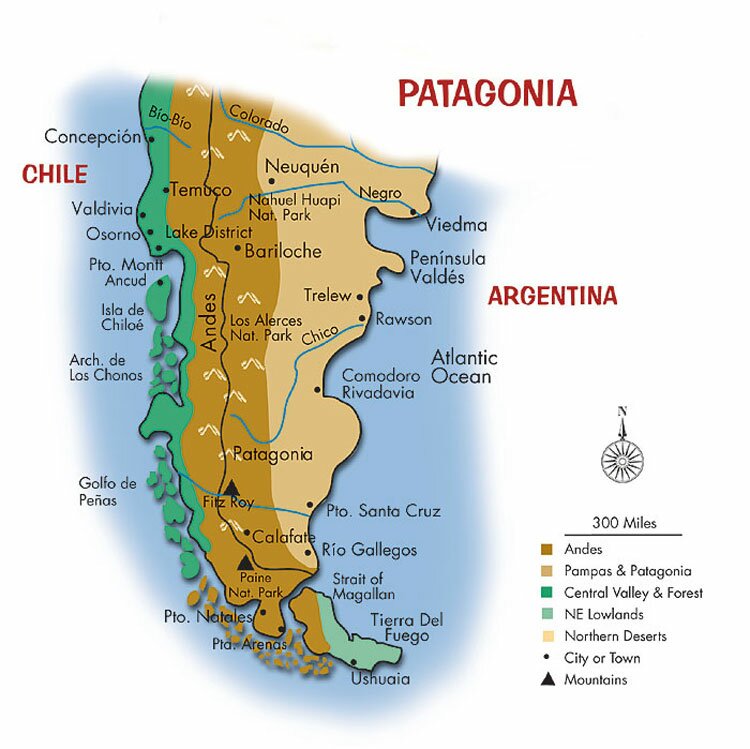
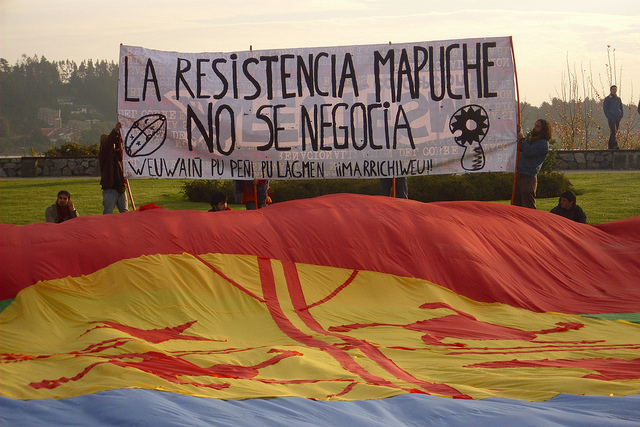
Representatives of the  Mapuche comminity in Santiago, chile are demanding the release of four prisoners jailed in Angol Chilean Araucania who have been on a hungar strike for weeks.  Nibaldo Huenuman, a Mapauce leader said, 

We hope the government listens to our demands, and find a solution to declare null the judgment of the brothers that remain in prison, which were unjustly accused and excessively severe sentenced.


Our community here in Santiago will continue protesting through avenues, partially to break the siege of communications about our case and try that citizens know that there are four Mapuche on hunger strike for nearly 30 days, unjustly convicted.

The hunger strike began on August 31 to protest the Chilean government's repression of the country's largest indigenous group.  The hunger strikers are protesting a lengthy prison sentence that two of the prisoners were given which  they call,  "discriminatory, racist and political."

Prensa Latina reports:


In addition to demanding the annulment of the sentences for Levipán and Levinao, the hunger strikers called for adherence by the Chilean government to International Labor Organization (ILO) Convention 169, which protects the rights of indigenous peoples; an end to the use of protected witnesses in Mapuche cases; an end to raids on Mapuche communities; and the release of all political prisoners and the return of indigenous lands to the communities.

Mapuche activists charge that that the government uses excessive force and unjust applications of criminal law to repress their actions, with which they seek the return of ancestral lands now being exploited by timber companies and other businesses.


Just yesterday the Chilean Supreme Court ordered an investigation into charges that police wounded three children and an adolescent when they assaulted Mapuche protesters "sitting in" at a hospital in the south of Chile.  At the time of the attack UNICEF issued a statement condemning the police action. 


Chile's national police, the Carabineros, are considered a branch of the armed forces, so the court ordered "the corresponding military judge to carry out an investigation" of the incident. The court ruling said,  "The rigor displayed by the police as they faced the group of people ... exceeded the framework of what is acceptable."

On the other hand, the same court rejected a request Monday from Mapuche communities in southern Chile for access to what they considered sacred land for ritual purposes. The communities also requested an end to the logging of trees in the area by private companies, which they considered to be illegal.  This overturned a lower court ruling.

The Santiago Times reports;

The Supreme Court decision was met with opposition from Mapuche leaders and human rights organization Observatorio Cuidadano who called the ruling a “setback” in indigenous relations with the state.


“The resolution ignores the existence of Ngen Mapu Kintuante when it says the land does not qualify as indigenous,” Mapuche Chief Juana Kuante said. “It upholds the law of private property without recognizing that our communities have traditionally used this ceremonial space.”


Kuante said the ruling does not respect Article 13 of the International Labor Organization’s (ILO) Convention 169, which states that governments should respect the “special importance for the cultures and spiritual values of the peoples concerned of their relationship with the lands or territories.”


The indigenous Mapuche tribe of south-central Chile has been actively seeking greater recognition of rights and the recovery of sacred lands since the 1990s following the return of democracy to the country.


Observatorio Cuidadano representatives argue the decision contradicts previous court rulings in favor of indigenous tribes in Chile and internationally. In the 2009 case of Francisca Machi Linconao Rahue, the Court of Appeals of Temuco in southern Chile prohibited a nearby forestry company from cutting down trees and shrubs within a 400-yard radius of sacred Mapuche springs. Another similar case was seen in 2008, when the Court of Appeals of Iquique in northern Chile granted the indigenous Aymara community of Chusmiza Usmagama access to sacred springs that were contested by the Chusmiza Mineral Water company.

The following is from Intercontinental Cry.


Mapuche activists enter fifth week of ‘open-ended’ hunger strike
By  Sep 27, 2012 

Photo by Carolonline. Some rights reserved.

CHILE -- Five Mapuche activists are entering the fifth week of an “open-ended” hunger strike at Angol Detention Center in the country’s Araucanía region. Community member Daniel Levinao Montoya called the hunger strike after he and Paulino Levipan Coyán were convicted by a military court in mid-August. The men are protesting the militarization of their land in Chile’s south and calling for the release of all Mapuche political prisoners.

The two activists were arrested in connection to a November 2011 shooting in Chequenco that left three members of the national police wounded. The court ruled the shooting was predetermined and sentenced both to 10 years for attempted murder, along with another year-and-a-half for possession of firearms. Levinao and Levipan, whose attorney plans to appeal the convictions, are both in their late teens.

In their fifth message to supporters, the strikers include a chart of their weights before the strike and two weeks in. According to Prensa Latina, community leader Nibaldo Huenuman’s statements to the site indicated the young men “suffer physical deterioration, have lost about 10 kilograms … and can barely stand up.” Despite significant weight-loss and general poor health, the men remain steadfast in their commitment to the strike and have refused hospital treatment.

The action is the third hunger strike to be carried out by Mapuche activists in three years, following two strikes in the summer of 2010 and spring 2011. Current strikers have not received the same level of media attention as those in years past, but all three actions have targeted a common enemy: Pinochet-era anti-terrorist legislation that is used almost exclusively against Mapuche community members.

An incident in April left police sergeant Hugo Albornoz fatally wounded. Albornoz’s injuries were sustained during a firefight that began after police raided Wente Winkul Mapu. According to witnesses, police were searching for evidence related to an October 2011 attack on a nearby private estate. Two months after Albornoz’s death, Erick Montoya Montoya was beaten and sustained buckshot wounds before police arrested him in connection to the crime. At least five members of Montoya Montoya’s family were also assaulted by police; the victims ranged in age from 12 to 78-years-old.

The remaining strikers –  Rodrigo Montoya Melinao and Héctor Ricardo Nahuelqueo Nahuelqueo – were arrested on charges related to the April attack. Montoya Montoya and Montoya Melinao await trial in Angol while Nahuelqueo, 19, was released on parole.

While their comrades count the hours until their own days in court, both Levipan and Levinaowere tried under the anti-terrorist law, known as Chile’s Law No. 19.027. A hangover from the country’s 17-year military dictatorship, the law makes it possible for civilians to be tried in military courts and, in the event that they are not convicted, may be subject to double jeopardy in a civilian hearing.

No. 19.027’s power stems from its adaptability. The legislation redefines “terrorism” to include property violence or attacks on corporate employees and allows for the use of anonymous witnesses to convict suspected terrorists. Until recently, anonymous witnesses were not allowed to be cross-examined by the defense.

Mapuche community members argue the law and its provisions usurp due process and criminalize the group’s struggle. Daniel Melinao, a spokesperson for Wente Winkul Mapu,argued in a speech at a Mapuche Ceremonial Center in Viña del Mar that the sentences were discriminatory and racist. "It was police who testified before the judges and they did not show any paper, antecedents or medical paper showing that they had even a scratch, pellet wound or whatever,” Melinao told the crowd.

But in spite of police violence and shady trial proceedings, the Mapuche struggle is still a polarizing topic for many Chileans. Social media buzzed with news of the strike and marked two distinct sides of the debate. Some argued the Mapuche and their supporters operate on the assumption that Mapuche lives should be protected at the expense of the lives of others. To make distinctions, one man tweeted, is to “distort the value of human life.”

At least four people have died in what the Chilean government has dubbed the Mapuche Conflict – three Mapuche and one national policeman. Some sources cite a higher figure. Only one of those suspected of killing the Mapuche victims was tried and the court did not convict the alleged assassin.

*

Resistance to repression has a centuries’ long history in Mapuche communities. The Mapuche staved off incorporation into the Inka Empire and their lands constituted the southern border of Inka territory.

European would-be colonizers met a similar fate. The Spaniards were only able to extend the colonial project as far south as the Bío-Bío River after a protracted battle with the Mapuche. The indigenous territory south of the River was one of the last pieces of South America to be incorporated into a modern nation-state in the 1880s, when Chilean forces finally began colonizing the region a full 60 years after declaring independence from Spain.

Free from the repression of Pinochet’s military since Chile’s return to democracy in 1990, activists began to engage in increasingly radical actions in the struggles for freedom of speech and affordable education.

Mapuche militants are no different in this respect. Legal land occupations and apolitical cultural centers were cast aside in favor of forceful land reclamations, anti-police actions and anti-corporate violence. Uprooting industrial crops and replacing them with foodstuffs became common practice in some communities in an effort to reclaim ancestral Mapuche lands fromprivate and corporate interests.

And while the Mapuche focus on local issues, radical Chilean student movements areaddressing Mapuche issues and incorporating the Mapuche struggle into their battle with the Sebastián Piñera administration. In its manifesto, the student movement demanded an increase in scholarships for indigenous students and the inclusion of course content relative to indigenous languages and histories.

At the 39 anniversary memorials of the 1973 military coup that ousted the democratically elected Salvador Allende, marchers called for freedom and justice for the Mapuche, marking a shift in the way indigenous identity is imagined from an urban perspective. The Mapuche are a powerful piece of urban Chilean national identity and imagination, and after a mass migration from the south to cities like Santiago, a tangible part. Over half of all people who self-identify as Mapuche live in urban settings (44% in Santiago alone), while more still have Mapuche lineage.

In rural indigenous communities, support came in the form of solidarity strikes. Mapuche activists expressed unity with the five incarcerated youths and began a hunger strike on August 25, after 30 days of occupying UNICEF’s Santiago office. According to TeleSur, the occupiers were occupying to protest the “passivity” and “lack of support” for Mapuche youth targeted by the government’s violence and criminalization of the struggle. Organizers suspended the strikeafter UNICEF representative Tom Olsen agreed to meet with the occupiers.

Amidst the shows of support from around Chile, the young hunger strikers announced their ownlist of demands. The Aug. 29 communiqué from Angol asks for the annulment of the sentences of both Levipan and Levinao and freedom for all Mapuche political prisoners; the demilitarization of Mapuche territory; an end to the use of protected witnesses in Mapuche cases and the return of land to indigenous communities.

In a fifth dispatch released September 12, the young men wrote, “being in prison is like being dead” and asked supporters to tell their parents: “we struggle because we were born Mapuche.”

Wednesday, September 26, 2012

CHINA, FOXCONN: WORKERS DOING IT FOR THEMSELVES


Last weeks "riot" at a Foxconn  Taiyuan plant in China has drawn attention around the world.  Foxconn’s Taiyuan facility employs an astounding 79,000 employees and builds many of America's favorite tech gadgets, including Apple’s brand new iPhone 5.

The question is why did it happen and what does it mean.  Some have said the four hour brawl that resulted in forty hospitilizations was the result of tensions caused by a sudden influx of out of twon workers.  That could be part of the reason, I suppose, but since "out of town" workers are pretty common in China it is hard to imagine it is really the primary cause. 

 There is also a long standing history of tension between guards at the plants and the workers and the lack of any effective way for the workers grievances with the guards to be heard, let alone resolved. One 19-year-old worker who Reuters tracked down in hospital said security guards at the plant were rough and there is a culture of managers verbally abusing workers. ”It doesn’t matter who you are, you shouldn’t curse people like that,” the worker told Reuters. “They do it all the time. If it happens over a long time, it builds up and of course it makes people angry and they go crazy like that.”

It seems that it might be mentioned that Foxconn has faced server criticism over working conditions and wages for a long time now in china.  China Worker points out:

Foxconn has long been tainted by scandals especially since a spate of worker suicides at its massive Shenzhen plants that became world news in 2010. Since then the company has shifted much production to inland regions such as Shanxi, Sichuan and Hunan, where wages are lower and it has been courted by local governments. But new scandals have erupted including the coercion of student labour to work as Foxconn ‘interns’. A strike at one Foxconn plant in June led to the dismissal of all the workers involved. 

 A report by several Chinese and Taiwanese universities published last October showed that nearly 28 percent of Foxconn workers have been verbally insulted by supervisors or security personnel, and 16 percent have suffered physical abuse. “Workers aren’t allowed to talk, smile, sit down, walk around or move unnecessarily during their long working hours, which require them to finish 20,000 products every day,” this report stated.

I would also note that Wages make up just 2-5 percent of the iPhone’s sale price, while Apple’s profit is 57 percent of every iPhone sold. 


In fact a statement from China Labor Watch says:


Chinese media has reported that on the night of September 23, Foxconn’s Taiyuan factory erupted in a riot involving over 2000 workers that has led to the injury of 40 people. The initial trigger of the incident involves a conflict between some guards and a worker. The guards reportedly dragged the worker into a van and began beating him. This led to the involvement of other workers, quickly devolving into a large-scale group fight between workers and guards. By the end of the night, the guards had ran away.

But the roots causes of this incident demand attention. Foxconn factories, which produce many of Apple’s products, have a history of maintaining militaristic management practices as well as putting an inordinate amount of stress on workers. Coming from a variety of places throughout China, workers are required to work 10-hour day and night shifts with little rest, receiving low wages, and all the while suffering very strict factory rules on behavior and suffering the verbal and physical abuse of guards. Given such stress, the workers are on edge, and incidents like the one yesterday are more likely to occur. This is especially true of a time in which Apple has given Foxconn large orders for new products, like the iPhone 5.  

CLW doesn’t know the exact products manufactured by workers involved in this incident, but this Taiyuan factory is currently producing Apple’s iPhone 5’s. We can thus conclude that the pressure on workers at this factory must be greater than usual.

These workers must be treated with respect. And both Apple and Foxconn, with billions of dollars in profits every year, have both a legal and ethical obligation to uphold the rights of these workers.


When Apple puts in orders with Foxconn for the new iPhone, it never considers the human rights of the workers, nor the production capacity of its factories. Rather, it is only concerned with sales revenues, PR, customers----its own interests. Just as in the case of the riot taking place in Foxconn's Taiyuan factory, a large number of workers are transferred to the factory at one time to produce the new iPhone. This large influx combined with the militaristic management at the factory results in tremendous pressure on the workers, and this may have been a root cause of the conflict. This sort of circumstance is bound to lead to the eruption of certain issues in other factories of Foxconn sooner or later. 

Chinese workers like workers everywhere are exploited by global capital and as everywhere it is only the workers themselves who have the power and ability to put an end to that exploitation. We are not talking trade unions, or vanguard party  here.  We are talking worker self organization.  It is absolutely essential that the Chinese Communist Party recognize what this means and recognize that Marx was not kidding when  he said that the emancipation of the working class could be accomplished only by the working class itself.  The role of the Party is NOT to lead the class, not tell the class what to do, not become the State.  As an old comrade of mine, Noel Ignatiev wrote:


The task of revolutionaries is not to organize the workers but to organize themselves to discover those patterns of activity and forms of organization that have sprung up out of the struggle and that embody the new society, and to help them grow stronger, more confident, and more conscious of their direction.


 Wouldn't it be something if someday the Chinese Communist Party came to this understanding.

In the meantime, Chinese workers are a significant part of the world's multitude which sooner or later will change the world.  In fact, in some ways Chinese workers who have shown no hesitation in battling capital could be considered as amongst those at the forefront of a worldwide struggle for the emancipation of their class...and beyond.  

The following is from the World Socialist Web Site.

Thousands of Foxconn workers clash with security guards in China

By John Chan 

Taiwan-based Foxconn, the world’s largest outsourcing electronics manufacturer, had to suspend production at one of its major facilities, in the northern Chinese city of Taiyuan, on Monday following a protest during which 2,000 assembly line workers clashed with 1,500 security guards.

The unrest is another sign of the rising social tensions in China, where the economy is slowing sharply due to the deepening slump in the major Western markets, threatening to fuel major working class confrontations with the Chinese Communist Party (CCP) regime.

There have been a growing number of strikes in China in line with emerging movements of the working class around the world, including the struggles by South African platinum miners, the strike by Chicago teachers and the ongoing protests opposing austerity by workers in Europe.

The Foxconn plant in Shanxi’s provincial capital has 79,000 workers. It is part of the supply chain that makes components for major international corporations, including for Apple’s new iPhone 5. Foxconn is the largest private employer in China, with 1.1 million workers, mostly young.

According to the British Telegraph, the unrest was sparked late on Sunday night after “a dispute between a worker and aggressive security guards in one of the factory dormitories spiralled out of control” and “thousands of workers streamed off their shifts and joined the fray against the plant’s 1,500 security guards.” The report noted witness accounts, posted on Internet blogging sites, that “grievances over pay and working conditions were also aired” and “the factory’s supermarket was also destroyed.”

About 10,000 onlookers then became involved in the confrontation, forcing authorities to deploy 5,000 police officers to quell the disturbance. The participants, mainly assembly line workers, smashed security posts, factory gates and vehicles, including police cars.

The police only managed to bring the situation under control at 9 a.m. on Monday. As of Monday, the plant remained shut, with 35 paramilitary police trucks parked outside. Riot police guarded the factory entrance, warning workers over loudspeakers that a “criminal incident” had occurred and urging them to respect the law.

Foxconn said 40 people were hospitalised, with “a number of people” arrested. A First Financial Daily journalist who was at the scene claimed that at least 10 people were killed, but officials have not confirmed the report.

The company claimed that the confrontation was “not work-related”. Likewise, the official Xinhua news agency and the police described the fight as nothing but a communal-style clash between employees from Shandong and Henan.

In fact, Foxconn’s security arm is notorious for abusive practices against workers, as part of the company’s military-style management. Online comments appeared on Chinese blogging sites suggesting that security guards beat up a worker who failed to present them with a pass to enter the dormitory, angering thousands of workers.

The Shanghai Evening Post recently sent one of its reporters undercover into the Taiyuan site, where he trained for seven days and then spent three days assembling the new iPhone’s metal back plates. In the dormitory section where the protest erupted, he wrote: “The whole dormitory smells like rubbish ... There was uncleared rubbish outside every room. Cockroaches crawled out from my wardrobe and the bed sheets are dirty with ash. All the windows are barred.”

Workers would be fired if they were found carrying any metallic objects. They had to sit still while working long hours. On the assembly line, they had to produce an iPhone 5 back plate almost every three seconds, and the reporter had to pick up each plate and mark four points, using an oil-based paint pen. “Every ten hours, I had to finish 3,000 back plates. After several hours, I had terrible neck pain,” he wrote.

Foxconn first came to international attention when 14 young workers jumped to their deaths in 2010 because of the unbearable conditions. In a public relations exercise, Foxconn then granted token pay rises, but shifted more production from coastal regions to inland provinces where labour is cheaper. The company’s contempt for workers remains unchanged. Earlier this year, Foxconn’s billionaire CEO Terry Gou likened his factories to a giant zoo, declaring that it was not easy to manage one million “animals”.

Like many outsourcing manufacturers, Foxconn is now expanding overseas. It has eight factories in Brazil, and its next major destination is Indonesia, where the average monthly wage is just one third of China’s. Far from giving concessions to Chinese workers, Foxconn is ramping up the pressure on them, on pain of losing their jobs.

As a result, strikes and unrest have rocked Foxconn’s plants since a threatened collective suicide by hundreds of workers at its Wuhan plant in January. In March and April, thousands of workers at the Taiyuan facility downed tools over the company’s failure to deliver a promised wage rise for entry-level workers, who are typically paid 1,550 yuan ($US245) a month. In June, a thousand workers at Foxconn’s Chengdu plant rioted against security guards.

Foxconn assembles 85 percent of iPhones, or more than 50 million sets a year. Earlier this year, following media reports exposing the company’s sweatshop conditions, Apple CEO Tim Cook toured Foxconn’s plants in China, professing concern for the workers who made his products. He said: “We care about every worker in our worldwide supply chain … Any suggestion that we don’t care is patently false and offensive to us.”

China’s vice premier Li Keqiang also feigned sympathy, asking Apple and other international corporations to be more “caring” to the millions of Chinese workers they exploited.

However, this posturing disappeared quickly, especially when the orders for the new iPhones arrived. In some places, authorities forced students into the Foxconn workforce in order to meet the targets. In Jiangsu province’s Huai’an city, several tertiary institutes compelled thousands of students to become Foxconn “interns” for two months, making parts for the iPhone 5. In Henan province, local governments even subsidised Foxconn’s payrolls to help it meet the production targets.

Foxconn and similar contract manufacturers throughout China and Asia are facing downward pressure on their profitability because of the worsening global economic crisis. Foxconn’s net profit margin fell to just 1.4 percent in the second quarter of this year—down from 1.5 percent in the first three months. Its first half-year profit rose by just 0.5 percent, with deep losses from its handset manufacturing business.

With China’s manufacturing contracting for 11 consecutive months, it is only a matter of time before far broader unrest erupts among the country’s multi-million working class.

Tuesday, September 25, 2012

AFGHANISTAN: WHERE WOMEN GO TO JAIL FOR "HOME ESCAPE"


Would you believe that seventy percent of women jailed in Afghanistan today are accused of "home escape?"  Unfortunately you probably would.  This is what the war has been all about?  Give me a break?

The international women's organization Madre puts it this way:


Most women have no money of their own and are forbidden from leaving home without a male relative. Escaping abuse is therefore very difficult: running away is itself a crime punishable by death.


Human Rights Watch last march reported  about 70 percent of the approximately 700 female prisoners have been imprisoned for running away, nearly always for fleeing forced marriage or domestic violence (To see the report click here).  At a press conference following the release of that report local reporters displayed a shocking lack of understanding or a shocking amount of patriarchal attitude (depending on your point of view, I suppose):


One local reporter asked, “If this is not considered a crime and it becomes rampant in the society and everyone does it, don’t you think that in a society like Afghanistan it will lead to a kind of anarchism here and everything will get out of control? What will be the consequences?”

Several questions later, another local reporter closed his question saying, “I think that to prosecute running away with strangers, it helps families to be more organized and it fortifies the family relationships in Afghanistan, so I think it is better for Afghanistan to prosecute this crime.”


The human rights group was forced to again chide the government recently  as the NATO backed Afghan government denied that escaping one's home was a crime.  Human Rights Watch research in six prisons and juvenile detention centers has found that some 50 percent of women in prison and some 95 percent of girls in juvenile detention are accused of so-called "moral crimes."   According to Outlook Afghanistan:


HRW Asia Director Brad Adams said pardoning victims of unlawful imprisonment for running away does nothing to end this abuse. He added that President Karzai should issue a decree prohibiting all arrests and prosecutions for 'running away' and order the release of all women and girls currently imprisoned on this charge.


 A previous HRW report said women and girls face a justice system stacked against them at every stage. Police arrest them solely on a complaint of a husband or relative. Prosecutors ignore evidence that supports women's assertions of innocence. Judges often convict solely on the basis of "confessions" given in the absence of lawyers and "signed" without having been read to women who cannot read or write. After conviction, women routinely face long prison sentences, in some cases more than 10 years.

Ironically, when it comes to Afghanistan’s interpretation of Islamic law regarding women who "run away free, " it  is the only Muslim nation to interpret such behavior as prohibited under Islamic law.


 Earlier this month, President Karzai came out in support of a statement by a government-sponsored council of religious scholars that said women were not equal to men and should not mix with men in public. Explaining his support of the statement, Karzai said the council was not putting limitations on women, but rather was enforcing the Islamic law that binds all Afghans and Muslims.

And that's the way it is, Tuesday, September 25, 2012 (or is it 1312).


The following is from RAWA.


70% jailed Afghan women are accused of home-escape

“Forced marriages, difference in age of couples, violence, use divorce comments and several other issues are the main motives which forces Afghan girls and married women to flee from their homes.”

By Sadaf Shinwari
Chief of the parliamentarian commission for human rights, civil society and women’s affairs Fawzia Koufi expressed concerns regarding the Afghan women detainees where majority of them have been arrested for escaping their homes.


Fawzia Koufi said more than 70% of the Afghan women have been jailed for escaping their homes despite this is not crime in Afghan law.


She said, “This is a major issue and women are jailed over adultery after escaping from their home. If the government does not have a specific law in this regard then it should be referred to us in order to modify a regulation in a bid to clarify the rules and prevent misunderstanding and misuse by Afghan attorney and police regarding the Afghan women.”


Afghan justice minister along with the Afghan women’s affairs minister and deputy administration of the Afghan interior ministry also attended the session to discuss the ways on how to prevent jailing Afghan women who are fleeing from their houses.


Afghan women’s affairs minister Husn Banu Ghazanfar said jailing Afghan women over fleeing charges from their house is one of the major issues.


She said, “Forced marriages, difference in age of couples, violence, use divorce comments and several other issues are the main motives which forces Afghan girls and married women to flee from their homes.”


In the meantime Afghan justice minister Habibullah Ghalib said fleeing from home is not a crime in Afghan law and no case should be referred to Afghan courts in this regard.


He said, “Escaping from home is not a crime and this was discussed during sessions last year. The issue was also discussed with the chief of the Afghan Supreme Court which was approved and was sent to concerned organizations by Afghan Justice High Council.”


In the meantime deputy administrative of the Afghan interior ministry Gen. Mirza Mohammad Yarmand said women escaping from their homes without committing adultery are not a crime based on the crime law of Afghanistan.


According to reports majority of the Afghan girls and women are leaving their homes to prevent from violence however they are reportedly facing more issues once they flee from their homes and majority of them are not accepted by their family to return.


Read more: http://www.rawa.org/temp/runews/2012/09/17/70-jailed-afghan-women-are-accused-of-home-escape.html#ixzz27VjeYE8l

Monday, September 24, 2012

FRACKING PLAN RUNS INTO THE MULTITUDE IN NOVA SCOTIA

LAKE AINSLIE
"ONE OF THE WORST POSSIBLE LOCATIONS THAT YOU COULD EVER PUT A DRILL SITE"


Remember when you had never heard of the word "fracking."  Well, you know it now, mostly thanks to the fight against it.

As we all know, fracking is the extraction of shale gas and other hydrocarbons held in dense rock formations using modern hydraulic fracturing techniques, including the combination of toxic chemical slickwater, high pressure fracturing and horizontal drilling. It needs masses of trucking activity, produces tons of contaminated water and appears to be poorly monitored and controlled. Extraction techniques come with serious risks.  Risks to drinking water, risks to streams and rivers, risks to human health and life, risks to ecosystems, etc. etc. and etc. 

One of dozens and dozens of places where people are protesting attempts by the oil and gas industries to mess with their lives is up in Nova Scotia where PetroWorth of Toronto is Capital's representative on the scene.

The provincial government there has delayed deciding supposedly  whether or not the company can proceed until after the next election in 2014.

In fact, Robert Parkins from Halifax who opposes the fracking says, ""This review is only smoke and mirrors,.  Reading it closely, you will see that the review is not on whether or not they will allow fracking in Nova Scotia. The review is on which practices they will actually let them do. Regardless of the outcome of this review, fracturing will happen."

Over the weekend anti fracking activist in Nova Scotia focused their protest on attempts to protect Lake Ainslie, Nova Scotia's largest freshwater lake, from any and all fossil fuel drilling on her shores. 

The Dominion reports:


Parkins views the positioning of the site, which has been selected by PetroWorth due to various 19th-century finds of oil and gas in the area, as an attempt by the province and the corporation to force a "worst case" scenario situation. Essentially, claims Parkins, if a drill site can be established on the shores of relatively pristine Lake Ainslie, the province's largest freshwater lake, at the head of the Margaree River Watershed and with some of the last remaining viable Atlantic salmon spawning grounds in the province, then it can be done anywhere.


“It's one of the worst possible locations that you could ever put a drill site. So if they can get away with putting a drill site there, it's going to set a precedent in Nova Scotia that they can place them anywhere,” says Parkins.

Initially Mi'kmaq chiefs were leaning to support for the fracking deal.  However, as the Dominion again reports: 

...the recent unrest, coupled with the effort of a group of local Mi'kmaq organizers who forced their way into a meeting of the Assembly of Nova Scotia Mi'kmaq Chiefs (ANSMC) on September 20, has caused the chiefs to do something of a public about-face.

A press release, issued on September 21, notes that the ANSMC are “in support of the community's concerns on hydraulic fracturing in the Lake Ainslie area of Cape Breton.” 
In any event, Ginny Marshall, one of the main forces behind the recent Mi'kmaq actions against the potential drill site, had this to say,   “[The chiefs] don't have the last say.  They work for us, so they better behave.”


In fact, about ten days ago the Mi'kmaq were the leading force in another protest blockade.  At that action Emmett Peters of Paq’tnkek (Afton) emphasized to the Halifax Media Co-op the importance of the action for future generations.
“I don’t know if you’re familiar with the 1752 treaty, [which was affirmed in the 1999] Marshall Decision, where we’re allowed to hunt and fish. So they thought about us 300 years previous. That’s how strong that treaty was."
“So now what we’re trying to do is leave something for our children…maybe all it could be is fresh water.”

The following is from Rabble.

'Global Frackdown' in Auld's Cove, Nova Scotia

 | SEPTEMBER 24, 2012


'Global Frackdown' in Auld's Cove, Nova Scotia
This weekend, hundreds of people driving to and from Cape Breton, Nova Scotia, were greeted by a large gathering as part of 'Global Frackdown' -- a worldwide day of action and solidarity, intended to "send a message to elected officials in our communities and across the globe that we want a future fuelled by clean, renewable energy, not dirty, polluting fossil fuels."

The fight to protect Lake Ainslie, Nova Scotia's largest freshwater lake, has brought together local First Nations, social justice and environmental groups, and concerned individuals. The event was organized by the Waycobah First Nation, and was a follow-up to similar events in the past two weeks as Petroworth looks to move ahead with their plans for an exploratory well on the shores of West Lake Ainslie.


Decked out in vibrant rain gear, participants chatted to drivers and with each other alongside the highway, handing out Council buttons and stickers, sharing food and making friends. Children held "I heart Lake Ainslie" posters, while another activist from the Occupy movement ran alongside passing vehicles, applying 'Don't frack our water' stickers for those in support.


Despite being slowed down on the highway due to the event, drivers displayed an overwhelmingly positive response, highlighting the widespread support for a ban on fracking in the region. Passerbys, including truck drivers, families, and police officers, showed their support with honks, waves, fists of solidarity and lots of smiles. The event showcased a strong sense of community and support for this grassroots movement.

Along with a few other speakers, Wilbert Marshall, chief of Chapel Island First Nation, spoke to an appreciative group to demonstrate the commitment of Mi'kmaq leadership in Nova Scotia. After the rally, organizers invited the whole group to join in their water ceremony, led by members of the Wacobah but who also invited Rebecca Parkins, whose home is next to the proposed drill site, to stand with them. The moment was blessed by a sighting of three eagles soaring above the strait, who have great spiritual significance in the Mi'kmaq culture.


This was also shown by who was there. Carloads of people came from Halifax, the North Shore of Nova Scotia, and Inverness County. Among the great show of solidarity were several Council of Canadians members, including myself, Ali Vervaeke (Atlantic Organizing Assistant), Anne Levesque (Atlantic Chapter Representative to the Board), Berta and Brian Gaulke of the North Shore chapter, and several people from the Inverness County chapter (about 15). We all shared a common goal to protect our water and land from shale gas development and fracking.