SCISSION

SCISSION provides progressive news and analysis from the breaking point of Capital. SCISSION represents an autonomist Marxist viewpoint. The struggle against white skin privilege and white supremacy is key. --- "You cannot carry out fundamental change without a certain amount of madness. In this case, it comes from nonconformity, the courage to turn your back on the old formulas, the courage to invent the future.” FIGHT WHITE SUPREMACY, SAVE THE EARTH

Saturday, March 02, 2013

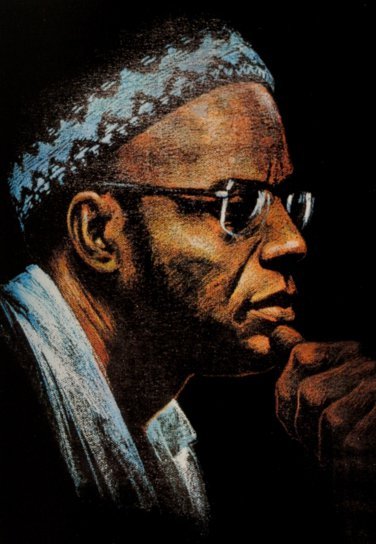
AMILCAR CABRAL: NATIONAL LIBERATION AND CULTURE


Amilcar Cabral was a revolutionary, poet and leader of the national liberation movement that freed Guinea-Bissau from Portuguese colonialism.  His influence was spread across Africa and the world. Cabral was one of Africa’s foremost revolutionary theorist and practitioner of his time.   In the essay below for Theoretical Weekends,  Cabral explains the significance of culture.  As he wrote, 

"The value of culture as an element of resistance to foreign domination lies in the fact that culture is the vigorous manifestation on the ideological or idealist plane of the physical and historical reality of the society that is dominated or to be dominated. Culture is simultaneously the fruit of a people’s history and a determinant of history, by the positive or negative influence which it exerts on the evolution of relationships between man and his environment, among men or groups of men within a society, as well as among different societies. Ignorance of this fact may explain the failure of several attempts at foreign domination--as well as the failure of some international liberation movements."

The following is taken from History Is A Lesson.


National Liberation and Culture


Amilcar Cabral

This text was originally delivered on February 20, 1970; as part of the Eduardo Mondlane (1) Memorial Lecture Series at Syracuse University, Syracuse, New York, under the auspices of The Program of Eastern African Studies. It was translated from the French by Maureen Webster. 

When Goebbels, the brain behind Nazi propaganda, heard culture being discussed, he brought out his revolver. That shows that the Nazis, who were and are the most tragic expression of imperialism and of its thirst for domination--even if they were all degenerates like Hitler, had a clear idea of the value of culture as a factor of resistance to foreign domination. 
History teaches us that, in certain circumstances, it is very easy for the foreigner to impose his domination on a people. But it also teaches us that, whatever may be the material aspects of this domination, it can be maintained only by the permanent, organized repression of the cultural life of the people concerned. Implantation of foreign domination can be assured definitively only by physical liquidation of a significant part of the dominated population.
In fact, to take up arms to dominate a people is, above all, to take up arms to destroy, or at least to neutralize, to paralyze, its cultural life. For, with a strong indigenous cultural life, foreign domination cannot be sure of its perpetuation. At any moment, depending on internal and external factors determining the evolution of the society in question, cultural resistance (indestructible) may take on new forms (political, economic, armed) in order fully to contest foreign domination.
The ideal for foreign domination, whether imperialist or not, would be to choose:
  • either to liquidate practically all the population of the dominated country, thereby eliminating the possibilities for cultural resistance;
  • or to succeed in imposing itself without damage to the culture of the dominated people--that is, to harmonize economic and political domination of these people with their cultural personality.
The first hypothesis implies genocide of the indigenous population and creates a void which empties foreign domination of its content and its object: the dominated people. The second hypothesis has not, until now, been confirmed by history. The broad experience of mankind allows us to postulate that it has no practical viability: it is not possible to harmonize the economic and political domination of a people, whatever may be the degree of their social development, with the preservation of their cultural personality.
In order to escape this choice--which may be called the dilemma of cultural resistance--imperialist colonial domination has tried to create theories which, in fact, are only gross formulations of racism, and which, in practice, are translated into a permanent state of siege of the indigenous populations on the basis of racist dictatorship (or democracy).
This, for example, is the case with the so-called theory of progressive assimilation of native populations, which turns out to be only a more or less violent attempt to deny the culture of the people in question. The utter failure of this "theory," implemented in practice by several colonial powers, including Portugal, is the most obvious proof of its lack of viability, if not of its inhuman character. It attains the highest degree of absurdity in the Portuguese case, where Salazar affirmed that Africa does not exist.
This is also the case with the so-called theory of apartheid, created, applied and developed on the basis of the economic and political domination of the people of Southern Africa by a racist minority, with all the outrageous crimes against humanity which that involves. The practice of apartheid takes the form of unrestrained exploitation of the labor force of the African masses, incarcerated and repressed in the largest concentration camp mankind has ever known.
These practical examples give a measure of the drama of foreign imperialist domination as it confronts the cultural reality of the dominated people. They also suggest the strong, dependent and reciprocal relationships existing between the cultural situation and the economic (and political) situation in the behavior of human societies. In fact, culture is always in the life of a society (open or closed), the more or less conscious result of the economic and political activities of that society, the more or less dynamic expression of the kinds of relationships which prevail in that society, on the one hand between man (considered individually or collectively) and nature, and, on the other hand, among individuals, groups of individuals, social strata or classes.
The value of culture as an element of resistance to foreign domination   lies in the fact that culture is the vigorous manifestation on the ideological or idealist plane of the physical and historical reality of the society that is dominated or to be dominated. Culture is simultaneously the fruit of a people’s history and a determinant of history, by the positive or negative influence which it exerts on the evolution of relationships between man and his environment, among men or groups of men within a society, as well as among different societies. Ignorance of this fact may explain the failure of several attempts at foreign domination--as well as the failure of some international liberation movements.
Let us examine the nature of national liberation. We shall consider this historical phenomenon in its contemporary context, that is, national liberation in opposition to imperialist domination. The latter is, as we know, distinct both in form and in content from preceding types of foreign domination (tribal, military-aristocratic, feudal, and capitalist domination in time free competition era).
The principal characteristic, common to every kind of imperialist  domination, is the negation of the historical process of the dominated people by means of violently usurping the free operation of the process of development of the productive forces. Now, in any given society, the level of development of the productive forces and the system for social utilization of these forces (the ownership system) determine the mode of production. In our opinion, the mode of production whose contradictions are manifested with more or less intensity through the class struggle, is the principal factor in the history of any human group, the level of the productive forces being the true and permanent driving power of history.
For every society, for every group of people, considered as an evolving entity, the level of the productive forces indicates the stage of development of the society and of each of its components in relation to nature, its capacity to act or to react consciously in relation to nature. It indicates and conditions the type of material relationships (expressed objectively or subjectively) which exists among the various elements or groups constituting the society in question. Relationships and types of relationships between man and nature, between man and his environment. Relationships and type of relationships among the individual or collective components of a society. To speak of these is to speak of history, but it is also to speak of culture.
Whatever may be the ideological or idealistic characteristics of cultural expression, culture is an essential element of the history of a people. Culture is, perhaps, the product of this history just as the flower is the product of a plant. Like history, or because it is history, culture has as its material base the level of the productive forces and the mode of production. Culture plunges its roots into the physical reality of the environmental humus in which it develops, and it reflects the organic nature of the society, which may be more or less influenced by external factors. History allows us to know the nature and extent of the imbalance  and conflicts (economic, political and social) which characterize the evolution of a society; culture allows us to know the dynamic syntheses which have been developed and established by social conscience to resolve these conflicts at each stage of its evolution, in the search for survival and progress.
Just as happens with the flower in a plant, in culture there lies the capacity (or the responsibility) for forming and fertilizing the seedling which will assure the continuity of history, at the same time assuring the prospects for evolution and progress of the society in question. Thus it is understood that imperialist domination by denying the historical development of the dominated people, necessarily also denies their cultural development. It is also understood why imperialist domination, like all other foreign domination for its own security, requires cultural oppression and the attempt at direct or indirect liquidation of the essential elements of the culture of the dominated people.
The study of the history of national liberation struggles shows that generally these struggles are preceded by an increase in expression of culture, consolidated progressively into a successful or unsuccessful attempt to affirm the cultural personality of the dominated people, as a means of negating the oppressor culture. Whatever may be the conditions of a people's political and social factors in practicing this domination, it is generally within the culture that we find the seed of opposition, which leads to the structuring and development of the liberation movement.
In our opinion, the foundation for national liberation rests in the inalienable right of every people to have their own history whatever formulations may be adopted at the level of international law. The objective of national liberation, is therefore, to reclaim the right, usurped by imperialist domination, namely: the liberation of the process of development of national productive forces. Therefore, national liberation takes place when, and only when, national productive forces are completely free of all kinds of foreign domination. The liberation of productive forces and consequently the ability to determine the mode of production most appropriate to the evolution of the liberated people, necessarily opens up new prospects for the cultural development of the society in question, by returning to that society all its capacity to create progress.
A people who free themselves from foreign domination will be free culturally only if, without complexes and without underestimating the importance of positive accretions from the oppressor and other cultures, they return to the upward paths of their own culture, which is nourished by the living reality of its environment, and which negates both harmful influences and any kind of subjection to foreign culture. Thus, it may be seen that if imperialist domination has the vital need to practice culturaloppression, national liberation is necessarily an act of culture.
On the basis of what has just been said, we may consider the national liberation movement as the organized political expression of the culture of the people who are undertaking the struggle. For this reason, those who lead the movement must have a clear idea of the value of the culture in the framework of the struggle and must have  a thorough knowledge of the people's culture, whatever may be their level of economic development.
In our time it is common to affirm that all peoples have a culture. The time is past when, in an effort to perpetuate the domination of a people, culture was considered an attribute of privileged peoples or nations, and when, out of either ignorance or malice, culture was confused with technical power, if not with skin color or the shape of one's eyes. The liberation movement, as representative and defender of the culture of the people, must be conscious of the fact that, whatever may be the material conditions of the society it represents, the society is the bearer and creator of culture. The liberation movement must furthermore embody the mass character, the popular character of the culture--which is not and never could be the privilege of one or of some sectors of the society.
In the thorough analysis of social structure which every liberation movement should be capable of making in relation to the imperative of the struggle, the cultural characteristics of each group in society have a place of prime importance. For, while the culture has a mass character, it is not uniform, it is not equally developed in all sectors of society. The attitude of each social group toward the liberation struggle is dictated by its social group toward the liberation struggle is dictated by its economic interests, but is also influenced profoundly by its culture. It may even be admitted that these differences in cultural level explain differences in behavior toward the liberation movement on the part of individuals who belong to the same socio-economic group. It is at the point that culture reaches its full significance for each individual: understanding and integration in to his environment, identification with fundamental problems and aspirations of the society, acceptance of the possibility of change in the direction of progress.
In the specific conditions of our country--and we would say, of Africa--the horizontal and vertical distribution of levels of culture is somewhat complex. In fact, from villages to towns, from one ethnic group to another, from one age group to another, from the peasant to the workman or to the indigenous intellectual who is more or less assimilated, and, as we have said, even from individual to individual within the same social group, the quantitative and qualitative level of culture varies significantly. It is of prime importance for the liberation movement to take these facts into consideration.
In societies with a horizontal social structure, such as the Balante, for example, the distribution of cultural levels is more or less uniform, variations being linked uniquely to characteristics of individuals or of age groups. On the other hand, in societies with a vertical structure, such as the Fula, there are important variations from the top to the bottom of the social pyramid. These differences in social structure illustrate once more the close relationship between culture and economy, and also explain differences in the general or sectoral behavior of these two ethnic groups in relation to the liberation movement.
It is true that the multiplicity of social and ethnic groups complicates the effort to determine the role of culture in the liberation movement. But it is vital not to lose sight of the decisive importance of the liberation struggle, even when class structure is to appear to be in embryonic stages of development.
The experience of colonial domination shows that, in the effort to perpetuate exploitation, the colonizers not only creates a system to repress the cultural life of the colonized people; he also provokes and develops the cultural alienation of a part of the population, either by so-called assimilation of indigenous people, or by creating a social gap between the indigenous elites and the popular masses. As a result of this process of dividing or of deepening the divisions in the society, it happens that a considerable part of the population, notably the urban or peasant petite bourgeoisie, assimilates the colonizer's mentality, considers itself culturally superior to its own people and ignores or looks down upon their cultural values. This situation, characteristic of the majority of colonized intellectuals, is consolidated by increases in the social privileges of the assimilated or alienated group with direct implications for the behavior of individuals in this group in relation to the liberation movement. A reconversion of minds--of mental set--is thus indispensable to the true integration of people into the liberation movement. Such reonversion--re-Africanization, in our case--may take place before the struggle, but it is completed only during the course of the struggle, through daily contact with the popular masses in the communion of sacrifice required by the struggle.
However, we must take into account the fact that, faced with the prospect of political independence, the ambition and opportunism from which the liberation movement generally suffers may bring into the struggle unconverted individuals. The latter, on the basis of their level of schooling, their scientific or technical knowledge, but without losing any of their social class biases, may attain the highest positions in the liberation movement. Vigilance is thus indispensable on the cultural as well as the political plane. For, in the liberation movement as elsewhere, all that glitters is not necessarily gold: political leaders--even the most famous--may be culturally alienated people. But the social class characteristics of the culture are even more discernible in the behavior of privileged groups in rural areas, especially in the case of ethnic groups with a vertical social structure, where, nevertheless, assimilation or cultural alienation influences are non-existent or practically non-existent. This is the case, for example, with the Fula ruling class. Under colonial domination, the political authority of this class (traditional chiefs, noble families, religious leaders) is purely nominal, and the popular masses know that true authority lies with an is acted upon by colonial administrators. However, the ruling class preserves in essence its basic cultural authority over the masses and this has very important political implications.
Recognizing this reality, the colonizer who represses or inhibits significant cultural activity on the part of the masses at the base of the social pyramid, strengthens and protects the prestige and the cultural influence of the ruling class at the summit. The colonizer installs chiefs who support him and who are to some degree accepted by the masses; he gives these chiefs material privileges such as education for their eldest children, creates chiefdoms where they did not exist before, develops cordial relations with religious leaders, builds mosques, organizes journeys to Mecca, etc. And above all, by means of the repressive organs of colonial administration, he guarantees economic and social privileges to the ruling class in their relations with the masses. All this does not make it impossible that, among these ruling classes, there may be individuals or groups of individuals who join the liberation movement, although less frequently than in the case of the assimilated "petite bourgeoisie." Several traditional and religious leaders join the struggle at the very beginning or during its development, making an enthusiastic contribution to the cause of liberation.
But here again vigilance is indispensable: preserving deep down the cultural prejudices of their class, individuals in this category generally see in the liberation movement the only valid means, using the sacrifices of the masses, to eliminate colonial oppression of their own class and to re-establish in this way their complete political and cultural domination of the people.
In the general framework of contesting colonial imperialist domination and in the actual situation to which we refer, among the oppressor's most loyal allies are found some high officials and intellectuals of the liberal professions, assimilated people, and also a significant number of representatives of the ruling class from rural areas. This fact gives some measure of the influence (positive or negative) of culture and cultural prejudices in the problem of political choice when one is confronted with the liberation movement. It also illustrates the limits of this influence and the supremacy of the class factor in the behavior of the different social groups. The high official or the assimilated intellectual, characterized by total cultural alienation, identifies himself by political choice with the traditional or religious leader who has experienced no significant foreign cultural influences.
For these two categories of people place above all principles our demands of a cultural nature--and against the aspirations of the people--their own economic and social privileges, their own class interests. That is a truth which the liberation movement cannot afford to ignore without risking betrayal of the economic, political, social and cultural objectives of the struggle.
Without minimizing the positive contribution which privileged classes may bring to the struggle, the liberation movement must, on the cultural level just as on the political level, base its action in popular culture, whatever may be the diversity of levels of cultures in the country. The cultural combat against colonial domination--the first phase of the liberation movement--can be planned efficiently only on the basis of the culture of the rural and urban working masses, including the nationalist (revolutionary) "petite bourgeoisie" who have been re-Africanized  or who are ready for cultural reconversion. Whatever may be the complexity of this basic cultural panorama, the liberation movement must be capable of distinguishing within it the essential from the secondary, the positive from the negative, the progressive from the reactionary in order to characterize the master line which defines progressively a national culture.
In order for culture to play the important role which falls to it in the framework of the liberation movement, the movement must be able to preserve the positive cultural values of every well defined social group, of every category, and to achieve the confluence of these values in the service of the struggle, giving it a new dimension--the national dimension. Confronted with such a necessity, the liberation struggle is, above all, a struggle both for the preservation and survival of the cultural values of the people and for the harmonization and development of these values within a national framework.
 
ENDNOTES:
1. Eduardo Mondlane, was the first President of the Mozambique Liberation Front (FRELIMO). He was assassinated by Portuguese agents on Feb. 3, 1960.

Posted by Oread Daily at 3:12 PM No comments:
Email ThisBlogThis!Share to XShare to FacebookShare to Pinterest

Thursday, February 28, 2013

"THE WESTERN SAHARA CONFLICT IS ONE OF THE MOST NEGLECTED AND FORGOTTEN TERRITORIAL CONFLICTS IN TODAY'S WORLD"


Return with Scission to the Western Sahara where the people have been struggling against colonialism for about as long as I can remember these days.  Most of the time no one notices and most of the time few seem to give a damn.  As I have said numerous times before, I just don't understand why not.  Here is the last absolutely concrete example of colonialism in Africa and nobody cares?  What's up with that?  Someone explain it to me, please. The Saharawi people deserve an answer...and a lot more.

The post below from Pambazuka News provides a wealth of information and should be thanked for devoting an entire issue to the Western Sahara.

A bit of recent news first. Recently 24 Saharawi activists were sentenced to sentences ranging from 20 years to life by a military tribunal in Morocco.  They were charged in connection with clashes which followed the dismantling of the Gdeim Izik peace camp in the Western Sahara back in 2010.   The Western Sahara Campaign of the UK writes:
  
European observers who witnessed the trial, noted many anomalies including the delay of detention without trial beyond the legal limit of 12 months, trial of civilians in a military court, confessions allegedly obtained under torture and signed with a thumb print.


John Gurr, Coordinator of the Western Sahara Campaign of the UK stated:


“We not only condemn these sentences, we reject the entire legal process under which they have been brought. Amnesty International has described this military trial as “flawed from the outset”, in violation of international standards for a fair trial. The defendants insist that they are political prisoners. Whilst in detention the defendants claim to have suffered torture and to have been coerced into signing confessions. Gdeim Izik is widely regarded as having sparked the Arab Spring and many of the defendants are well respected human rights activists. Any trial should have been in a civilian court not under military tribunal. Their trial should not have been delayed by over two years. Their trial should have been open to international legal observers, jurists and journalists and allegations of torture should have been fully and independently investigated. This appears to have been a politically motivated show trial and we call on the international community to join us in speaking out against these sentences and supporting our calls for independent human rights monitoring in Western Sahara.” 


Africa’s longest and most forgotten territorial conflict

Aluat Hamudi

The conflict of Western Sahara is one of Africa’s longest lasting territorial disputes. It has been going on for more than three decades. The territory is contested by Morocco and the Polisario Front, which on 27 February 1976 formally proclaimed a government-in-exile called the Saharawi Arab Democratic Republic. The self-proclaimed republic has been a member of the African Union since 1984. It has been recognized by more than 80 nations. In the meantime, the issue has been on the UN agenda since 1966, yet the international community has failed to find a suitable solution between the two concerned parties. The reasons for this failure are the lack of interest from the international community and the West’s power struggles in the strategic region of North Africa.

In 2007, the Kingdom of Morocco proposed the Autonomy Plan in which ‘the people of Western Sahara will have local control over their affairs through legislative, executive and judicial institutions under the aegis of the Moroccan sovereignty.’ [1] The plan was rejected by the Polisario Front and academic Jacob Mundy wrote a paper explaining why. [2]

This paper presents a historical, political and legal account of the Western Sahara conflict and evaluates the geopolitical roles of the regional and outside powers in the conflict: Spain, Algeria, France, and the United States. See The Forgotten of Western Sahara.

HISTORICAL BACKGROUND

In essence, the issue of Western Sahara seems to be a simple case of self -determination: the plight of a people to decide their political status over their own territory. However upon more thorough examination, we see that the conflict is in fact far more complex and unique. It has many different dimensions: historical, political, economic, social and emotional. In order to understand the complexity of the conflict, it is important to shed some light on the historical background of this ongoing dispute.

Western Sahara is located in the northern part of Africa along the Atlantic coast. It is bordered by Algeria to the east, Morocco to the north and Mauritania to the south. The land is mostly low lying, flat desert with some small mountains in the south and northeast. The ethnicity in Western Sahara is Arab, Berber and Black Africans most of whom are the followers of Islam. They are known as the Saharawi people. Western Sahara has an estimated population of 573, 000 inhabitants with a hundred thousand refugees living in Tindouf, Algeria. The territory has profitable natural resources including phosphates, iron ore, sand and extensive fishing along the Atlantic Coast. [3]The official languages are Arabic and Spanish.

Given its strategic location, Western Sahara has always been a disputed area whereupon several world powers have fought to gain control over it. Spain took control of the region in 1884 under the rule of Captain Emilio Bonelli Hernando. In 1900, a convention between France and Spain was signed determining the southern border of Spain’s Sahara. Two years later, Spain and France signed another convention that demarcated the borders of Western Sahara. Spain faced unsuccessful military resistance from the leaders of the Saharawis.

However, another structured Saharawi movement – the Harakat Tahrir Saguia El Hamra wa Uad Ed-Dahab– was formed by Mohammed Bassriri in 1969. [4] In 1970, Bassiri’s movement organized a large, peaceful demonstration at Zemla (El Aaiun), demanding the right of independence. It ended with the massacre of civilians and the arrest of hundreds of citizens. [5]

The failure of this movement led to the establishment of a more united and organized front that included all the Saharawi political and resistance groups. The movement was called Frente Popular para la Liberación de Saguia el-Hamra y de Rio de Oro known by its Spanish acronym as POLISARIO. The Front was led by Al-Wali Mustafa in 1973. The aim was to obliterate Spanish colonization from Western Sahara. In 1974, Spain proposed a local autonomy plan in which the native Saharawis would run their own political affairs but sovereignty would remain under Spanish control. The plan was rejected and the military struggle continued.

Two years later, King Hassan II ordered a march what is ironically known as The Green March which featured Moroccan flags, portraits of the king and copies of the Koran (Islam’s holy book). It was a march of more than 350,000 people under the leadership of Hassan II and his army [6]. In November14, 1975, the tripartite Madrid Agreement was signed by Spain, Morocco and Mauritania, which divided Western Sahara between the two African countries whilst securing the economic interests of Spain in the phosphate and fisheries. [7] The agreement also stressed the end of Spanish control over the territory but not the sovereignty; Spain would remain the legal administrative power over Western Sahara.

After the Madrid agreement, Morocco invaded the territory from the north and Mauritania from the south. As a result, thousands of Saharawi refugees escaped and settled in the southern Algerian desert near the city of Tindouf. They have been living there for more than three decades. In the meantime, the United Nations never accepted the Moroccan and Mauritanian occupation of Western Sahara and continues to classify the territory as a non-self-governing territory; that is an area that is yet to be decolonized. [ 8]

WESTERN SAHARA AND INTERNATIONAL LAW  

The involvement of the United Nations in the Western Sahara issue began on December 16, 1965, when the General Assembly adopted its first resolution on what then was called Spanish Sahara. The resolution requested Spain to take all necessary measures to decolonize the territory by organizing a referendum that would allow the right to self-determination for the Sahrawi people where they could choose between integration with Spain or independence. The Spanish government promised to organize a referendum, but never kept its promise.

In the Universal Declaration of Human Rights, the United Nations states that everyone has the right to a national identity and that no one should be arbitrarily deprived of that right or denied the right to change nationality. [9] Self-determination is viewed as a right of people who have a territory to decide their own political status. For this reason, on December 13, 1974, the United Nations General Assembly passed a resolution (No. 3292) requesting the International Court of Justice to give an advisory opinion at an early date on the following questions: Was the Western Sahara (Saguia El-Hamra y Rio de Oro) at the time of colonization by Spain a territory belonging to no one (terra nullius)? If the answer to the first question is negative, then what were the legal ties between this territory and the Kingdom of Morocco and the Mauritanian entity? [10]

In response to the first question, the Court answered: ‘No’. Western Sahara was not a terra nullius. In fact, Western Sahara belonged to a people: ‘inhabited by peoples which, if nomadic, were socially and politically organized in tribes and under chiefs competent to represent them’ [11]. In other words, the ICJ had determined that the Western Sahara had belonged to the indigenous Western Saharans at the time of Spanish colonization. For the second question, the Court found no evidence of any legal ties of territorial sovereignty between Western Sahara and Morocco. Therefore, the ICJ had ruled that the native Saharawi population was the sovereign power in the Western Sahara, formerly known as Spanish Sahara. However, Morocco and Mauritania ignored the court’s ruling and invaded Western Sahara anyway. As a result, Polisario Front waged a nationalist war against the new invaders. In 1979, Mauritania abandoned all claims to its portion of the territory and signed a peace treaty with the Polisario Front in Algiers. [12] Nevertheless, war continued between the Polisario forces and the Moroccan royal army until the UN sponsored a ceasefire between the antagonists in 1991.

In the same year, the U.N. Security Council adopted its resolution 690 (April 29, 1991) which established the United Nations Mission for the Organization of a Referendum in the Western Sahara known as MINURSO. It called for a referendum to offer a choice between independence and integration into Morocco. [13]

However, for the next decade, Morocco and the Polisario differed over how to identify an electorate for the referendum, with each seeking to ensure a voter roll that would support its desired outcome. The Polisario maintained that only the 74,000 people counted in the 1974 Spanish census of the region should vote in the referendum, while Morocco argued that thousands more who had not been counted in 1974 or who had fled to Morocco previously should vote.

In 1997, the UN supervised talks in Houston (Houston Agreement) between Morocco and the Polisario movement chaired by James Baker, former US Secretary of State, in which the two parties agreed to resolve all the pending obstacles to the holding of a referendum. In January 2003, Baker presented a compromise that ‘does not require the consent of both parties at each and every stage of implementation.’ It would lead to a referendum in four to five years, in which voters would choose integration with Morocco, autonomy, or independence. [14] The Polisario agreed to the plan; Morocco refused to consider it. In June 2004, James Baker resigned after seven years as UN special envoy to Western Sahara. His successor, Peter Van Walsum vowed to achieve a resolution.

In 2007, the UN Security Council passed resolution 1783, requesting that the two parties, Morocco and the Polisario Front, to enter into good faith negations to solve the conflict. 15] The negotiations were to take place under the supervision of the personal envoy of the Secretary General to Western Sahara, the Dutch diplomat Peter van Walsum who was replaced by the American diplomat Christopher Ross in August 2008.

Since 2007, the parties have engaged in a series of negotiations under the auspices of the UN but there has been no breakthrough. Each side still holds its position as the only option for a lasting resolution. Despite the 21 years of neither war nor peace, the two conflicting parties still insist on resolving the problem within the framework of international law. The question that should be asked is why the international legality has failed to solve this issue? According the former UN personal envoy to Western Sahara, Peter Van Walsum, the international legality has failed in the Western Sahara because of two main reasons: first, the weakness of the international law itself: there is no mechanism to enforce its resolutions and even if there was it cannot be applied in the case of the Western Sahara because this conflict is included under the act of the Security Council’s Chapter VI (pacific settlement of disputes) which implies that the Security Council cannot use force to advance a solution on the disagreeing parties. Second, French and the American continued political support for Morocco in the Security Council has undermined a just and lasting solution. [16] Thus, Morocco continues to occupy the disputed territory illegally.


ROLES AND INTERESTS OF REGIONAL AND INTERNATIONAL PLAYERS

Despite the legality and the legitimacy of the Saharawi people’s right to self-determination, the question of Western Sahara has always been tied to geopolitics thus inhibiting a just and peaceful solution to the conflict. To gain a better understanding of the deadlock in this conflict, it is essential to analyze the positions and interests of all concerned parties: Polisario and the SADR; Morocco; Spain; Algeria; France; and the United States.

THE POLISARIO FRONT AND THE SADR

The Polisario Front’s position on this issue has been clear and consistent. The Movement wants the people of Western Sahara to exercise their right to self-determination with the assumption that it would lead to an independent nation in Western Sahara. The Polisario declared the Saharawi Arab Democratic Republic (SADR) in February 1976 and it controls 20 per cent of the territory. The self-proclaimed republic enjoys full membership of the African Union and has been recognized by over 80 nations. The primary motivation of the Polisario movement is the right of self-determination. They feel that their people have suffered under the Spanish and Moroccan invasions and thus they deserve to decide their political fate which would provide them with a better future. It is a claim that has been endorsed by the UN since 1966.

MOROCCO

The position of Morocco in this is dispute is very clear and as steady as the Polisario’s. It wants Western Sahara to be an integral part of its territory. Moroccan claim of sovereignty over the territory is based on historical narratives. Its army controls 80 percent of the territory. [17] There are different interests at play behind the Moroccan position. First, the conflict is very important for the stability of the Moroccan Monarchy. The monarchy uses it to gain legitimacy and popular support. Zartman notes that ‘the political usefulness of the issue as a common bond and creed of the political system since 1974 is great to the point where it imposes constraints on the policy latitude of the incumbent or any other government’. [18] Second, the regional aspiration of Morocco also contributes to its interest in this conflict. Rabat strives to be the dominant player in the North African region. Besides, the political interests, Western Sahara represent economic interests for Morocco as well. The region has large amounts of phosphates and other natural resources that form a contribution to the Moroccan economy. [19]

SPAIN

From a legal perspective, Spain is still the colonial administrative power of Western Sahara. In 1975 Spain handed over the territory to Morocco and Mauritania on condition that the views of the Saharawis would be taken into account. That is to say that Spain did not sign away the sovereignty over what was its fifty-third province. As a result, the International Court of Justice ruled in favour of the Saharawi people’s right to self-determination. Yet, Western Sahara still remains non-decolonized territory. According to Arts and Pinto, in the 1970s, Spain’s main goal was to avoid an armed conflict with the Polisario fighters. As a result it handed the territory to Morocco and Mauritania. Spain also was engaged in starting a new political system after the death of its leader, Generalissimo Franco. Today, however, Spain faces the dilemma of balancing international legal obligations and upholding geopolitical interests. [20] Zoubir and Darbouche asserted that Spain has tried to maintain balanced relations with Algeria, Morocco and the Saharawis. Yet, its stand has been also based on strategic interests in the region. The current Spanish government has connected Spain’s security to Morocco’s; it feels that cooperation with Morocco in different areas such as illegal immigration and terrorism is crucial to Spain. Meanwhile, Spain is well aware of the strategic importance of its other southern neighbor, Algeria. Algeria is a key oil and natural gas producing country. It is an economic and political partner of Spain in the region. Thus, the Spanish ‘positive neutrality over the Western Sahara is part of wider Spanish attempt to reassert itself as a player in the Maghreb.’ [21]

ALGERIA

Algeria has been the long-standing and main supporter of the Polisario movement. It provides the independence movement with vital political, military and logistical support. Algeria’s stand with Sahrawi people’s right to self-determination can be explained in two ways: one is the support for a legal and political principle which is the right of self-determination, and second is the struggle for supremacy in the region through the geopolitical approach. As Yahia Zoubir and Hakim Darbouche pointed out, Algeria’s main interests in the conflict derive from fears of its neighbour’s irredentism. Indeed, Morocco made claims over parts of the Algerian territory and even sought to seize southern regions by force in the fall of 1963. In addition to clear geostrategic interests, Algeria’s historical struggle for independence shaped its early diplomatic priorities around the percepts of self-determination and decolonization. [22] In addition, Algeria was and still struggles for regional supremacy over Morocco.  According to Shelley, by the 1970s the Algerian president Boumedienne’s vision of his country was as the Japan of Africa. He wanted to position Algeria as the economic and political leader in the Maghreb region. Therefore, Algeria must maintain its support for an independent Western Sahara.

FRANCE

France has been the main supporter of the Moroccan position on Western Sahara. It has been consistent in its support more than any other outside power in this enduring conflict. In fact, France had threatened several times to use its veto power at the Security Council of the UN if it ever decided to enforce a solution undesirable to Morocco. According to experts on this conflict, the French position is derived from geopolitical and geostrategic interests. For France too, preservation and protection of the Moroccan regime was and is important in terms of maintaining French economic, political, military and cultural influence in North, West and Central Africa. [23] Given the fact that Algeria is the major supporter of the Polisario Front, France has also favoured Morocco because of its enormously complex relations with Algeria due to its past colonial status in Algeria. Zoubir and Darbouche asserted that Algeria’s nationalism is often at odds with France’s policy: only Algeria had demanded that France repent of its colonial past. [24] Furthermore, France stands with Morocco because of its competition with major powers such as US and Spain over its sphere of influence in the North African region. As Zoubir and Darbouche clearly state, through its strong political and economic presence in Morocco, France hopes not only to curtail growing US influence in the region, but also to prevent the establishment of an independent Saharawi state, whose population speaks Spanish, and would therefore be more receptive to Iberian influence, both culturally and economically. [25]

Consequently, considering the fact that Western Sahara was the only Spanish colony in the region, France would not permit an independent state that might preclude its influence in a region which France identifies as its sphere of influence. Besides these factors, there are economic and commercial reasons that drive the French position on Western Sahara issue. France is Morocco’s main trading partner and the principal investor in that country. [26] Hence, it is inevitable that France continues to maintain a consistent stand regarding this conflict.

THE UNITED STATES

According to experts on this matter, the U.S’s role in this conflict started when the war broke out in 1975. The Ford, Carter, and Reagan administrations had provided financial and military support for Morocco’s invasion and occupation of Western Sahara from 1975 to 1991. The Bush and Clinton administrations maintained a silent position on the UN referendum process from 1992 to 1996. However, the highest level of U.S. leadership was presented in the former U.S. Secretary of State James Baker as the United Nations special envoy to Western Sahara from 1997 to 2004. Even so, James Baker resigned after seven years without any major progress. Since 2003, the U.S government’s view towards the conflict has been to leave it to the parties to reach a mutual solution while maintaining undeclared support for the Moroccan Autonomy Plan: local self-rule for the Sahrawi people under the Moroccan sovereignty.[27]

Although, the US supports the right of self-determination in principle, its position has been favourable to Morocco as the French for geopolitical interests. The US has consistently provided decisive political and military support to Morocco, without however overtly supporting Morocco’s irredentist claim or recognizing its sovereignty over Western Sahara.[28] There are different factors that have contributed to the US position on this conflict. Karin Arts and Pedro Pinto acknowledge that during the Cold War Morocco was portrayed as the best ally for the American and western interests in the region. Despite the fact that the Soviets never supported the Saharawi nationalist movement, USA was worried about the potential emergence of a pro-Soviet state in Western Sahara. [29] In fact, Morocco and its supporters still point that the founders of the Polisario movement were Leninist, Guevarist, and Maoist sympathizers. [30] Furthermore, in August 2004, Baker confirmed this point by saying that the US’s support to Morocco is reasonable because ‘in the days of the Cold War the Polisario Front was aligned with Cuba and Libya and some other enemies of the United States, and Morocco was very close to the United States.’ [31] Furthermore, Morocco is a major ally of the US in terms of security matters. Zoubir and Darbouche pointed out tha,t since the events of the September 11 and the global war on terro,r many US officials favored Morocco for security issues. In addition, they asserted that Morocco also enjoys the support of strong lobbies which endorse the Moroccan position in the US Congress. [32]

CONCLUSION

In conclusion, the Western Sahara conflict is one of the most neglected and forgotten territorial conflicts in today’s world. According to the UN, Western Sahara remains Africa’s last colony. However, in regards to geopolitics, the status quo of neither war nor peace seems to be the least damaging outcome. The conflict has been in deadlock for years and a mutual and an acceptable solution to all the antagonist parties is far from attainable. What the future holds for this ongoing dispute remains unclear. Only time will tell.
See here


BIBLIOGRAPHY

1. Karin Arts and Pedro Pinto Leite. International Law and the Question of Western Shara. Rainho and Neves, Lda (Santa Maria da Feira), 2007
2. Tobby Shelly. Endgame in the Western Sahara: What Future For Africa’s Last Colony. Zed Books: 2004
3. Hakim Darbouche, Yahia Zoubir. Conflicting International Policies and the Western Sahara Stalemate ;International Spectator, 43:1, 91-105
4. Maghreb Arab Press. 08 October 2012. Sahara Issue.http://www.map.ma/eng/sections/sahara/morocco_s_autonomy_p3614/view>.
5. United Nations Regional Information Center for Western Europe. 8 October 2012. Universal Declaration of Human Rights.http://www.unric.org/index.php?option=com_content&task=view&id=105&Itemid=146>.
6. Wikipedia. 8 October 2012. United Nations list of Non-Self-Governing Territories.http://en.wikipedia.org/wiki/United_Nations_list_of_Non-Self-Governing_Territories>.
7. Encyclopedia Britannica. 8 October 2012. Green March.http://www.britannica.com/EBchecked/topic/245024/Green-March>
8. El Pais. 8 October 2012. Sahara’s Long and Troubled Conflict.http://www.elpais.com/iphone/index.php?module=iphone&page=elp_iph_visornotcias&idNoticia=20080828elpepuint_5.Tes&seccion=
9. MINURSO Mandate. 8 October 2012. MINURSO United Nations Mission for the Referendum in Western Sahara.http://www.un.org/en/peacekeeping/missions/minurso/mandate.shtml>
10. Jerome Larosch, “Caught in the Middle: UN Involvement in the Western Sahara Conflict”, The Hague, Netherlands Institute of International Relations. Clingendael Diplomacy Papers. No.11, 2007
11. The International Court of Justice: Western Sahara Advisory Opinion . 26April 201.http://www.icjcij.org/docket/index.php?sum=323&code=sa&p1=3&p2=4&case=61&k=69&p3=5>
12. William Zartman, “The Timing of Peace Initiatives: Hurting Stalemates and Ripe Moments”, the Global Review of Ethnopolitics Vol. 1, no. 1, September 2001, 8-18
13. Macharia Munene, “History of Western Sahara and Spanish
14. Colonisation”, United States International University, Nairobi
15. Wikipedia. 8 October 2012. Madrid Accords. http://en.wikipedia.org/wiki/Madrid_Accords>


END NOTES

[1] http://www.map.ma/eng/sections/sahara/morocco_s_autonomy_p3614/view

[2] http://arso.org/mundy2008_canaries_conference.pdf

[3] Conflict resolution in Western Sahara, p. 2

[4] History of Western Sahara and Spanish colonization, p. 92

[5] History of Western Sahara and Spanish colonisation, p. 92

[6] http://www.britannica.com/EBchecked/topic/245024/Green-March

[7] http://en.wikipedia.org/wiki/Madrid_Accords

[8] http://www.un.org/en/decolonization/nonselfgovterritories.shtml

[9] http://www.un.org/en/documents/udhr/index.shtml

[10] ICJ, Western Sahara Advisory Opinion, 1975, 12-68 and http://www.icj-cij.org/docket/index.php?sum=323&code=sa&p1=3&p2=4&case=61&k=69&p3=5

[11] ICJ, Western Sahara Advisory Opinion, 1975, 12-68

[12] History of Western Sahara and Spanish colonization, p. 92

[13] http://www.un.org/en/peacekeeping/missions/minurso/mandate.shtml

[14] Conflict resolution in Western Sahara, p.93

[15] http://www.un.org/ga/search/view_doc.asp?symbol=S/RES/1783%282007%29

[16]http://www.elpais.com/iphone/index.php?module=iphone&page=elp_iph_visornoticias&idNoticia=20080828elpepuint_5.Tes&seccion=

[17] Larosch, 2007

[18] Zartman, Ripe of Resolution, p.39.

[19]Larosch, 2007

[20] Conflicting International Policies and the Western Sahara Stalemate, p. 101

[21] End Game in the Western Sahara: What Future for Africa’s Last Colony, p. 22

[22] Conflicting International Policies and the Western Sahara Stalemate, p. 94

[23]End Game in the Western Sahara: What Future for Africa’s Last Colony, p.199

[24] Conflicting International Policies and the Western Sahara Stalemate, p.98

[25] Conflicting International Policies and the Western Sahara Stalemate, p.99

[26] Conflicting International Policies and the Western Sahara Stalemate, p.99

[27] http://www.counterpunch.com/mundy04272007.html

[28] Conflicting International Policies and the Western Sahara Stalemate, p.100

[29] End Game in the Western Sahara: What Future for Africa’s Last Colony, p. 9

[30] International Law and the Question of Western Sahara, p.290

[31] Conflicting International Policies and the Western Sahara Stalemate, p. 100

[32] International Law and the Question of Western Sahara, p.291

* Aluat Hamudi, a male Sahrawi student from the refugee camps, studying a Master’s degree 
Posted by Oread Daily at 4:14 PM No comments:
Email ThisBlogThis!Share to XShare to FacebookShare to Pinterest

Wednesday, February 27, 2013

THE PEOPLE HAVE HAD IT WITH KILLER COPS IN CALIFORNIA TOWN


What the hell is the deal with the police in Vallejo City, California.  They have been shooting everything in sight for the last year or so.  In 2012, there were ten cop shootings resulting in the deaths of six people and two dogs.

Give me a break.

Police Chief Joseph Kreins said last September following the shooting of a man outside his home, ""When dealing with violent confrontations, our officers are trained to use whatever force is reasonable and necessary to effect an arrest or eliminate a threat."  

The Chief's statement would be accurate if you drop the, "..use whatever force is reasonable and necessary to effect an arrest or..."  part.

That shooting was the fifth fatal officer involved shooting of the year and sparked a protest outside of police headquarters where family of 23 year old Mario Romero, at whom the cops fired 31 times claiming he was reaching for a pellet gun, disputed that account.  According to the San Francisco Chronicle article at the time, the police responding to a reported burglary stopped a vehicle.  The cops say that the passenger, Joseph Johnson, came out of the car with his hands up, but that Romero exited the vehicle and reached for a "gun."


...family members said that after an initial round of firing, one of the officers climbed onto the hood of Romero's car and continued shooting into the windshield. Kreins disputed that account and said the officer stood on the vehicle only to make sure no one else was hiding inside, but did not fire into the vehicle.

Johnson's father, Kevin Edwards, said his son, who is recovering at a local hospital, told him Romero never stepped out of the vehicle because police never gave him the opportunity.
"He told me they put their hands up and then all he saw was bright lights flashing, heard gunshots going off, and then he passed out," Williams said. "He said Mario never got out of the car because they never had the chance."

The car was parked just outside the home Mr. Romero.

"We have a department that is out of control," said George Holland, president of the NAACP's Oakland branch.  "If you can't be in a car in front of your home in this city without getting shot, what does that say about Vallejo?"Northbay Copwatch says:

On Monday, Sept. 2nd, Vallejo Police detain Mario and his brother-in-law, who are in their car parked out front of their Family's house, and without provocation fire 30 rounds (two magazines, possibly alongside another clip of 15 bullets) into the faces of the detained men. There is no evidence that a crime had been taking place, no reason for why they were detained. Mario does not have gang-related tattoos. Police send a car impound order notification and bill to Mario after his murder, which provides the legal reasoning for the police to tow it away and secure evidence which could be used against themselves…
The family has called for the arrest of the officers involved.  "We're just praying that this comes out the right way and that these officers are charged with murder and attempted murder," Romero's sister Cynquita Martin said in a KGO report.  The KGO report continues:


Police fired 32 rounds at the car. Romero and Johnson did not return fire. "There's something called overkill. When you kill or shoot a person in excess of 30 times, what are you trying to do? What are you trying to prove?" attorney George Holland asked. Police say they found some ecstasy and a pellet gun inside the car. "That he would've pointed a pellet gun that does not have bullets at two police officers who have their guns out, that defies common sense," attorney John Burris said. 

 
On June 30, 2012 17 year old Jared Huey fired on by police with at least fifteen rounds that left him dead.


Before that 41 year old Anton Barrett was killed by Vallejo police in May when following a chase police say he pulled "what turned out to be a metal wallet from his waistband.

Are you getting all of this.


The people are fighting back, have been fighting back with numerous protests, demonstrations and marches.  Yesterday, they scared the bejeezus out of city officials.


Last Wednesday two civil rights suits were filed against the city for the killings of family dogs.  The first suit says the cops "...wrongfully killed two pet dogs when they fired tear gas into a home in search of robbery suspects, igniting and destroying the residence..."  The robbery suspect was not found in the house.

The second suit says a police officer came to a home and "...wrongfully shot and killed their 11-year-old Labrador mix, Belle, on May 16."


The San Francisco Chronicle reported:


"Although these are separate incidents that occurred three months apart, they reflect a pattern of aggressive, reckless police tactics by the Vallejo Police Department," said Nick Casper, the attorney who filed both suits. "The staggering lack of judgment and restraint by (Vallejo police) in both instances resulted in the entirely unnecessary deaths of three beloved dogs."


The following report on yesterday's occupation of Vallejo council chambers comes from the Times-Herald.


Anti-police protest briefly occupies Vallejo council chambers

By Irma Widjojo and Jessica A. York/Times-Herald staff writers


A group protesting police-related shootings faces off with a line of Vallejo police officers outside the Vallejo City Hall Tuesday night. The protesters briefly took over the City Council chambers before dispersing, with no arrests. (Mike Jory/Times-Herald)
Dozens of anti-police violence protesters who had gathered Tuesday night at City Hall briefly took over Vallejo City Council Chambers during a special council meeting, police said.


About 50 people moved inside the chambers about 12 minutes after the meeting's 6 p.m. start, at which time council members called a recess and retreated to a back room, City Manager Dan Keen said.


Some 17 minutes later, the demonstrators -- who were protesting police brutality stemming from a fatal officer-involved shooting of Mario Romero in September -- then stood behind the council dais and began using the chambers' sound system for about seven minutes, according to authorities and city meeting footage posted on the city's website, www.ci.vallejo.ca.us.


Two of Romero's sisters spoke into the City Clerk's microphone, in addition to others, before saying that they would continue the protest outside City Hall.


"This is just a little bit of what can go down. This is what can happen," sister Cyndi Mitchell said. "We want action ... We want murderers that are murdering our family to be (prosecuted) like any civilian."


A representative from a group that has identified itself at previous Vallejo protests as the Oakland-based Black Riders Liberation Party, New Generation Black Panther Party noted that Tuesday evening marked the one-year anniversary of the death of 17-year-old Floridian Trayvon Martin, shot and killed by a volunteer neighborhood watch captain.


Romero's family has been regularly protesting the Sept. 2 Vallejo police actions, in which the 23-year-old Vallejo man was shot multiple times while in a car parked outside his North Vallejo home with a friend. Police said Romero was killed after two officers saw him with a handgun that later turned out to be a replica. Romero's family members and friends have been refuting the police department version of events ever since.


The fatal shooting was one of 10 officer-involved shootings in 2012. Six people and two dogs were killed.


Called to respond to the protest, officers entered the chambers and asked everyone to move their protest back outside to the City Hall steps, police said. Four officers, including one cadet, were already on hand for the special meeting, which involved interviews of the public for vacancies on city committees, commissions and boards.


About 15 officers from both the Vallejo police department and Solano County Sheriff's office lined up at the entrance to keep protesters from re-entering City Hall. American Canyon police also provided backup.


The protesters began dispersing at about 7 p.m. with no arrests, although police said one demonstrator was seen with a baton.


"We are not going to tolerate that moving forward," Vallejo police Lt. Sid DeJesus said of weapon carrying.


The start of the council's regular meeting was pushed back at least 20 minutes. As of press time, the council had begun hearing a mid-year city budget update, and had approved purchase of a use-of-force and firearms simulator for the police department -- a direct response to community outcry over last year's officer-involved shootings.


Contact staff writer Irma Widjojo at (707) 553-6835 or iwidjojo@timesheraldonline.com. Follow her on Twitter @IrmaVTH. Contact staff writer Jessica A. York at (707) 553-6834 or jyork@timesheraldonline.com. Follow her on Twitter @JYVallejo.

Posted by Oread Daily at 5:08 PM No comments:
Email ThisBlogThis!Share to XShare to FacebookShare to Pinterest

Tuesday, February 26, 2013

SNOW DAY


I'm taking a snow day.  Think I'll just play with my dog in the snow and sit around inside reading.  Sounds good to me...See you tomorrow....
Posted by Oread Daily at 3:43 PM No comments:
Email ThisBlogThis!Share to XShare to FacebookShare to Pinterest

Monday, February 25, 2013

VIOLENCE AGAINST WOMEN: THE REAL WORLD WAR

HERE IS AN IDEA 


It's everywhere.  Violence against women is a worldwide epidemic.  


According to the UNIFEM report, Not A Minute More: Ending Violence Against Women:


 “Throughout the world, one in three women will be raped, beaten, coerced into sex or otherwise abused in her lifetime. Violence against women has become as much a pandemic as HIV/AIDS or malaria. But still it is downplayed by the public at large and policymakers who fail to create and fund programmes to eradicate it.”


Recently the World Health Organization reported in 10 mainly developing countries found that, among women aged 15-49:


  • between 15% of women in Japan and 71% of women in Ethiopia reported physical and/or sexual violence by an intimate partner in their lifetime;

  • between 0.3–11.5% of women reported experiencing sexual violence by a non-partner since the age of 15 years;

  • the first sexual experience for many women was reported as forced – 17% in rural Tanzania, 24% in rural Peru, and 30% in rural Bangladesh.


Let's not stop there.  That would be unfair. 


How about the USA.  


One out of every five American women have been the victims of an attempted or completed rape in their lifetime. (The National Intimate Partner and Sexual Violence Survey 2010)

22 million women in the United States have been raped in their lifetime. 63.84% of women who reported being raped, physically assaulted, and/or stalked since age 18 were victimized by a current or former husband, cohabiting partner, boyfriend, or date. (National Intimate Partner and Sexual Violence Survey 2010) 


 Somewhere in America a woman is battered, usually by her intimate partner, every 15 seconds. (UN Study On The Status of Women, Year 2000)

Meanwhile according to Futures Without Violence:


On average more than three women a day are murdered by their husbands or boyfriends in the United States


In 2008, the Centers for Disease Control and Prevention published data collected in 2005 that finds that women experience two million injuries from intimate partner violence each year.

You probably never heard, as the World Bank reports, 


"The Pacific region has some of the highest rates of domestic violence in the world. A 2008 WHO survey found that 23 per cent of women in Kiribati reported abuse during pregnancy, while 68 per cent of women aged 15-49 experienced violence from an intimate partner...According to the World Bank's 2012 World Development Report on Gender Equality and Development, between 60 and 70 per cent of women in Kiribati, the Solomon Islands and Vanuatu report experiencing some form of domestic violence.."

You are more likely to have heard something like what the Thomson Reuters Foundation reports:


India is the fourth most dangerous country in the world for women. A recent study conducted by India’s Central Statistical Organisation, found that nearly three million girls, one million more than boys, are “missing” in 2011 compared to 2001 and there are now 48 fewer girls per 1,000 boys than there were in 1981. According to police records, a woman is raped in India every 20 minutes. But even the most violent crimes committed against women are rarely reported and perpetrators are often unpunished. At the same time, broad community awareness of violence against women is low. As a result, many such crimes continue with impunity.

And, if for some reason, you are not now convinced that there really is (and long has been) a very real war against women going on every single day, and in every single place on the planet.  Well, here is a lengthy list of bad business reported by the UN which will surely convince you.


Between 15 and 76 percent of women are targeted for physical and/or sexual violence in their lifetime, according to the available country data. Most of this violence takes place within intimate relationships, with many women (ranging from 9 to 70 percent) reporting their husbands or partners as the perpetrator.

Femicide

In Guatemala, two women are murdered, on average, each day.

In India, 8,093 cases of dowry-related death were reported in 2007; an unknown number of murders of women and young girls were falsely labeled ‘suicides’ or ‘accidents’.

In Australia, Canada, Israel, South Africa and the United States, between 40 and 70 percent of female murder victims were killed by their intimate partners.

In the State of Chihuahua, Mexico, 66 percent of murders of women were committed by husbands, boyfriends or other family members.

Violence and Young Women


Worldwide, up to 50 percent of sexual assaults are committed against girls under 16.

An estimated 150 million girls under the age of 18 suffered some form of sexual violence in 2002 alone.

The first sexual experience of some 30 percent of women was forced. The percentage is even higher among those who were under 15 at the time of their sexual initiation, with up to 45 percent reporting that the experience was forced.

Harmful Practices


Approximately 100 to 140 million girls and women in the world have experienced female genital mutilation/cutting, with more than 3 million girls in Africa annually at risk of the practice.

Over 60 million girls worldwide are child brides, married before the age of 18, primarily in South Asia (31.3 million) and sub-Saharan Africa (14.1 million). Violence and abuse characterize married life for many of these girls. Women who marry early are more likely to be beaten or threatened, and more likely to believe that a husband might sometimes be justified in beating his wife.

Trafficking

Women and girls are 80 percent of the estimated 800,000 people trafficked across national borders annually, with the majority (79 percent) trafficked for sexual exploitation.

Within countries, many more women and girls are trafficked, often for purposes of sexual exploitation or domestic servitude.

One study in Europe found that 60 percent of trafficked women had experienced physical and/or sexual violence before being trafficked, pointing to gender-based violence as a push factor in the trafficking of women.

Sexual Harassment

Between 40 and 50 percent of women in European Union countries experience unwanted sexual advances, physical contact or other forms of sexual harassment at work.

Across Asia, studies in Japan, Malaysia, the Philippines and South Korea show that 30 to 40 percent of women suffer workplace sexual harassment.

In Nairobi, 20 percent of women have been sexually harassed at work or school.

In the United States, 83 percent of girls aged 12 to 16 experienced some form of sexual harassment in public schools.

Rape in the context of Conflict

Conservative estimates suggest that 20,000 to 50,000 women were raped during the 1992-1995 war in Bosnia and Herzegovina, while approximately 250,000 to 500,000 women and girls were targeted in the 1994 Rwandan genocide.

Between 50,000 and 64,000 women in camps for internally displaced people in Sierra Leone were sexually assaulted by combatants between 1991 and 2001.

In eastern Democratic Republic of Congo, at least 200,000 cases of sexual violence, mostly involving women and girls, have been documented since 1996: the actual numbers are believed to be far higher.

Some may criticize me because all I did here was cite some facts.  I didn't delve into reasons.  I didn't suggest what we need to do to stop this.  

Whatever!   I have done that before and I will do it in the future.  Today I just wanted to hammer you over the head with just a glimpse of what misogyny , hatred of women, fear of women, exploitation of women and all the rest mean in today's world.  


The following is from Edge of Sports.


Oscar Pistorius and the Global System of Deadly Misogyny

By Dave Zirin


A professional athlete; a home with an arsenal of firearms; a dead young woman involved in a long-term relationship with her killer. In November, her name was Kasanda Perkins and the man who shot her was Kansas City Chiefs linebacker Jovan Belcher. Now her name is Reeva Steenkamp, killed by Olympic sprinter and double amputee Oscar “the Blade Runner” Pistorius. We don’t know whether Pistorius is guilty of murdering a woman he claims to have deeply loved or is guilty merely of being an unbelievably irresponsible gun owner, firing four bullets into the door of his bathroom in an effort to hit an imagined burglar. We do know that this is either an all-too-familiar story of a man and the woman he dated and then killed, or it’s the story of a man who thought a burglar had penetrated the electrified fence that surrounded his gated community to break into his house and use his toilet.


Just as with Belcher and Perkins, we will learn more than we ever wanted or needed to know in the weeks to come about the nature of Pistorius and Steenkamp’s relationship. We will learn about the “allegations of a domestic nature” that had brought police to his home in the past. We will learn about Pistorius’s previous allegedly violent relationships with women. We will learn about the variety of guns he kept at close hand. We will surely discuss male athletes and violence against women: the sort of all-too-common story that can create commonality between a football player from Long Island and a sprinter from Johannesburg. We might even ponder the way these gated communities, one of which was also the site of Florida teenager Trayvon Martin’s murder a year ago, become throbbing pods of paranoia and parabellums. We will learn about everything except what actually matters: there is a global epidemic of violence against women, and South Africa is at its epicenter.


Two days before Steenkamp’s death, there were protests outside of the South African parliament about the failures of the state to adjudicate the unsolved rapes and murders of women across the country. As the executive director of the Rape Crisis Centre Kathleen Dey said on February 12, “There are no overnight cures to the scourge of rape that is affecting South Africa. We have the highest instance of rape in the world and we cannot continue in this way.” The official statistics are shocking. Every seventeen seconds a woman is raped in South Africa yet just one out of nine women report it and only 14 percent of perpetrators are convicted. The Rape Crisis Centre and other organizations are starved for funds, with the demand for social services, counseling and even HIV tests far outstripping their capacity.


There have also had to be demonstrations against what the Women’s League of the African National Congress has termed “femicide.” In this country of 50 million people, three women a day are killed by their partners. When news of Steenkamp’s death became front-page news across the country, it pushed out ongoing headlines of the February 2 Western Cape gang rape and mutilation of a 17-year-old girl named Anene Booysen. Before her death, Booysen identified one of her perpetrators: it was someone she both trusted and knew.


This is hardly a South African problem, of course. We are confronting nothing less than a global system of brutal misogyny. Too many men across the world see too many women as repositories of their rage, frustration, narcissism or simply their will to enact violence. The World Health Organization’s reports that depending on the country, anywhere from “15% (Japan) to 71% (Ethiopia) of women report physical and/or sexual violence by an intimate partner at some point in their lives.” Like in South Africa, every statistic on this issue must be viewed with skepticism because of the transnational stigmas and shame that silence women who have survived.


In the United States, rape culture and the rape it produces have been normalized to the point where Notre Dame athletes accused of rape can take the field for a national championship football game without a peep from the sports pages. It’s a country where Fox News host Bob Beckel can ask incredulously, “When’s the last time you heard about rape on a college campus?” It’s a country, and a world, where people are now saying enough is enough.


It’s a global problem that will get solved only with a global response if we want to even dream of a world where violence against women is a relic of history. That’s the sentiment behind initiatives like “One Billion Rising to End Violence Against Women and Girls,” and this kind of brave solidarity and support is extremely welcome. This very solidarity was displayed by Reeva Steenkamp herself just before her death. Distraught over the murder of Anene Booysen, Steenkamp sent out an instragam message. It read, “I woke up in a happy safe home this morning. Not everyone did. Speak out against the rape of individuals in SA. RIP Anene Booysen.” Short of a billion of us rising, happy and safe homes will not be a reality for the women of the world. It should be. We have to act now unless we want to keep telling the stories of Kasandra Perkins, Anene Booysen and Reeva Steenkamp over and over again, only with different names.
Posted by Oread Daily at 4:25 PM No comments:
Email ThisBlogThis!Share to XShare to FacebookShare to Pinterest
Newer Posts Older Posts Home
Subscribe to: Comments (Atom)

Followers

Blog Archive

  • ►  2014 (211)
    • ►  12/14 - 12/21 (2)
    • ►  12/07 - 12/14 (4)
    • ►  11/30 - 12/07 (1)
    • ►  11/23 - 11/30 (4)
    • ►  11/16 - 11/23 (4)
    • ►  11/09 - 11/16 (4)
    • ►  11/02 - 11/09 (5)
    • ►  10/26 - 11/02 (2)
    • ►  10/19 - 10/26 (4)
    • ►  10/12 - 10/19 (4)
    • ►  10/05 - 10/12 (5)
    • ►  09/28 - 10/05 (5)
    • ►  09/21 - 09/28 (4)
    • ►  09/14 - 09/21 (4)
    • ►  09/07 - 09/14 (4)
    • ►  08/31 - 09/07 (3)
    • ►  08/24 - 08/31 (4)
    • ►  08/17 - 08/24 (5)
    • ►  08/10 - 08/17 (5)
    • ►  08/03 - 08/10 (5)
    • ►  07/27 - 08/03 (5)
    • ►  07/20 - 07/27 (6)
    • ►  07/13 - 07/20 (5)
    • ►  07/06 - 07/13 (5)
    • ►  06/29 - 07/06 (3)
    • ►  06/22 - 06/29 (5)
    • ►  06/15 - 06/22 (4)
    • ►  06/08 - 06/15 (4)
    • ►  06/01 - 06/08 (3)
    • ►  05/11 - 05/18 (4)
    • ►  05/04 - 05/11 (5)
    • ►  04/27 - 05/04 (5)
    • ►  04/20 - 04/27 (4)
    • ►  04/13 - 04/20 (4)
    • ►  04/06 - 04/13 (4)
    • ►  03/30 - 04/06 (5)
    • ►  03/23 - 03/30 (4)
    • ►  03/16 - 03/23 (2)
    • ►  03/09 - 03/16 (5)
    • ►  03/02 - 03/09 (6)
    • ►  02/23 - 03/02 (5)
    • ►  02/16 - 02/23 (6)
    • ►  02/09 - 02/16 (5)
    • ►  02/02 - 02/09 (6)
    • ►  01/26 - 02/02 (6)
    • ►  01/19 - 01/26 (6)
    • ►  01/12 - 01/19 (5)
    • ►  01/05 - 01/12 (6)
  • ▼  2013 (265)
    • ►  12/29 - 01/05 (5)
    • ►  12/22 - 12/29 (5)
    • ►  12/15 - 12/22 (5)
    • ►  12/08 - 12/15 (6)
    • ►  12/01 - 12/08 (5)
    • ►  11/24 - 12/01 (3)
    • ►  11/17 - 11/24 (6)
    • ►  11/10 - 11/17 (6)
    • ►  11/03 - 11/10 (4)
    • ►  10/27 - 11/03 (6)
    • ►  10/20 - 10/27 (1)
    • ►  10/13 - 10/20 (6)
    • ►  10/06 - 10/13 (7)
    • ►  09/29 - 10/06 (6)
    • ►  09/22 - 09/29 (5)
    • ►  09/15 - 09/22 (5)
    • ►  09/08 - 09/15 (5)
    • ►  09/01 - 09/08 (7)
    • ►  08/25 - 09/01 (1)
    • ►  08/18 - 08/25 (4)
    • ►  08/11 - 08/18 (5)
    • ►  08/04 - 08/11 (5)
    • ►  07/28 - 08/04 (8)
    • ►  07/21 - 07/28 (2)
    • ►  07/14 - 07/21 (5)
    • ►  07/07 - 07/14 (5)
    • ►  06/30 - 07/07 (5)
    • ►  06/23 - 06/30 (6)
    • ►  06/16 - 06/23 (5)
    • ►  06/09 - 06/16 (5)
    • ►  05/26 - 06/02 (1)
    • ►  05/19 - 05/26 (6)
    • ►  05/12 - 05/19 (5)
    • ►  05/05 - 05/12 (6)
    • ►  04/28 - 05/05 (6)
    • ►  04/21 - 04/28 (7)
    • ►  04/14 - 04/21 (3)
    • ►  04/07 - 04/14 (5)
    • ►  03/31 - 04/07 (7)
    • ►  03/24 - 03/31 (6)
    • ►  03/17 - 03/24 (5)
    • ►  03/10 - 03/17 (4)
    • ►  03/03 - 03/10 (6)
    • ▼  02/24 - 03/03 (6)
      • AMILCAR CABRAL: NATIONAL LIBERATION AND CULTURE
      • "THE WESTERN SAHARA CONFLICT IS ONE OF THE MOST NE...
      • THE PEOPLE HAVE HAD IT WITH KILLER COPS IN CALIFOR...
      • SNOW DAY
      • VIOLENCE AGAINST WOMEN: THE REAL WORLD WAR
      • AN INTERVIEW WITH AMERICAN AUTONOMIST HARRY CLEAVER
    • ►  02/17 - 02/24 (5)
    • ►  02/10 - 02/17 (6)
    • ►  02/03 - 02/10 (8)
    • ►  01/27 - 02/03 (5)
    • ►  01/20 - 01/27 (6)
    • ►  01/13 - 01/20 (6)
    • ►  01/06 - 01/13 (7)
  • ►  2012 (306)
    • ►  12/30 - 01/06 (3)
    • ►  12/23 - 12/30 (1)
    • ►  12/16 - 12/23 (1)
    • ►  12/09 - 12/16 (7)
    • ►  12/02 - 12/09 (6)
    • ►  11/25 - 12/02 (6)
    • ►  11/18 - 11/25 (6)
    • ►  11/11 - 11/18 (8)
    • ►  11/04 - 11/11 (6)
    • ►  10/28 - 11/04 (6)
    • ►  10/21 - 10/28 (4)
    • ►  10/14 - 10/21 (2)
    • ►  10/07 - 10/14 (5)
    • ►  09/30 - 10/07 (5)
    • ►  09/23 - 09/30 (6)
    • ►  09/16 - 09/23 (6)
    • ►  09/09 - 09/16 (6)
    • ►  09/02 - 09/09 (7)
    • ►  08/26 - 09/02 (4)
    • ►  08/19 - 08/26 (5)
    • ►  08/12 - 08/19 (3)
    • ►  08/05 - 08/12 (6)
    • ►  07/29 - 08/05 (6)
    • ►  07/22 - 07/29 (6)
    • ►  07/15 - 07/22 (6)
    • ►  07/08 - 07/15 (5)
    • ►  07/01 - 07/08 (7)
    • ►  06/24 - 07/01 (8)
    • ►  06/17 - 06/24 (5)
    • ►  06/10 - 06/17 (6)
    • ►  06/03 - 06/10 (7)
    • ►  05/27 - 06/03 (5)
    • ►  05/20 - 05/27 (7)
    • ►  05/13 - 05/20 (4)
    • ►  05/06 - 05/13 (4)
    • ►  04/29 - 05/06 (5)
    • ►  04/22 - 04/29 (7)
    • ►  04/15 - 04/22 (5)
    • ►  04/08 - 04/15 (7)
    • ►  04/01 - 04/08 (7)
    • ►  03/25 - 04/01 (7)
    • ►  03/18 - 03/25 (7)
    • ►  03/11 - 03/18 (7)
    • ►  03/04 - 03/11 (6)
    • ►  02/12 - 02/19 (9)
    • ►  02/05 - 02/12 (8)
    • ►  01/29 - 02/05 (11)
    • ►  01/22 - 01/29 (7)
    • ►  01/15 - 01/22 (8)
    • ►  01/08 - 01/15 (11)
    • ►  01/01 - 01/08 (9)
  • ►  2011 (353)
    • ►  12/04 - 12/11 (3)
    • ►  11/27 - 12/04 (11)
    • ►  11/20 - 11/27 (11)
    • ►  11/13 - 11/20 (13)
    • ►  11/06 - 11/13 (12)
    • ►  10/30 - 11/06 (13)
    • ►  10/23 - 10/30 (14)
    • ►  10/16 - 10/23 (15)
    • ►  10/09 - 10/16 (13)
    • ►  10/02 - 10/09 (12)
    • ►  09/25 - 10/02 (11)
    • ►  09/18 - 09/25 (12)
    • ►  09/11 - 09/18 (13)
    • ►  09/04 - 09/11 (12)
    • ►  08/28 - 09/04 (13)
    • ►  08/21 - 08/28 (13)
    • ►  08/14 - 08/21 (9)
    • ►  08/07 - 08/14 (9)
    • ►  07/31 - 08/07 (10)
    • ►  07/24 - 07/31 (7)
    • ►  07/17 - 07/24 (12)
    • ►  07/10 - 07/17 (9)
    • ►  05/15 - 05/22 (1)
    • ►  03/06 - 03/13 (1)
    • ►  02/27 - 03/06 (8)
    • ►  02/20 - 02/27 (11)
    • ►  02/13 - 02/20 (12)
    • ►  02/06 - 02/13 (13)
    • ►  01/30 - 02/06 (13)
    • ►  01/23 - 01/30 (13)
    • ►  01/16 - 01/23 (7)
    • ►  01/09 - 01/16 (14)
    • ►  01/02 - 01/09 (13)
  • ►  2010 (434)
    • ►  12/26 - 01/02 (7)
    • ►  12/19 - 12/26 (7)
    • ►  12/12 - 12/19 (11)
    • ►  12/05 - 12/12 (14)
    • ►  11/28 - 12/05 (9)
    • ►  10/10 - 10/17 (6)
    • ►  10/03 - 10/10 (12)
    • ►  09/26 - 10/03 (11)
    • ►  09/19 - 09/26 (9)
    • ►  09/12 - 09/19 (5)
    • ►  09/05 - 09/12 (5)
    • ►  08/29 - 09/05 (6)
    • ►  08/22 - 08/29 (9)
    • ►  08/15 - 08/22 (10)
    • ►  08/08 - 08/15 (10)
    • ►  08/01 - 08/08 (8)
    • ►  07/11 - 07/18 (1)
    • ►  07/04 - 07/11 (6)
    • ►  06/27 - 07/04 (12)
    • ►  06/20 - 06/27 (11)
    • ►  06/13 - 06/20 (9)
    • ►  06/06 - 06/13 (12)
    • ►  05/30 - 06/06 (2)
    • ►  05/23 - 05/30 (1)
    • ►  05/16 - 05/23 (12)
    • ►  05/09 - 05/16 (11)
    • ►  05/02 - 05/09 (8)
    • ►  04/25 - 05/02 (11)
    • ►  04/18 - 04/25 (5)
    • ►  04/11 - 04/18 (8)
    • ►  04/04 - 04/11 (8)
    • ►  03/28 - 04/04 (7)
    • ►  03/21 - 03/28 (9)
    • ►  03/14 - 03/21 (8)
    • ►  03/07 - 03/14 (9)
    • ►  02/28 - 03/07 (15)
    • ►  02/21 - 02/28 (15)
    • ►  02/14 - 02/21 (13)
    • ►  02/07 - 02/14 (12)
    • ►  01/31 - 02/07 (11)
    • ►  01/24 - 01/31 (16)
    • ►  01/17 - 01/24 (21)
    • ►  01/10 - 01/17 (25)
    • ►  01/03 - 01/10 (17)
  • ►  2009 (31)
    • ►  12/27 - 01/03 (20)
    • ►  12/20 - 12/27 (11)
  • ►  2008 (367)
    • ►  10/12 - 10/19 (2)
    • ►  10/05 - 10/12 (7)
    • ►  09/28 - 10/05 (8)
    • ►  09/21 - 09/28 (7)
    • ►  09/14 - 09/21 (7)
    • ►  09/07 - 09/14 (9)
    • ►  08/31 - 09/07 (10)
    • ►  08/24 - 08/31 (15)
    • ►  08/17 - 08/24 (10)
    • ►  08/10 - 08/17 (1)
    • ►  08/03 - 08/10 (10)
    • ►  07/27 - 08/03 (11)
    • ►  07/20 - 07/27 (8)
    • ►  07/13 - 07/20 (9)
    • ►  07/06 - 07/13 (9)
    • ►  06/29 - 07/06 (9)
    • ►  06/15 - 06/22 (3)
    • ►  06/08 - 06/15 (11)
    • ►  06/01 - 06/08 (11)
    • ►  05/25 - 06/01 (9)
    • ►  05/18 - 05/25 (11)
    • ►  05/11 - 05/18 (9)
    • ►  05/04 - 05/11 (9)
    • ►  04/27 - 05/04 (13)
    • ►  04/20 - 04/27 (9)
    • ►  04/13 - 04/20 (11)
    • ►  04/06 - 04/13 (8)
    • ►  03/30 - 04/06 (4)
    • ►  03/23 - 03/30 (14)
    • ►  03/16 - 03/23 (8)
    • ►  03/09 - 03/16 (8)
    • ►  03/02 - 03/09 (9)
    • ►  02/24 - 03/02 (11)
    • ►  02/17 - 02/24 (11)
    • ►  02/10 - 02/17 (8)
    • ►  02/03 - 02/10 (10)
    • ►  01/27 - 02/03 (10)
    • ►  01/20 - 01/27 (9)
    • ►  01/13 - 01/20 (14)
    • ►  01/06 - 01/13 (15)
  • ►  2007 (520)
    • ►  12/30 - 01/06 (9)
    • ►  12/23 - 12/30 (3)
    • ►  12/16 - 12/23 (10)
    • ►  12/09 - 12/16 (4)
    • ►  12/02 - 12/09 (12)
    • ►  11/25 - 12/02 (14)
    • ►  11/18 - 11/25 (4)
    • ►  11/11 - 11/18 (15)
    • ►  11/04 - 11/11 (14)
    • ►  10/28 - 11/04 (12)
    • ►  10/21 - 10/28 (14)
    • ►  10/14 - 10/21 (16)
    • ►  10/07 - 10/14 (13)
    • ►  09/30 - 10/07 (12)
    • ►  09/23 - 09/30 (1)
    • ►  09/16 - 09/23 (18)
    • ►  09/09 - 09/16 (13)
    • ►  09/02 - 09/09 (11)
    • ►  08/26 - 09/02 (4)
    • ►  08/19 - 08/26 (11)
    • ►  08/12 - 08/19 (13)
    • ►  08/05 - 08/12 (15)
    • ►  07/29 - 08/05 (15)
    • ►  07/22 - 07/29 (12)
    • ►  07/15 - 07/22 (15)
    • ►  07/08 - 07/15 (10)
    • ►  07/01 - 07/08 (1)
    • ►  06/24 - 07/01 (14)
    • ►  06/17 - 06/24 (13)
    • ►  06/10 - 06/17 (9)
    • ►  06/03 - 06/10 (11)
    • ►  05/27 - 06/03 (10)
    • ►  05/20 - 05/27 (17)
    • ►  05/13 - 05/20 (15)
    • ►  05/06 - 05/13 (13)
    • ►  04/22 - 04/29 (10)
    • ►  04/15 - 04/22 (13)
    • ►  04/08 - 04/15 (11)
    • ►  04/01 - 04/08 (13)
    • ►  03/25 - 04/01 (9)
    • ►  03/18 - 03/25 (11)
    • ►  03/11 - 03/18 (12)
    • ►  03/04 - 03/11 (11)
    • ►  02/25 - 03/04 (14)
    • ►  02/18 - 02/25 (7)
    • ►  02/11 - 02/18 (1)
    • ►  02/04 - 02/11 (14)
    • ►  01/28 - 02/04 (1)
  • ►  2006 (504)
    • ►  09/03 - 09/10 (8)
    • ►  08/27 - 09/03 (2)
    • ►  08/20 - 08/27 (12)
    • ►  08/13 - 08/20 (11)
    • ►  08/06 - 08/13 (16)
    • ►  07/30 - 08/06 (17)
    • ►  07/23 - 07/30 (14)
    • ►  07/16 - 07/23 (14)
    • ►  07/09 - 07/16 (1)
    • ►  07/02 - 07/09 (1)
    • ►  06/25 - 07/02 (11)
    • ►  06/18 - 06/25 (21)
    • ►  06/11 - 06/18 (15)
    • ►  06/04 - 06/11 (17)
    • ►  05/28 - 06/04 (18)
    • ►  05/21 - 05/28 (19)
    • ►  05/14 - 05/21 (20)
    • ►  05/07 - 05/14 (19)
    • ►  04/30 - 05/07 (18)
    • ►  04/23 - 04/30 (23)
    • ►  04/16 - 04/23 (17)
    • ►  04/09 - 04/16 (23)
    • ►  04/02 - 04/09 (16)
    • ►  03/26 - 04/02 (17)
    • ►  03/19 - 03/26 (19)
    • ►  03/12 - 03/19 (15)
    • ►  03/05 - 03/12 (19)
    • ►  02/26 - 03/05 (17)
    • ►  02/19 - 02/26 (17)
    • ►  02/12 - 02/19 (14)
    • ►  02/05 - 02/12 (6)
    • ►  01/29 - 02/05 (13)
    • ►  01/22 - 01/29 (12)
    • ►  01/08 - 01/15 (12)
    • ►  01/01 - 01/08 (10)
  • ►  2005 (388)
    • ►  12/18 - 12/25 (2)
    • ►  12/11 - 12/18 (11)
    • ►  12/04 - 12/11 (14)
    • ►  11/27 - 12/04 (11)
    • ►  11/20 - 11/27 (8)
    • ►  11/13 - 11/20 (12)
    • ►  11/06 - 11/13 (15)
    • ►  10/30 - 11/06 (14)
    • ►  10/23 - 10/30 (16)
    • ►  10/16 - 10/23 (12)
    • ►  10/09 - 10/16 (14)
    • ►  10/02 - 10/09 (13)
    • ►  09/25 - 10/02 (12)
    • ►  09/18 - 09/25 (15)
    • ►  09/11 - 09/18 (16)
    • ►  09/04 - 09/11 (16)
    • ►  08/28 - 09/04 (8)
    • ►  08/21 - 08/28 (1)
    • ►  08/14 - 08/21 (3)
    • ►  08/07 - 08/14 (8)
    • ►  07/31 - 08/07 (13)
    • ►  07/24 - 07/31 (26)
    • ►  07/17 - 07/24 (18)
    • ►  07/10 - 07/17 (17)
    • ►  07/03 - 07/10 (3)
    • ►  06/26 - 07/03 (17)
    • ►  06/19 - 06/26 (19)
    • ►  06/12 - 06/19 (18)
    • ►  06/05 - 06/12 (18)
    • ►  05/29 - 06/05 (18)
Simple theme. Theme images by luoman. Powered by Blogger.