Wednesday, August 04, 2010

HAITI: MYTH AND REALITY

Myths are created for a reason. The one that Haitians are living better in the IDP camps, than they did before the earthquake is a beauty. This myth is mostly put out by American politicians and some relief workers. Maybe it makes them feel better about themselves. Maybe they don't want us to think about the struggles of the Haitian people too much. Maybe they just want to make us believe what good people we are for helping these poor suffering people. I think it helps justify hundreds of years of Western imperialism.


What do you think is behind this myth?


The following is from the Institute for Justice in Haiti.


(I apologize for all the spacing issues in the article below.  I have no idea what the cause was, but I tried to correct as many as I could find.  But I didn't get to them all)

“Haitians in IDP Camps are living better now than before the earthquake? Are you kidding me?”


Update from Nicole Phillips, IJDH Staff Attorney currently working in Haiti


I find it difficult to write about Haiti when in Haiti because the experience is over­whelming.  I spend my days there try ing to make some thing happen for people strug gling to survive day after day.  People all around me are los ing hope that their coun try and their lives will ever get better — from our staff at BAI who lost fam ily mem bers, to vic tims of rape who remain in the same camp as their rapists, to fam i lies with out any income strug gling to feed their children.
Walk ing or dri ving around Port au Prince you see families liv ing in home less encamp ments every where you go.  (1,342 inter nal dis place ment (IDP) camps in the Port au Prince area was the offi cial count in June)  It’s what I imagine refugee camps to be like in armed conflict zones like Sudan or Rwanda.  I’m told that those camps had refugee organizations living with the survivors.  In Haiti, most camp communities are on their own to scrounge for food, shel ter and other basic services.

Chil dren at Camp Palais de L’Art
Every poor Haitian has had their life torn upside down by the earth quake.   Every story of desperation I hear crushes me.  One young man waited all day at our office to speak with me.  I had never met him before, but some one told him that I was there and may be able to help.  He wanted me to help his com mu nity in Grand Ravine who had lost every thing and asked for build ing mate ri als, food, clothes, any thing?  We spoke for about 45 minutes as he told me how hard it is to grow up in Haiti right now.  He graduated from col lege at 20 years old with excellent grades and wants to be a doc­tor.  He wondered if I could sponsor his visa to study in the U.S., or pay for his school in Haiti, or just find him work, any work.  I hated saying no to him.  I spoke with dozens of young, educated women and men who may never have the opportunity to realize their potential.
Fam i lies are suf fer ing in the IDP camps we visited.

There is a myth out there, prop a gated by American politicians and relief work ers in Haiti, that Haitians are living bet ter in IDP camps now than they were living before the earth quake.  These same peo ple clar ify that the role of disaster relief is not to raise the standard of living of poor people.


Camp Acra Sud
I men tioned this myth to a group of law stu dents from the University of San Fran­cisco, School of Law who came with me to Haiti to do a survey on conditions in IDP camps.  We were debrief ing last night from our trip and strategizing on how to expose the human rights violations we witnessed.  The students all laughed as if it were a joke.  People we interviewed in the sur vey were employed before the earth quake and pro vided for their families.  Now their children are sleep ing on mud soaked with raw sewage from the last rain storm.   Conditions are not bet ter than before the earth quake, in fact, they couldn’t get any worse.
We visited 6 IDP camps around Port au Prince (I visited about a dozen camps total).  The con di tions in all of them were unbear able by any human being’s standard.  Tents and tarps that finally reached Haiti in Feb ru ary and March are now falling apart from con tin u ous use.  Families are living and sleep ing exposed to the elements, with out protection from rain, wind, mal nu tri tion, or dis ease.  One young man living in Camp Acra Sud invited us into his tent to meet his mother.   He told me that he lost his job and his home after the earth quake.  He said that his family could not afford to eat and were desperate.

Mother and Son at Acra Sud
Most camps we saw did have access to non-potable water, mostly sup plied by the Red Cross or Doctors with out Borders.  Most also had a few portable toilets and show ers (about 1 toi let for every 50–100 people).  The toi ets were changed 1–2 times a month and smelled so pun gent that it is hard to be within 100 feet of them.  People eat and sleep around them.  There is also lit tle to no secu rity or light ing in the camps we saw, mak ing peo ple vul­nerable to theft and rape.
One camp I visited, Bar ban court II, had a cesspool the diam e ter of a large swim ming pool.  The water is nor mally a foot high but when it rains the water rises to 3 feet and creeps into people’s tents.  The smelly, stag nant water was bub bling before us.  (Is that mos quito larva? I asked myself)  Space is so lim ited in the camp that tents are pitched right next to the cesspool.  It’s a health dis as ter wait ing to happen.


I worry that Americans and the rest of the international community think that Haitians in IDP camps are living better now than before the earth quake.  I worry about how this myth may affect aid efforts.   But I also feel that the myth fails to appreciate Haitians’ amazing day-to-day survival in uninhabit­able conditions.


For more information on camp conditions, see Neglect in the Encamp­ments: Haiti’s Second-Wave Humanitarian Disaster (http://ijdh.org/archives/10671), a report released in March.  We will be releasing a follow-up report next month based on our surveys in 6IDP camps.

MARILYN BUCK WILL BE MISSED

ONLY A HANDFUL OF WHITES HAVE SO REJECTED THEIR SKIN PRIVILEGE AND STOOD AS TALL IN THE FIGHT AGAINST RACISM AND WHITE SUPREMACY AS MARILYN BUCK.  MARILYN WAS AN AMAZING HUMAN BEING WHO DEVOTED HER LIFE COMPLETELY TO THE STRUGGLE FOR JUSTICE AND FREEDOM.  MARILYN NEVER SURRENDERED WHETHER SHE BE ON THE STREETS OR LOCKED AWAY IN AMERICA'S PRISONS.  HER LIFE IS AN INSPIRATION TO ALL OF US.


MARILYN, YOU MADE OLD JOHN BROWN PROUD.


Tuesday, August 03, 2010

SEPTEMBER 12TH IS BURN THE CONFEDERATE FLAG DAY

I don't know who this guy is but I really like his idea. Some blogger going by "General J.C. Christian" is promoting September 12th as "Burn the Confederate Flag Day." He suggests Tea Party events would be a sweet place for a burning. My only suggestion is make sure to take some non, non violent folks with you, if you catch my drift. Although since all those baggers claim they aren't a pack of racists, you'd think they'd join right in, but somehow I've got my doubts.

By the way September 12 is a big day for the tea bag crew so they shouldn't be hard to locate. Look for the folks with the bermuda shorts and funny hats gearing up fight off the invasion from Mexico which I hear has already seized several ranches in the Lone Star Republic.

The only problem with t
he idea is how to acquire a racist confederate flag without paying for it. Hmmm...there must be some way.


The following is from TPM.


A pseudonymous liberal blogger in Washington state hopes that progressives across the country will show up to tea party rallies on September 12 and -- if it's legal -- light up a confederate flag so tea partiers can watch it burn.


"I think that it would start a great conversation about race and about how it's being used for political gain right now," the blogger, who preferred to be identified by his online handle, "General J.C. Christian," told me Monday. "I can imagine people showing up at the tea parties, which I'll do at my local one, and the tea party backers will start explaining why [the flag] is about state's rights, not slavery, and all that and basically hang themselves."
"I think that will be one of the messages that come out of the tea party events if my idea works out and people actually embrace it," he added.
General JC Christian, who writes the satirical anti-conservative blog Jesus' General, says he's serious about Burn The Confederate Flag Day, which he announced Sunday night on Facebookand the web. And while there's no sign so far that Burn The Confederate Flag Day will spread across the nation, the idea seems sure to at least ruffle some tea party feathers.
September 12 is right up there with Tax Day in importance on the tea party calendar. The date comes from Glenn Beck, who helped launch the movement as we know it today with the first 9/12 rally in Washington, DC back in 2009. The 9/12 Project, as Beck's yearly protest is named, is "designed to bring us all back to the place we were on September 12, 2001," according to the project's website. "The day after America was attacked we were not obsessed with Red States, Blue States or political parties. We were united as Americans, standing together to protect the greatest nation ever created."
Of course what that actually meant in practice was thousands of angry conservatives converging on the National Mall to hear Glenn Beck and national Tea Party leaders whip up opposition to Democratic control of Congress and the White House. The 2009 9/12 tea party day became best known for the high-profile spat over how many people actually showed up in DC, though hundreds of sister rallies were held across the country.
This year, with the midterm election looming, tea partiers are expected to head out in to parks and public squares to make their voices heard again this September.
General JC Christian says he hopes Burn The Confederate Flag Day will expose what he says are the racial motivations of the tea party movement. The logistics are simple: protesters are urged to show up to the rallies and, if local laws allow a fire to be set, light a Confederate flag (or whatever approximation of one they can get their hands on -- the blogger told me he's not picky.) If laws don't allow the flag to be burned in a public place, the protesters are urged to show up with a singed flag they burned at home and display it prominently.
The blogger told me that even as the tea party has publicly struggled to shake off its racist image, the movement has continued to be fueled by prejudice.
"Sure, after all the publicity, the leaders are trying to clean up their act," General JC Christian told me. "But you're looking at a group I think is fundamentally racist...I think there's a conscious effort to show African Americans as subversive and anti-American and to tie that to Obama."
The ongoing debate over the Confederate flag is the perfect way to expose those racial motivations, the blogger predicts. He posits that most tea partiers will be supportive of the Confederate flag, which he says means they've got issues with race.
"I refer to that kind of mindset as being from Confederate Americans," he said, adding that the symbolism of the flag knows no geographic boundary. "I saw plenty of Confederate flags in Utah, I see plenty up here in Washington and you know if you get talking to the people [carrying them] you don't have to scratch the surface much to find racism."
It's because of the prevalence of those views in otherwise blue state Washington that General JC Christian told me he has to remain pseudonymous, even as he tries to spark a national movement to publicly expose racist ideology in tea party ranks.
"You know, I've received some pretty credible death threats in the past," he told me. "Also the nature of my work -- I'm in a fairly conservative area of Washington state and I have to work very closely with some pretty scary right-wing people."

IT'S ALWAYS RIGHT TO CONFRONT RACISTS AND FASCISTS

There is always someone(s) who pops us and says don't be too militant or you'll just help the other side, or drive away support, or something like that. To them, I say get a life. I refuse to be held responsible for what someone else uses as an excuse to remain mum, to remain a tool of "the empire."


It is always righ
t to stand up to racists and fascists. It is always right to confront them head on. If you want to clap and sing, well, I guess that is your business, but those who take on the jackals are fine by me.


The following is from  the UK's Socialist Worker online.

It is right to march against the racist EDL

Racist and fascist thugs are planning to descend on Bradford over the August bank holiday weekend.

The English Defence League (EDL) has one aim—to terrorise and intimidate Bradford’s Muslim population.

Yet some people are arguing that it is a mistake for anti-racists to hold a counter-protest.
They say that previous counter-protests have not stopped the EDL and that the best strategy is to call on the police and government to ban the EDL’s demonstration.

But where the EDL has been met with only limited opposition on the streets, the consequences have been dire. In Stoke at the start of the year hundreds of EDL thugs rampaged through Asian areas, smashing shops and homes.

Since January, counter-protests have gathered support and checked the EDL—in Bolton, Dudley, Newcastle, Cardiff and elsewhere.

A massive anti-racist mobilisation in Tower Hamlets in London’s East End forced the EDL to cancel their racist rally.

Anti-racist protests serve another purpose too. They are a tangible demonstration of solidarity by anti-racists with Muslim communities under attack by the EDL.

The EDL are calling Bradford “the Big One”.

Stoke was a warning about what happens when our side doesn’t mobilise on the streets.

There must be no repeat of Stoke in Bradford—a city with one of the largest Muslim populations outside London.

That’s why it’s right that a “We are Bradford” event to celebrate the city’s multicultural diversity is being held in opposition to the EDL’s racist demonstration.

All anti-racists should campaign to make this as big as possible.

Monday, August 02, 2010

SAN FRANCISCO BAY VIEW VERSUS THE CALIFORNIA DEPARTMENT OF CORRECTIONS

As anyone who follows my posts here knows, I'm a fan of the San Francisco Bay View. The Bay View is a national Black newspaper founded back in 1976. The paper is never afraid to take on the powers that be and to stand up for the oppressed, including those locked away in America's prisons.

Now California prison authori
t
ies are doing their damnedest to keep the Bay View out of the hands of prisoners and punishing those who dare to read it.


The San Francisco Bay View isn't going to weakly submit to this injustice, nor are those languishing in the prisons of California.

We all need to join them.


The following is from the San Francisco Bay View.

California prisons silencing SF Bay View
by Nick Theodosis

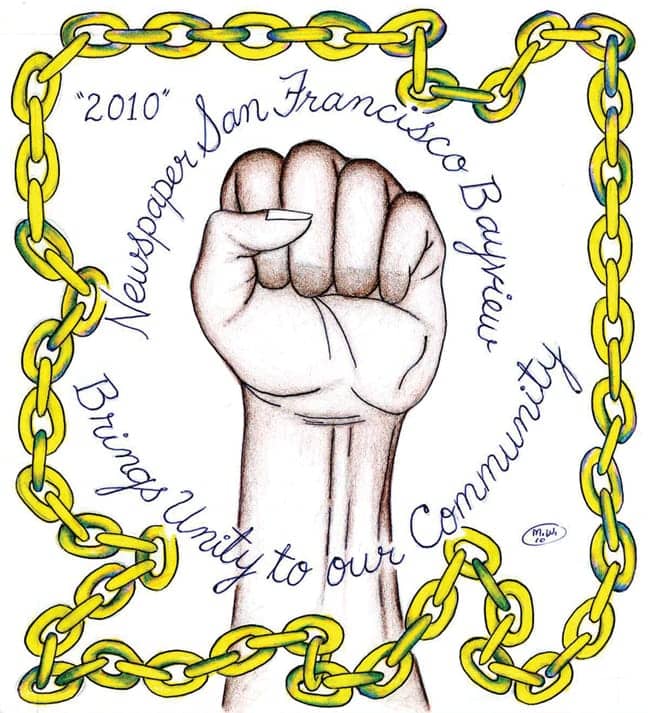
Drawing titled "Under Lock & Key" by Michael A. Wortham, H-69234, D-Fac, P.O. Box 8504, PVSP, Coalinga CA 93210

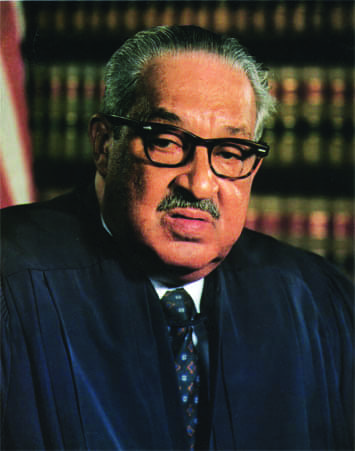
In 1974 (Procunier v. Martinez) U.S. Supreme Court Justice Thurgood Marshall sought to protect the practice of free speech by challenging a standard illegitimate dictate of prison authority: censorship of prisoners’ mail. In opposition to prison officials’ desire to quell dissent and regulate opinion in the yard, Marshall appropriated – indeed, elevated – the discussion to the level of moral indignation:
“The First Amendment serves not only the needs of the polity but also those of the human spirit – a spirit that demands self-expression. Such expression is an integral part of the development of ideas and a sense of identity. To suppress expression is to reject the basic human desire for recognition and affront the individual’s worth and dignity.”
Just over a decade later (Turner v. Safley) Sandra Day O’Connor agreed, asserting that “prison walls do not form a barrier separating prisoners from the protections of the Constitution.”
Yet such bold proclamations from the bench rarely provide comfort to those who need it most.

“To suppress expression is to reject the basic human desire for recognition and affront the individual’s worth and dignity.”

Today, according to numerous reports from inmates in several California state prisons, free speech inside the penitentiary is increasingly becoming a scant luxury, not the universally recognized right abstracted by federal judges. Reality, it seems, is closer to the view offered by the ACLU that “prisoners’ First Amendment rights are far more limited than those of non-prisoners, and prison officials can significantly restrict the publications prisoners receive.”
Stifle tactics: Bay View as prison contraband
As early as March 2008, the San Francisco Bay View began receiving dispatches from California prisoners alerting the newspaper that prisoners in possession of the newspaper were being charged with gang affiliation and having their subscriptions withheld.
Ed Furnace, formerly at Salinas Valley State Prison (SVSP), informed the Bay View that he had been segregated from the general inmate population and exiled to solitary confinement in part for possessing a Bay View article on Black August, the commemoration of Black radical resistance centered on the Marin courthouse rebellion that occurred Aug. 7, 1970. Furnace believes the segregation violated his First Amendment rights and possibly constitutes defamation: They (SVSP) are “essentially saying that the article is gang recruitment material when it is not.”
When Furnace challenged court authorities in June to demonstrate how his possession of the Bay View and other so-called gang “source items” provided the requisite “direct” link to gang activity, the court appealed to Webster’s dictionary, ruling, “While neither the statute nor case authority specifically defines the term, the dictionary defines ‘direct’ as meaning, among other things ‘without interruption or diversion,’ and ‘without any intervening agency or step.’” Despite no evidence of prior or current affiliation, the California prison system has thus acknowledged that Furnace’s fate will not be decided empirically, but rather by manipulative word play.
On June 10, 2010, Derick Lovings, a prisoner at Kern Valley State Prison (KVSP), was subjected to what he believed at first to be a routine cell search. “I was told it was a random cell search. However, after speaking with the sergeant I was informed it was for a Bay View magazine.”
According to prisoner reports, prisoners at Corcoran, Chuckawalla, Kern and Pelican Bay state prisons are facing punitive action by prison officials including what’s known as administrative segregation, leading to an unofficial yet effective ban on the Bay View newspaper.

“I was told it was a random cell search. However, after speaking with the sergeant I was informed it was for a Bay View magazine.”

Administrative segregation, or “AdSeg,” is a process used to isolate prisoners from the general inmate population. Once segregated, prisoners are often placed in solitary confinement, formally called Specialized Housing Units (SHU). In the SHU, prisoners experience extreme sensory deprivation – a clear form of psychological torture according to mental health experts and prisoner advocates, who continue to castigate the process as inhumane.
It is also well documented that in addition to the psychological effects of such confinement practices, prison guard brutality is not uncommon in the SHU. According to the Prison Law Office, a leading public interest law firm, Corcoran State Prison, one of the institutions implicated in the current ban, gained particular “notoriety for [SHU] violence, including ‘gladiator fights’ in which prison guards put hostile prisoners on group yards, bet on the resulting fights, and sometimes shot the prisoners involved.”
Stays in the SHU commonly follow what are known as “validations.” Inmates get validated when prison officials decide that the prisoner fits one of their criteria for gang affiliation. Possession of gang-related contraband is one such criterion and according to recent reports from California prisoners, the Bay View is now being compared to white supremacist and other racist propaganda.
What’s the justification for this claim? According to Derick Lovings, prison officials are arguing for the need to uphold standards of objectivity. “Is this some sort of Black Panther paper?” reportedly queried a certain Captain Flores of KVSP. “You know we don’t allow the white supremacist literature inside.”
Aside from the transparent ignorance of the actual content of the Bay View, what is more disturbing is the obvious assumption that the Black Panthers and, by implication, the Bay View, represent racist opinion. Assuming the Bay View can be likened to white supremacist literature adds validity to Ed Furnace’s claim that the actions of recent California prisons border on libel.
At the very least, it reinforces the understanding, perhaps now simply taken for granted, that behind the walls of the penitentiary, where rights are “more limited,” such absurdities are commonly upheld as instances of objectivity.
Banned in the CDCR
While some prisoners are being punished for possessing copies of the Bay View, others in the California Department of Correction and Rehabilitation (CDCR) system are having their subscriptions withheld and, in some cases, charging that their outgoing mail is not being sent.
Randall Ellis, a prisoner at Pelican Bay, filed a lawsuit July 6 against the prison for withholding a letter sent to the Bay View back in August 2009. Keith Barnett, a former Corcoran, now at Kern Valley, has not received his subscription to the Bay View since August 2008 despite the papers’ consistent mailing. In February of this year Barnett wrote that he had begun to “believe that the prisoncrats were censoring the publications allowed into the SHU at Corcoran” and suggested the Bay View pursue legal action.

Former Supreme Court Justice Thurgood Marshall

The apparent censorship of the Bay View in California prisons coincides with accounts of another banned periodical, Revolution, the newspaper of the Revolutionary Communist Party, USA. According to Revolution, officials at two California prisons where bans are alleged to be instituted have had little to say. Officials at Pelican Bay have remained silent on the issue except to emphasize that “no ban of Revolution Newspaper is in effect.” Similarly, the assistant warden of Chuckawalla Valley State Prison (CVSP) claims, “Revolution does not have a blanket ban at Chuckawalla.” Both statements do not deny that a prior ban had been in place, merely that they are not instituting one currently. However, Revolution maintains that prisoners, as recently as June, continue to be denied their subscriptions.
Rebellion is printing the Black voice
Regardless of the outcome of his lawsuit against Pelican Bay, Randall Ellis vows to continue to speak out in support of “Blacks’ various struggles in this country and shed light on the false attacks levied against [Blacks] for writing about and studying [their] history.” An admirable task not pursued nearly enough and a call to arms for those who enjoy far greater freedoms.
The Bay View is often the only window to the world for countless Black prisoners. It provides perspective and insight into issues facing the Black community long ignored by the mass and most independent media. Attempts to silence or pacify its content only serve as a reminder that, as Black radical activist Ashanti Alston points out, “The state is inherently oppressive as a mechanism that cannot give, grant, guarantee or preserve freedom.”
Freedom is not a gift or benevolent judicial gesture; it is something fought for by people like California prisoners, enlightened souls with little left to lose. So long as their freedoms are left to the whims of wardens, the Bay View will continue to share their voice and support their struggle. That they’ll likely be denied the freedom to read this article is, in Thurgood Marshall’s words, perhaps the greatest assault on an their “worth and dignity.”
Nick Theodosis is a graduate student in philosophy at San Francisco State University. He can be reached at mailto:nmtheo@mail.sfsu.edu [4]
How you can help
Legal assistance to help the Bay View and prisoner subscribers pursue their rights is welcome. So are contributions to the Bay View’s Prisoner Subscription Fund, so more prisoners can read the Bay View and join the many subscribers behind enemy lines who say, “The Bay View keeps me alive.”
Contribute online by clicking on Support SF BayView near the top left of every page at www.sfbayview.com [5]. Scroll down to the section headed “DONATE” for simple instructions on contributing to the Prisoners Subscription Fund. If you’d like to give a gift subscription to a prisoner you know, scroll down further to the section headed “SUBSCRIBE” to read the easy instructions.
And send our brothers who are taking the lead in this freedom fight some love and light: Edward Furnace, H-33245, CSP4B-4R-31, P.O. Box 3481, Corcoran, CA 93212; Derick Lovings, T-42634, A-8-211, P.O. Box 5101, Delano, CA 93216; and Randall Sondai Ellis, C-68764, SHU D2-213, P.O. Box 7500, Crescent City, CA 95531.

Related Posts

MESSING WITH THE SKY, MESSING WITH THE EARTH

 The aviation industry, along with the shipping industry, has been one of the most recalcitrant industry sectors in addressing global warming. This denial of culpability flies in the face of the fact that one round trip from NY to LA or Trans Atlantic round trip is equal to 2,000 pounds of CO2; in a year air travel releases 600 million tons of carbon dioxide into the atmosphere. As air traffic emissions double — or even triple — by 2050, a recent study in the journal Environmental Science & Technology indicates that air travel will become one of the significant factors in global warming.

Now it's no doubt true that we could all cut down on our air travel one way or another. The biggest villains here are not you and me flying off somewhere to visit aunt Ruth. No, we should look at corporate America.

The airline industry has a responsibility to, for example, to increase the rate of technological development and uptake for fuel efficiency measures as well as well as look at alternative fuels. The business world has numerous ways to cut down on business travel and they need to do it now, not tomorrow, but now. Most business travel is really a communications issue anyway and does not require person to person real life contact.


The following is from rabble.


Up in the air, destroying the planet

Tuesday, July 13, 2010

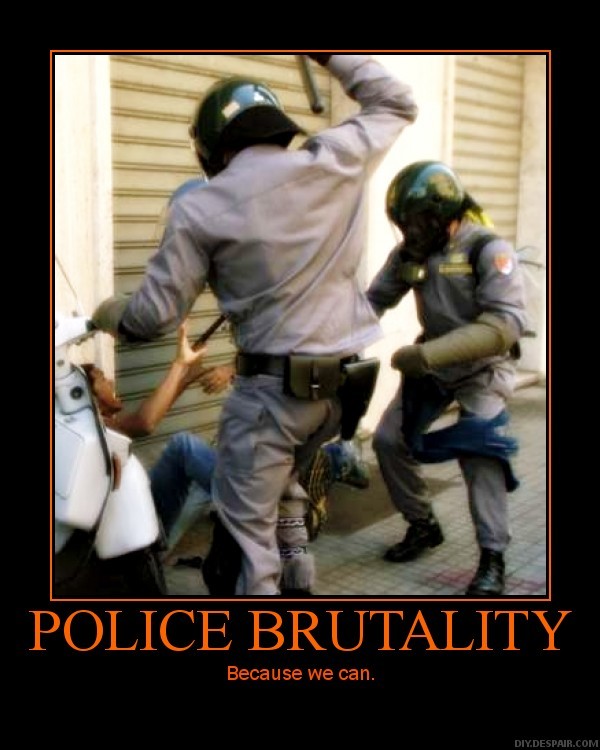
THE LYNCHING CONTINUE: POLICE BRUTALITY IN AMERICA

I'm still on hiatus, but I had to post this from the STEVELENDMANBLOG.


THE LYNCHINGS CONTINUE:

Police Brutality in America

by Stephen Lendman
Tuesday, 13 July 2010
Despite Congress passing the 1994 Violent Crime Control and Law Enforcement Act, Congress has consistently failed to fund it. Further, the legislation doesn't require local police agencies to keep records, nor does it criminalize police violence and excessive force as human rights violations.
Across America, daily incidents occur, one of many the cold-blooded January 1, 2009 murder of Oscar Grant - unarmed, offering no resistance, thrust face-down on the ground, shot in the back, and killed, videotaped on at least four cameras for irrefutable proof. USA Today said five bystanders taped it.
His killer: Oakland, CA transit officer, Johannes Mehserle, tried for the killing, the jury told to consider four possible verdicts - innocent, second-degree murder, voluntary manslaughter, or involuntary manslaughter, jurors deciding the latter.


The Legal Dictionary defines it as "The act of unlawfully killing another human being unintentionally," the absence of intent distinguishing it from voluntary manslaughter. Many states don't define it or do it vaguely. Wallin & Klarich Violent Crime Attorneys say in California it carries a two - four year sentence. However, since a gun was used, Judge Robert Perry can add three to 10 additional years.
Because minority victims seldom get justice, especially against police, Mehserle may serve minimal time, then be paroled quietly when the current furor subsides.


After the verdict, it erupted on Oakland streets, hundreds turning out to protest, Bay Area indymedia.org saying:
"The actions of the Police in Oakland tonight (including dozens of arrests) show their disrespect for justice in General. Their heavy handed violence towards protestors just reinforces their total disconnect with the people of Oakland." It's as true everywhere across America, police acting like Gestapo, usually unaccountably.
Grant's family will appeal the verdict and is suing the Bay Area Rapid Transit (BART) for $25 million, his mother Wanda Johnson saying "My son was murdered (and) the law has not held the officer accountable." It rarely does for Black, Latino, or other minorities, no matter the injustice, civil rights lawyer John Burris, representing Grant's family in the civil suit, saying:
"The system is rarely fair when a police officer shoots an African-American male." Police brutality against them and other minorites is systemic, including beatings, torture, and cold-blooded murder, usually with impunity, justice nearly always denied.
While far from certain, the Obama administration may charge Mehserle with civil rights or hate crime violations, DOJ spokesman Alejandro Miyar saying:
"The Justice Department has been closely monitoring the state's investigation and prosecution. The Civil Rights Division, the US Attorney's Office, and the FBI have an open investigation into the fatal shooting and, at the conclusion of the state prosecution, will conduct an independent review of the facts and circumstances to determine whether the evidence warrants federal prosecution."
Systemic Police Brutality
An earlier Jones Report.com text and video account headlined, "Epidemic of Police Brutality Sweeps America," showing footage of police repeatedly tasering a student with 50,000 volts of electricity for questioning the 2004 election results at a campus meeting.
Other videotaped incidents showed:
  • a man victimized by police violence;
  • a former sheriff's deputy acquitted of voluntary manslaughter for shooting an unarmed man;
  • police repeatedly beating an old man on the head, "for the crime of intoxication;"
  • officers violently using assault rifles, tear gas, dogs, and at least one helicopter in an alleged narcotics sweep;
  • a woman tasered to death by police; and
  • a man in shock, bleeding and burned over much of his body, ordered to lie on the pavement, then tasered and shot to death while he sat dazed, the Report highlighting systemic police violence "repeated almost every day in (America), the police (getting) away with murder," beatings, and other lawless acts - poor Blacks, Latinos, and Muslims for their faith and ethnicity their usual victims.
Amnesty International (AI) on American Police Brutality
On its web site, AI says "Police brutality and use of excessive force has been one of the central themes of (AI's) campaign on human rights violations in the USA," launched in October 1998. In its "United States of America: Rights for All Index," it documented systematic patterns of abuse across America, including "police beatings, unjustified shootings and the use of dangerous restraint techniques to subdue suspects."
Yet little is done to monitor or constrain it, evidence showing that "racial and ethnic minorities were disproportionately" harmed by harassment, verbal and physical abuse, false arrests, and in the case of West African immigrant, Amadou Diallo, shot at 41 times by four New York policemen, struck 19 times and killed while he stood in the vestibule of his apartment building, unarmed and nonviolent, victimized by police brutality.
Nationwide, driving while black has been criminalized, racial profiling used for traffic stops and searches for suspected drugs or other reasons, the practice especially common in California, Colorado, Florida, Illinois, Indiana, Maryland, Massachusetts, Pennsylvania, Oklahoma, Rhode Island, and Texas.
AI cited numerous incidents, including beatings and "questionable" shootings, usually found to be unjustified, yet cops most often absolved. Although most US police departments stipulate that officers should only use deadly force when their lives, or others, are endangered, dozens of cases show they do it indiscriminately, at most being "mildly disciplined" even if guilty of serious misconduct.
"Police shooting(s) resulting in death or injury are routinely reviewed (internally or) by local prosecutors....to see whether criminal laws (were) violated. However, few officers are criminally charged and little public information is given out if a case does not go to trial." As a result, systemic abuse stays hidden, police brutality allowed to persist with impunity.
Despite Congress passing the 1994 Police Accountability Act, incorporated into the 1994 Violent Crime Control and Law Enforcement Act to require the Attorney General to compile national data on excessive police force, Congress has consistently failed to fund it. Further, the legislation doesn't require local police agencies to keep records or submit data to the Justice Department. Nor does it criminalize police violence and excessive force as human rights violations.
ACLU Report on Racial and Ethnic Profiling
In August 2009, the report titled, "The Persistence of Racial Profiling in the United States" [PDF graphicDownload full report] quoted Rep. John Conyers (D. MI) saying "Since (9/11), our nation has engaged in a policy of institutionalized racial and ethnic profiling," although, as an African-American, he knows the problem goes back generations, most recently in the "war on terrorism" against Blacks, Latinos, and Muslims for their faith, ethnicity, activism, prominence, and at times charity, a topic this writer addresses often - arrests, some violently, bogus charges, prosecutions, and imprisonments often compounding the injustice.
Post-9/11 under Bush and Obama, federal, state and local law enforcement agencies have engaged in virulent racial/ethnic profiling, what the ACLU calls "a widespread and pervasive problem throughout the United States, impacting the lives of millions of people in African American, Asian, Latino, South Asian, and Arab communities."
Evidence shows that racial minorities are systematically victimized, without cause, in public, when driving, at work, at home, in places of worship, and traveling, often violently.
A "major impediment to (prohibiting it) remains the continued unwillingness or inability of the US government to pass federal legislation (banning the practice) with binding effect on federal, state or local law enforcement."
Nor do authorities comply with the provisions of the 1994 Convention on the Elimination of All Forms of Racial Discrimination (ICERD) that obligates all levels of government.
In addition, the Justice Department's 2003 Guidance Regarding the Use of Race by Federal Law Enforcement Agencies designed to ban federal officers from engaging in racial profiling is, in fact, flawed and does little to end it, because it doesn't cover "profiling based on religion, religious appearance, or national origin."
Nor does it apply to state and local law enforcement where police brutality is systemic. In addition, it specifies no enforcement mechanisms or punishments for violators, and contains a "blanket exception for national security and border integrity cases," besides being advisory and not legally binding.
As a result, it actually promotes profiling and abuse, including false arrests, beatings and killings. It's not surprising how minorities have been systematically mistreated by federal, state and local authorities, or that congressional legislation introduced to stop it never passed.
On December 13, 2007, the House and Senate introduced their versions of the End Racial Profiling Act (HR 4611 and S. 2481). Both bills were referred to committee and never enacted - making it extremely hard to nearly impossible for victims to successfully challenge abuses against them.
As a candidate, Obama promised a "Blueprint for Change" to ban racial profiling and related mistreatment, criminalizing them, but so far, no measures have been introduced or passed, showing another promise made, another broken, a systematic pattern under his leadership, across the board against the constituencies that elected him. Hopefully they'll remember next election and choose another way, a third way, both parties equally corrupted in deference to big money and systemic police brutality that serves it.
National Police Misconduct Statistics
The Injustice Everywhere.com (IE) web site compiles them, publishing them in regular reports, some for individual cities, including daily accounts. One on July 10 covers King County, WA deputy Paul Schene, captured on videotape assaulting a 15-year old girl in jail. He was tried twice, hung juries resulting each time.
On July 9, the County Prosecutor's Office dropped the charges, and won't pursue a third trial. As a result, the sheriff's department may rehire Schene, though he still faces possible disciplinary action. It's currently in arbitration, IE saying decisions nearly always favor officers, in which case he'll likely be reinstated to abuse other detainees, off camera to avoid being charged.
In early 2010, IE published an April - mid-December 2009 (8.5 months) Police Misconduct Report, from figures compiled in its National Police Misconduct Statistics Reporting Project (NPMSRP), begun earlier in March 2009, analyzing data:
"by utilizing news media reports of police misconduct to generate statistical information (to) approximate how prevalent (it) may be in the United States."
Police departments don't usually provide them, nor do courts, except for successful prosecutions, omitting confidential settlements and cases resulting in disciplinary action only, not trials. Media reports, though imperfect, are more complete because laws limit or filter information released. As a result, IE's data "should be considered as a low-end estimate of the current rate of police misconduct," as well as in individual cities covered.
Statistics compiled follow the same DOJ/FBI Uniform Crime Reporting (UCR) methodology, recording only the most serious allegation (not conviction) when multiple ones are associated with a particular incident. The findings were as follows:
  • 3,445 police misconduct reports;
  • 4,012 officers charged;
  • 261 law enforcement officials (police chiefs or sheriffs) cited;
  • 4,778 alleged victims;
  • 258 fatalities reported;
  • an average of 15.05 daily incidents or one every 96 minutes;
  • nearly $200 million in related civil litigation expense, excluding legal fees and court costs;
  • 980.64 per 100,000 officers charged;
  • one of every 266 officers accused of a violent crime;
  • one of every 1,875 charged with homocide;
  • one of every 947 accused of sexual assault;
  • 33% of police officers charged were convicted, not necessarily justly for the offense committed;
  • 64% of officers convicted were imprisoned, not necessarily as long as justified;
  • those sentenced served an average 14 months, far less than citizens for the same crime;
  • misconduct by category included 18.1% for non-firearm related excessive force; 11.9% for sexual misconduct; and 8.9% for fraud or theft;
  • analyzing reports by last reported status showed 45.9% affected officers adversely, including 14% internally disciplined and 31.9% criminally charged; of the latter, 32.5% were convicted "for a 10.4% total criminal conviction rate for alleged misconduct incidents; and
  • 27% resulted in civil lawsuits, 34.3% favoring victims.
In addition, data were compiled for states, cities and counties, excluding unavailable federal statistics as well as local omissions, especially in some states. Various offenses included:
  • accountability: evidence of coverups, lax discipline, and other failures to adhere to official policies or processes;
  • animal cruelty, harming them by unnecessary shooting, inappropriate KP unit training, or other mistreatment;
  • assault: "unwarranted violence" off-duty, excluding murder;
  • auto incidents involving recklessness, negligence, and other violations of official policies;
  • brutality, involving excessive physical force on-duty, excluding firearms or tasers;
  • civil rights, including unconstitutional civil liberties violations such as lawless peaceful protest disruptions;
  • sexual misconduct, including rape, sexual assault, sexual battery, wrongfully eliciting sex, harassment, coercion, prostitution, sex on duty, incest, and molestation;
  • theft or fraud, including robbery, shoplifting, extortion or bribery;
  • shooting: gun-related incidents both on and off-duty, including self-harm;
  • taser: excessive force, including usage not according to guidelines, resulting in excessive injury or death; also, improper taser use may be recorded as "brutality;"
  • color of law, including incidents involving misuse of authority such as bribery, soliciting favors, extortion by threat of arrest, or using badges to avoid arrest;
  • perjury, including false testimony, dishonesty during investigations, and falsifying charging papers or warrants; and
  • raids, including misconduct during warranted or warrantless operations or searches, wrong address raids, mistaken ones, use of no-knock ones when warrants require notification, or mistreatment during executions.
Misconduct status stages go from allegations to investigations, lawsuits, charges, trials, judgments, disciplinary measures, terminations, convictions, and sentences.
IE compiles data regularly, prepares daily and quarterly reports, and henceforth an annual one each January the following year. It explains that its statistics:
"should only be used (as) a very basic and general view of the extent of police misconduct. It is by no means an accurate gauge that truly represents the exact extent (of its extensiveness) since it relies on the information voluntarily gathered and/or released to the media, not (first-hand) by independent monitors who investigate complaints.....because no such agency exists for any law enforcement agency...."
Detailed quarterly and annual reports are produced, not monthly ones considered a less accurate "depiction of the overall extent of police misconduct...." Daily reports cover a sampling of individual incidents. Overall, IE provides a valuable reading of systemic police misconduct, though capturing only a snapshot of the full problem - widespread, abusive, violent, often with impunity, and when officers are held accountable, imposed discipline is usually mild, prison sentences rare and short-term, victims cheated by a criminally unjust system, favoring power over people, no matter the offense.
Final Comments
In December 2007, the UN Committee on the Elimination of Racial Discrimination published a report titled, "PDF graphic In the Shadows of the War on Terror: Persistent Police Brutality and Abuse of People of Color in the United States," saying:
"Since this Committee's 2001 review of the US, during which it expressed concern regarding incidents of police brutality and deaths in custody at the hands of US law enforcement officers, there have been dramatic increases in law enforcement powers in the name of waging the "war on terror (resulting in) the use of excessive force against people of color....(It's not only continued post-9/11), but has worsened in both practice and severity" - a NAACP representative saying it's "the worst I've seen in 50 years."
On April 4, 2007, Ryan Gallagher, writing for Medill Reports, produced by Northwestern University's Medill School of Journalism, headlined, "Study: Police abuse goes unpunished," saying:
From 2002 - 2004, over "10,000 complaints of police abuse were filed with Chicago police....but only 19 resulted in meaningful disciplinary action, a new study asserts." According to Gerald Frazier, president of Citizens Alert, it reflects "not only the appearance of influence and cover-up," but clear evidence that city residents are being abused, not protected, despite the department's official motto being "We Serve and Protect."
Most disturbing is that the Chicago pattern reflects what's happening across America, people of color like Oscar Grant systematically abused, in his case murdered in cold blood, what no criminal or civil actions can undo.


Stephen Lendman

    Stephen Lendman

    About Me

    I was born in 1934 in Boston, MA, raised in a modest middle income family, attended public schools, received a Harvard BA in 1956 and a Wharton MBA in 1960. After six years as a marketing research analyst, became part of a new small family business in 1967, remaining there until retiring in 1999. Have since devoted my time to progressive causes, extensive reading, and since summer 2005 writing on vital world and national topics, including war and peace, American imperialism, corporate dominance, political persecutions, and a range of other social, economic and political issues. In early 2007, began regular radio hosting, now The Progressive Radio News Hour on The Progressive Radio Network. Full information above.