Thursday, January 30, 2014

THE CANCER OF GLOBAL CAPITAL IS KILLING AFRICA


The environmental crisis, global capital, colonization, war, and destruction all meet head on in Africa in general, and the Democratic Republic of the Congo (DRC) in particular...and those of us, like you and me, just aren't doing a hell of a lot about any of it.  Not really.

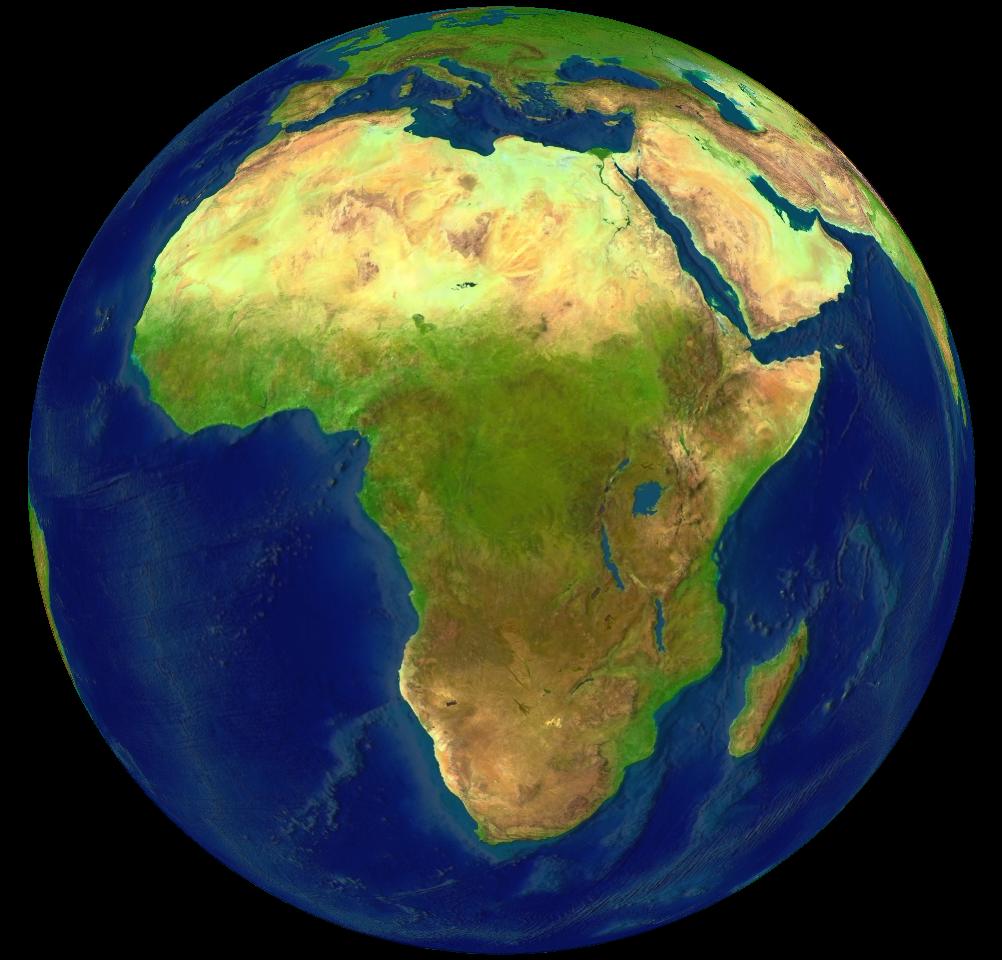
It is obvious that the Developed countries and global capital are doing all they can to re-enter and control as much of Africa as possible, as quickly as possible right now.  They want the resources mostly.  They desperately want the resources and they don't much care how much damage they do or who is in the way.  Africa has a large quantity of natural resources including oil, diamonds, gold, iron, cobalt, uranium, copper, bauxite, silver, petroleum and cocoa beans, but also woods and tropical fruits. Much of its natural resources are undiscovered or barely harnessed.  Global Capital in the form of the developed countries (and the so called developing countries) are making sure the value from these resources are heading their way and doing nothing for the people of Africa themselves.


For more than two decades the United States and western based capital has been increasingly escalating military and economic penetration of Africa.

As Abayomi Azikiwe writes at Pambazuka News:

The presence of U.S. military and intelligence forces in Africa is designed to bolster the strategic mineral and territorial interests of Wall Street. Africa is now supplying greater amounts of oil, natural gas and other essential minerals to economic interests of the ruling class.

With the growing role of the People’s Republic of China on the continent, Washington and Wall Street are concerned that they will lose their post-World War II advantage in Africa. Hence due to the declining economic influence of the U.S., the capitalist are relying more on aggressive military and intelligence operations to undermine Africa’s long term interests which are more in line with other continental states as well as other geo-political regions of the world including Asia, the Middle East and Latin America.

Garikai Chengu writes at Systemic Capital.com,

....Africa is a paradox that underscores the ongoing power of financial imperialism. She is spectacularly rich, yet the natural capital that is extracted from above and below her children’s feet continues to enrich, not Africans, but the people who facilitate Africa’s impoverishment: Western capitalists.

...Neo-liberalism is unquestionably the greatest cancer spreading across the African continent. Neo-liberalism is the promotion of a combination of counter-developmental economic policies, such as privatisation, austerity and structural adjustment that put the interests of foreign capital over local labour.

Meanwhile, highlighting the fact that we are talking about GLOBAL capital here is the fact that Brazil, Russia, India, China and South Africa (BRICS) are surely not hapless innocents in all this.  The question always being is it the State, is it Capital, who the hell is it.

Patrick Bond puts it this way at Links:

The BRICS agenda of relegitimising neoliberalism not only reinforces North American power, of course. In each case, the BRICS countries’ control of their hinterlands for the sake of regional capitalist hegemony was another impressive feature of sub-imperialism, especially in South Africa’s case....

...South African, US, European, Australian and Canadian firms have been joined by major firms from China, India and Brazil in the region. Their work has mainly built upon colonial infrastructural foundations – road, rail, pipeline and port expansion – for the sake of minerals, petroleum and gas extraction. BRICS appears entirely consistent with facilitating this activity, especially through the proposed BRICS Bank...

...The eco-destructive, consumerist-centric, over-financialised, climate-frying maldevelopment model throughout the BRICS works very well for corporate and parastatal profits, especially for Western capital, but is generating repeated crises for the majority of its people and for the planet.

The media likes to portray Africa as a continent surviving on the handouts of the West.  The exact opposite is more the case.  As Garikai Chengu explains,

...it is the West that is reliant on African handouts. These handouts come in many and varied forms. They include illicit flows of resources, the profits of which invariably find their way into the West’s banking sector via strings of tax havens (as thoroughly documented in Nicholas Shaxson’s Poisoned Wells). Another is the mechanism of debt-extortion whereby banks lend money to military rulers (often helped to power by Western governments, such as the Congo’s former President Mobutu), who then keep the money for themselves (often in a private account with the lending bank), leaving the country paying exorbitant interest on an exponentially growing debt.


...Recent research by Leonce Ndikumana and James K Boyce found that up to 80 cents in every borrowed dollar fled the borrower nation in ‘capital flight’ within a year, never having been invested in the country at all; whilst meanwhile $20billion per year is drained from Africa in ‘debt servicing’ on these, essentially fraudulent, ‘loans’.

Think none of this has a direct effect on internal wars, on environmental collapse, on the very lives today of the people of Africa.  Hopefully, you are smart enough to think no such thing.  

Meanwhile I direct you to this interesting article from Ceasefire.


Africlimate | The DRC: Beyond the atrocities, an emerging environmental crisis
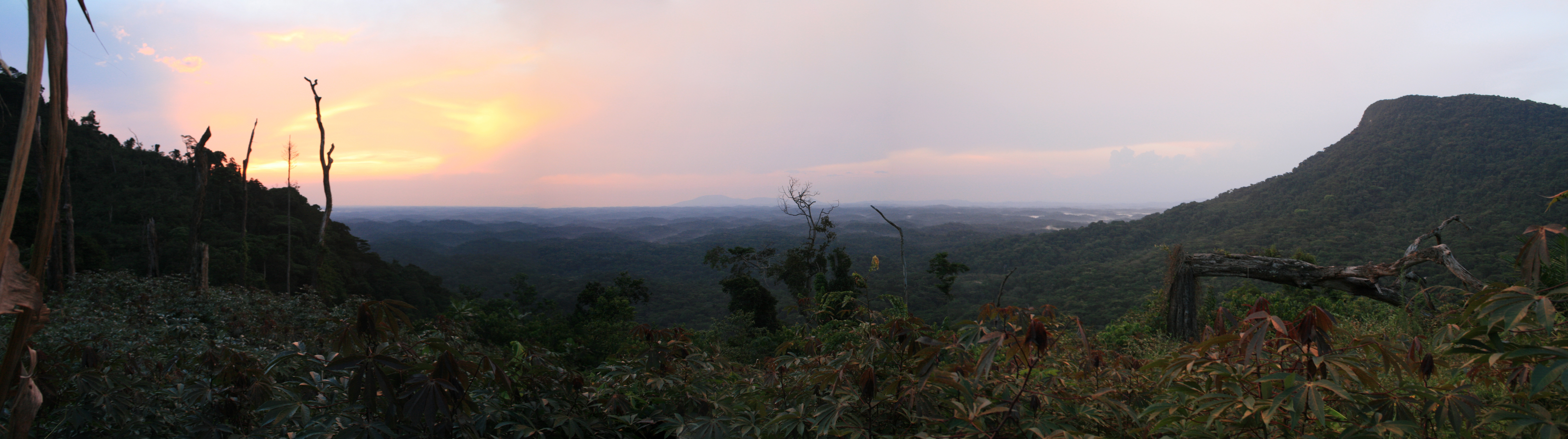

With much of the analysis of the events in the Congo concentrating on ethnic conflicts, Ceasefire's Luqman Onikosi looks at the environmental destruction and its effects on the lives of the people in the region.


congo rainforest
The Democratic Republic of Congo (DRC) is a region of Africa plagued by tragedy. This wasn’t always so: the thriving Kingdom of Kongo (which also includes modern Angola) enjoyed good trading relations with Portugal in 1482, before colonisation and the transatlantic slave trade. However, when civil war – instigated by the Portuguese – provided an opportunity for Europeans to purchase prisoners of war as slaves, this thriving civilisation and surrounding regions began a drawn-out and tempestuous descent. The civil war forced Afonso I, King of Kongo (DR Congo) to write to kings Manuel I and João III of Portugal in 1526 to protest:
‘Each day the traders are kidnapping our people – children of this country, sons of our nobles and vassals, even people of our own family. This corruption and depravity are so widespread that our land is entirely depopulated. We need in this kingdom only priests and school teachers, and no merchandise, unless it is wine and flour for Mass. It is our wish that this Kingdom not be a place for the trade or transport of slaves’.
From 1885, what was then called the Belgian Congo was carved out and bestowed upon King Leopold for mining rubber, eventually facilitating the automobile industry in Belgium and its incorporation into the industrial revolution. Despite widespread anticolonial resistance, imperial exploitation continues to this day – diamonds, gold, copper, cobalt, zinc, cassiterite (used in food packaging) and coltan (tantalum for making technological equipment) are extracted through European and US funding and support of civil conflict.
The DRC is a country of 60 million people, and equals in size the combined territorial expanse of Germany, the Netherlands, Belgium, Luxembourg, Austria, France, Spain, Portugal, Gibraltar and Italy. No less than two-thirds of its population rely on the rainforest in one way or another for food, medicine and shelter, and the cultures of many communities are founded on their relationship with the natural environment. The Congo basin rainforest in the DRC covers around two-thirds of the African equatorial forest. The African equatorial rainforest stretches from East to West Africa and is the second largest on earth after the Amazon. It extends to a large areas of Gabon, Cameroon, Equatorial Guinea, the Central African Republic and the Republic of Congo itself.
In spite of all its natural wealth, the African equatorial rainforest is under sustained threat, especially the areas across Central Africa which cover some 50 million hectares, an area the size of Spain. Food shortages and climate change are just some of the problems the world faces. The rainforest has the potential to help solve these crises through the judicious use of the resources possessed by the immense wealth of biodiversity. Forest elephants roam the area as do three species of great ape: gorillas, chimpanzees and bonobos. Animals and birds such as okapi and the Congo peacock are found nowhere else. And, as with all large forest areas, the Congo plays a vital role in regulating climate, both locally and globally. Efforts to preserve what remains of these areas are being hampered by a generational scramble for the country’s resources.
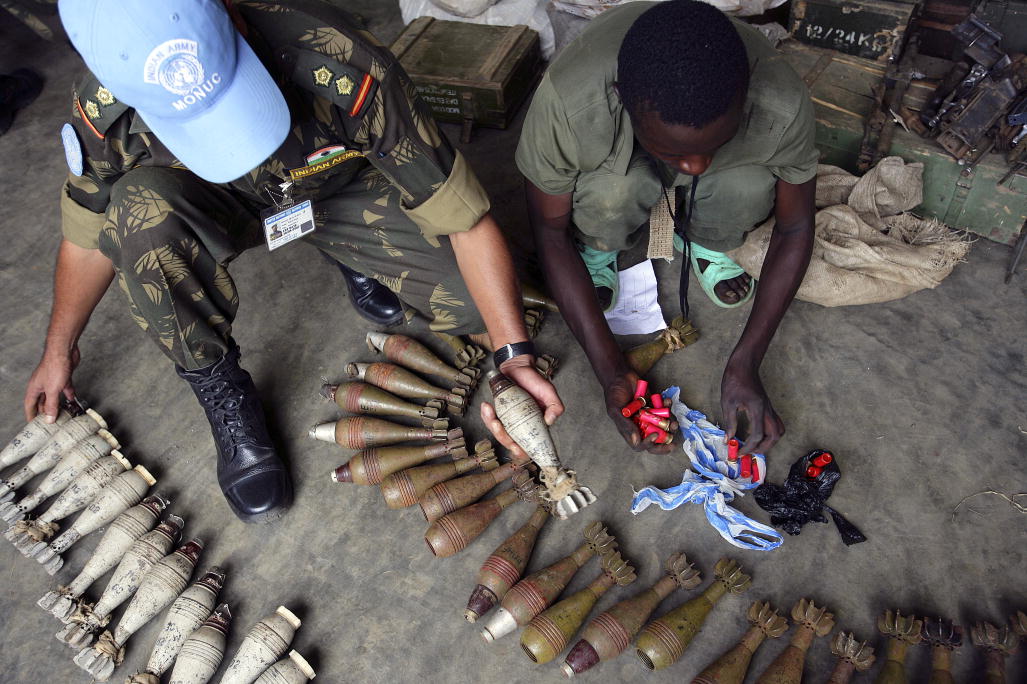
United Nations Peacekeepers Assist with Disarmament, Demobilization, and Reintegration in DRC
It is difficult to estimate precisely how many Congolese in Europe are refugees or asylum seekers. More than 400,000 Congolese refugees currently remain outside the DRC according to UNHCR statistics. The UNHCR report claims that, since the beginning of 2012, ethnic tensions and inequitable access to land have led to renewed violence in the east and north-east of DRC, resulting in the displacement of more than 2.2 million people inside the country. In addition, almost 70,000 people have crossed the border to neighbouring countries such as Uganda and Rwanda.
The 2009 report by UN-commissioned experts said UN involvement had done nothing to quell the violence – with rebels continuing to kill and plunder natural resources with impunity, and claims that the rebels are supported by an international network stretching through Africa to Western Europe and North America. Nevertheless, an earlier UN report in 2001 implicated about 100 multinational companies who rapaciously scrambled and looted the unaccountable wealth from the DRC rainforest. This firms include: Barclays Bank of the UK, Freeport-McMoRan Copper & Gold Inc, of the US, Banro Mining Company of Canada, Anglo Gold Ashanti Limited of South Africa and the infamous De Beers Groups. These companies were accused by the UN of financing rebels and exchanging ammunition for access to mineral resources and secure landing fields for their small planes to loot the wealth of the DRC rainforest. Sadly, the United States and the UK government forced the UN Security Council to back down in their attempt to prosecute these corporations. By 2008, over 8 million were dead, and at the time of writing, no source in the world can give an exact estimate of the fatalities.
DR Congo Equatorial rainforest and the danger of uncontrollable natural resources mining
According to an article published in the Proceedings of the National Academy of Sciences (PNAS) in 2011, it is estimated that sub-Saharan Africa’s forests contain 44-66 billion tons of carbon. Unlike other tropical forest regions, nearly three-quarters of Africa’s forests are distributed in woodland savannas and dry forests that contain less than 100 tons of carbon per hectare. Extremely carbon-dense forests, which store more than 350 tons of carbon in aboveground biomass per hectare, account for 8.7 percent of sub-Saharan Africa’s total stored carbon.
Overall, African forests store the least amount of carbon per hectare of any region, averaging 69-117 tons per hectare. Asia is the highest, averaging 125-174 tons per hectare per hectare, followed by the tropical Americas, which averages 87-132 tons per hectare. Unsurprisingly, the forests of the Democratic Republic of Congo which are the most extensive and store the most carbon of any African country, accounting for 26-37 percent of forest cover and 38-56 percent of carbon. Three other Congo Basin countries — Cameroon, Republic of Congo, and Central African Republic — follow.
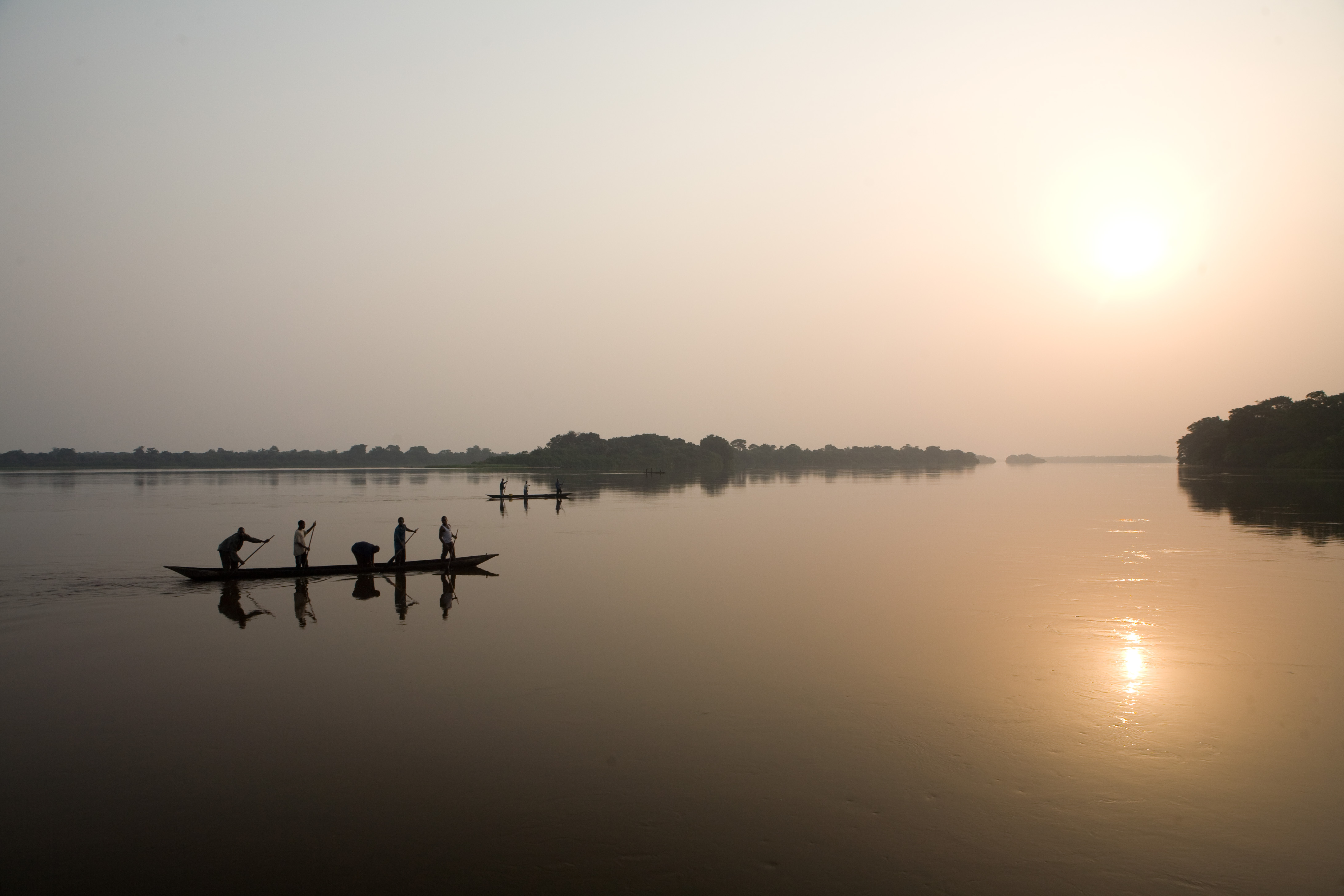
Peacekeeping - MONUCDRC rainforest deforestation rates since 1990 have been in the lowest of any major forest region in the world. However there are still a number of threats to the health of the Congo rainforest and its residents. The biggest drivers of deforestation in the Congo rainforest over the past 20 years have been small-scale subsistence agriculture, clearing for charcoal and fuel wood to domestically generate energy for cooking and lighting, urban expansion and mining.
International industrial logging has been the biggest driver of forest degradation. However it’s important not to understate the impact of logging in the region. Logging roads have opened up vast areas of the Congo to commercial hunting, leading to a poaching epidemic in some areas and a more than 60 percent drop in the region’s forest elephant population in less than a decade. Furthermore, logging roads have provided access to speculators and small-holders who clear land for agriculture.
Looking forward, the biggest threats to the Congo rainforest come from international industrial logging and conversion for large-scale agriculture. Some environmentalists fear that the Congo could be on the verge of a massive increase in deforestation for palm oil, rubber, and sugar production.
In 2002 the Democratic Republic of Congo (DRC) announced a moratorium on commercial logging in a bid to save rapidly falling forests, however a new report by Global Witness alleges that industrial loggers are finding a way around the logging freeze. Through unscrupulous officials, foreign companies are abusing artisanal permits—meant for local community logging—to clear-cut wide swathes of tropical forest in the country. These logging companies are often targeting an endangered tree—wenge (Millettia laurentii)—largely for buyers in China and Europe.
Another fast growing issue of deforestation of the Congo rainforest are industrial oil palm plantations which are spreading from Malaysia and Indonesia to the Congo raising fears about further social conflict over land tenure, compeling the local residence who depend on the rainforest land for subsistence farming to emigrate.
A new report by The Rainforest Foundation UK (RFUK) 2013, dramatically entitled The Seeds of Destruction, announces that new palm oil plantations in the Congo rainforest will soon increase fivefold to half a million hectares, an area nearly the size of Delaware. But conservationists warn that by ignoring the lessons of palm oil in Southeast Asia, this trend could be disastrous for the region’s forests, wildlife, and people:
“Governments of Congo Basin countries have handed out vast tracts of rainforest for the development of palm oil with apparently little or no attention to the likely impacts on the environment or on people dependent on the forest” (Simon Counsell, Executive Director of the Rainforest Foundation UK)
The palm tree used to produce palm oil originated in Africa, so production in the Congo Basin isn’t new. But industrial palm oil production involving massive plantations is a recent development for the region. The approach, modeled after operations in Southeast Asia, raises concerns among environmentalists who argue that palm oil has been a disaster for the forests of Malaysia and Indonesia. Indeed, scientific research has found that between 1990 and 2000, 86 percent of all deforestation in Malaysia was for palm oil.
The largest palm oil developer in the Congo Basin is currently Malaysian-owned Atama Plantations SARL, which is working to establish a 180,000-hectare (450,000-acre) plantation in the Republic of Congo. But the entire enterprise is masked by a complete lack of transparency is just one of the endless list of agent of deforestation of DR Congo forest and forece displacement of its people.
New Entrant in to the scramble for DRC
Although the war is waning the scramble still rages on. The latest international entrant amidst the scramble is China. In 2008, Chinese businesses signed $9bn deal with DRC. A massive state-owned firm based in Beijing, the China Railway Engineering Corporation, or CREC deployed its Chinese engineers and advance team of surveyors using global positioning tools taking satellite readings to plot the exact course of a road that’s about to be built in the region. The deal planned to give DRC $6bn of desperately needed infrastructure – about 2,400 miles of road, 2,000 miles of railway, 32 hospitals, 145 health centres and two universities. In return, China gets a slice of DR Congo’s precious natural resources to feed its booming industries – 10m tonnes of copper and 400,000 tonnes of cobalt.
China has surpassed the US as Africa’s largest trading partner with trade of US$90 billion in 2009, compared with $86 billion for the US and foreign direct investments of over $50 billion. Bilateral trade topped $160 billion in 2011 and is expected to reach $200 billion this year. In addition, China has proposed or committed about $101 billion to commercial projects in Africa since 2010, of which construction and natural resource deals total approximately $90 billion. However, the whole arithmetic of the deal unfairly favours the Chinese. At current world prices for copper and cobalt, the Chinese side of the joint venture will make a colossal overall profit of about $42bn after all the investment’s been paid.
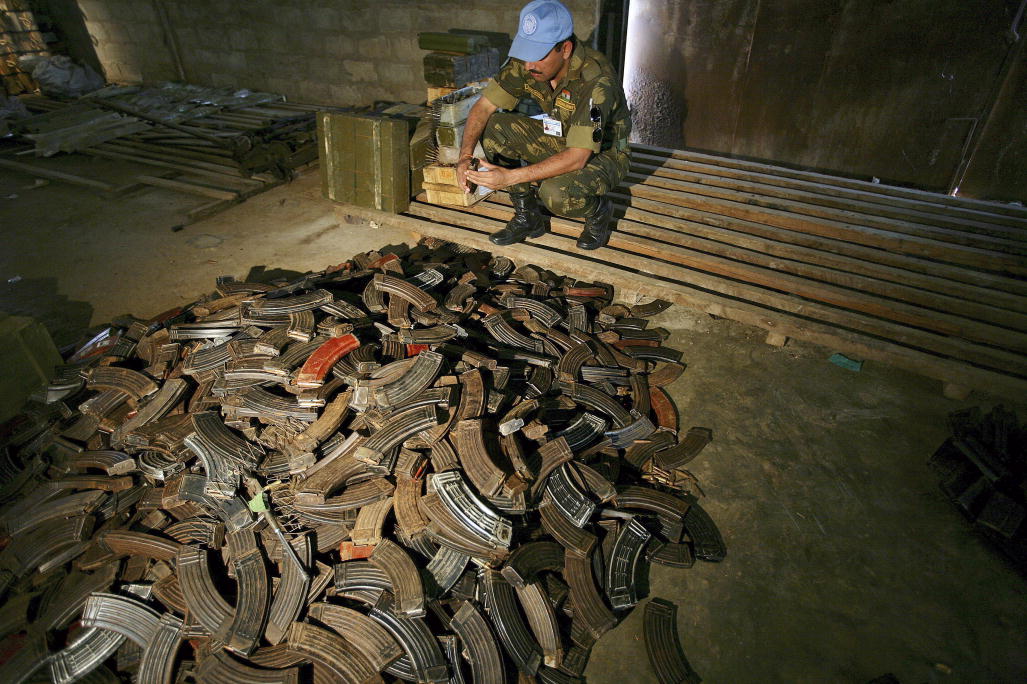
Peacekeepers Assist with Disarmament, Demobilization, and Reintegration in DRC
Being unable to compete economically with Beijing, Washington is once again turning to militarism to secure its advantage. As Mali demonstrates, and the ruinous war against Libya in 2011, this approach should be seen as a pointer for the future. The silent war in the DRC has claimed the lives of millions rooted in conflicts over strategic resources in which the rival imperialist powers invariably play their part more or less openly.
In 2011, according to a study by Dr Stephen Burgess, a Zimbabwean-born associate professor at the US Air War College, in his report titled ‘Sustainability of Strategic Minerals in Southern Africa and Potential Conflicts and Partnerships’, the US should move quickly to secure Southern Africa’s uranium, manganese, platinum, chrome, coltan (columbite and tantalum) and rare earth minerals for America’s industrial needs and for its military as well as maintenance of weapons systems. The study focuses on resource accessibility in the DRC, Namibia, South Africa, Zambia and Zimbabwe and draws parallels with the 1880s scramble for Africa.
To triumph in this new scramble, Burgess notes, ‘all instruments of (US) power’ must be deployed. Washington will enlist the services of the Department of Defence, the National Security Agency and the Africa Command (AFRICOM) to secure Southern Africa’s resources. DRC in particular for the US, is viewed as the source to quench America’s thirst for cobalt, uranium, coltan (columbite and tantalum), tungsten, tin, and rare earth minerals. In particular, the US government is concerned about access to ‘defence critical resources’. This requires increased levels of engagement with the African countries concerned, using all the instruments of American power and working with American and Western mining companies, as well as engagement with China and Chinese companies.
Conclusion
‘When two elephants fight, it is the grass that bears the brunt of the upheaval’ a Yoruba adage. On the ground in DRC, while power politics is played out across the African continent over natural resources, the mainstream media under-report or mis-report the atrocities facilitated by capital, led by the US and its allies, with the help of their puppets and cronies on the ground. As always, it is the ordinary Congolese who suffers most. The human cost of war and the destruction of environments essential for life both in the region and across the planet, are often presented as little more than collateral damage. We can easily neglect how our survival is dependent on the environment regardless of whether you live in the ‘concrete jungle’ or in the country side.
The interconnected nature of the planet’s complex ecosystems makes linking the issues of environmental degradation with modern imperialism an imperative for the progressive left based in the West, as it is and always has been for progress movements in the Global South. To build a movement which can not only defeat imperialist capitalism, but to maintain a healthy planet fit for habitation, climate justice and anti-imperialism must be understood as part of the same collective struggle.
Africlimate is an environmental project of the Hear Alkebu-lan* community group.

Wednesday, January 29, 2014

AMERICA LOVES IT BLACK ATHLETES...TO SHUT UP AND LOOK PRETTY


God damn, you'd think Richard Sherman was the coming of the anti-Christ.  At least, that how many white folks reacted when the extremely talented and bright Seattle defensive back spoke his piece after a spectacular play which brought to a close the conference championship game with San Francisco.  I'm not going into his comments here.  It's been almost a week and half since them, you've seen them.  You have probably even heard about a lot of the racist, white supremacist backtalk thrown his way since.

Nothing unusual really.  Whenever a black athlete has the gall to speak out, to speak his mind, to not play the game the way the white folks and the media want him to play, they get hell.  Then the media figured out that Sherman was an interesting story and the racist reaction wasn't really all that cool, and that calling him a thug was just another way of calling him the N word.  So they started to back off.  Instead they started honing in on his academic qualifications it seems to point out that while he looked and acted like a "thug," he really wasn't that "kind of a black person."  They don't even get their own racism.  Of course not.  

At the Gawker this observation is made,


Serena Williams is a "ghetto thug" for arguing with an umpire—John McEnroe was presumably less ghetto and thuggish when he regularly berated refs throughout his career; LeBron James is a thug just because this sports fan says so, because "I just don't like LeBron James or the way the NBA forces himself upon us, the fans and the media."


(One would be remiss to not also note that murdered black teenager Trayvon Martin's body had barely been in the ground before people were slandering him as a thug who got what was coming to him.)


There are other ways people try and deride black athletes—and teachers and lawyers and presidents and students buying skittles—and their various behaviors, of course, including adjectives like "tacky" and appeals to class. Many said Richard Sherman is "classless," for instance, because he raised his voice and showed too much pride and too little sportsmanship.

America loves its black athletes. It loves to watch them jump high and run fast. It loves to watch them punch each other in rings and tackle each other on fields, occasionally so violently that they tear each other's ligaments and break each other's bones and concuss each other. America loves to do all of this so much that it's willing to devote innumerable hours and billions of dollars to the practice. But all that love can be abusive and fleeting, and woe be unto the black athletes who step out of line in America.

Yes, white America loves its black athletes, but only if they behave properly and no where to sit on the bus.

M. Shadee Malaklou writes at Racialicious:


White supremacist culture dictates who and who does not get to be human. In order for people of color to receive a Human Card, they must assimilate: they must not use slang. They must be quiet. They must not wear hoodies. They must not curse. They must be gracious at all times. They must enunciate. They must not talk about racism. They must not listen to rap music. They must not sag. They must not brag. They must not laugh in public. They must not take up more than one seat on the bus. They must not ever ask for more. In short, you must be perfect. Robotic. Even if you are a professional athlete who performs for millions of Americans, playing a game in which aggression, testosterone, and energy are rewarded (demanded)… you must be quiet, gracious, calm, unassuming. Unscary. To be black and also be regarded as human, you must never make a mistake in your entire life, ever—ever—or you are a thug. Ghetto. Other. Your Human Card is denied.

To be sure stepping out of line is a different thing for a black athlete then a white one. 

Want to know a thug football player.  How about Ben Roethlisberger?  Name ring a bell?  If not google him and sexual assault.  How about most of the players in the NHL, who spend as much time beating on each other as playing the game. Lance Armstrong is a thug. Dodger pitcher Brian Wilson, following a ballgame gets to accost and yell at Giants CEO Larry Baer, without anyone daring to label him a thug.  Brandi Chastain ripped off her shirt to celebrate a soccer victory and everyone loved it.  When the black men of the 2000 Olympics gold medal 4X100 removed their shirts in celebration it was termed a disgrace.  It gets old.

Anyway,below is a post from our old friend Dave Zirn at Edge of Sports.  You may want to go back and read his earlier article as well.


Richard Sherman’s Latest and his Refusal to Be a Brand


I was done writing about Super Bowl bound Seahawks cornerback Richard Sherman. I was done writing about the polarizing, perspicacious, Pro Bowler who with one iconic post-game interview morphed into our latest national Rorschach test about racism and sports. I was done partly because I had already written about him and partly because others have said it better. (Find great articles about Sherman and race here, here and here.) I also didn’t want to write again about the man who made the journey from Compton to Stanford to NFL glory because we seem to be entering a place where his five-star post-game rant has crossed a line from rebellion to commodification. His marketing agent, Jamie Fritz, has been making the media rounds, telling the advertising trades that since Sherman said “CRABTREE” at volume ten, his phone has been ringing off the hook. “We haven’t seen a guy like this in a while,” Fritz gushed to Ad Age.“Richard’s a guy who’s going to speak his mind. And that makes people very curious. We have data that Richard is single-handedly growing the Seattle Seahawks fan base in Middle America—where [Seahawks] fans would not exist.”
It just did not seem interesting to write about another athlete Madison Avenue was attempting to turn into a rebel with no cause. But then, Richard Sherman took the microphone again this week and said something that needed to be said, something that won’t help him sell Big Macs to pre-schoolers. Facing the press on Wednesday, Sherman spoke about the avalanche of racist garbage he has faced since Sunday, trash that includes not only the social media barrage of racial epithets, but also being called a “thug” repeatedly in the mainstream media.
Sherman said, “The only reason it bothers me is because it seems like it’s the accepted way of calling somebody the N-word nowadays. It’s like everyone else said the N-word and they said ‘Thug’ and they’re like, ‘Ah, that’s fine.’ That’s where it kind of takes me aback and it’s kind of disappointing.” He then brought up the decades long double standard of how fighting in the almost entirely white NHL is viewed with a yawn but so much as raised voices from black athletes are greeted as a national calamity. Referencing a recent brawl between the Vancouver Canucks and Calgary Flames, Sherman said, “What’s the definition of a thug really? Maybe I’m talking loudly and doing something I’m not supposed to. But I’m not.… there was a hockey game where they didn’t even play hockey. They just threw the puck aside and started fighting. I saw that and said, ‘Oh, man. I’m the thug? What’s going on here?’ ”
Richard Sherman said something that has needed to be said since Jack Johnson commented that he would be Jim Jeffries’s “master” a mere forty years after the end of slavery. It has needed to be said since the first time Dick Allen scowled from a batter’s box or Sonny Liston glowered from across a ring or Allen Iverson took the court with cornrows. It has needed to be said since David Stern hysterically started to enforce what NBA players could and could not wear on the road. It has needed to be said since Muhammad Ali said, “I don’t have to be what you want me to be.” Using the platform to tell harsh truths is not a recipe for being a Madison Avenue “brand.” It is a recipe for actually doing something that moves society forward.
James Baldwin once said that America was a country devoted to the death of the paradox. We want our jocks to be jocks, our poets to be poets, our ditch diggers to be ditch diggers and our black athletes from Compton to not have the ability to call out the dominant culture on its own hypocritical bullshit. Richard Sherman is that paradox. But unlike the athletic paradoxes of the past, he is also acutely aware of the ways in which twenty-first-century media are attempting to put him in that box and kill his paradox. Richard Sherman has the ability to use words as weapons and spit arguments as easily as he spits insults. That makes him interesting. That makes him provocative. That makes him dangerous. And Beats by Dre aside, that makes him difficult as hell to brand.
For many people watching the Super Bowl, the game will come down to whether you root for Peyton Manning, the Broncos quarterback, or Richard Sherman. For many people that will mean “Peyton good” and “Sherman bad.” For many people, like John McCain, that means rooting for Peyton to shut up the “loudmouth.” If you’re going to root against the Seahawks and Richard Sherman, by all means do so. But please root against them for the right reasons, not so Richard Sherman gets some kind of lip-buttoning comeuppance. Whether you like the Broncos or Seahawks, you should hope for the greater good that Richard Sherman never shuts up.

Tuesday, January 28, 2014

INDIA, CAPITAL, COAL, DEATH, DESTRUCTION, AND ENVIRONMENTAL DOOM


India has a problem.  Almost four hundred million of its populations are without access to electricity and the existing supply falls ten percent short during peak hours.

India sits on one of the world's largest deposits of coal, yet it can't get it out of the ground quickly enough or transport it fast enough to meet its own demand.

India's answer to this is simple - expand coal production by whatever means are necessary.

Now, I am not here to announce that I have the answer to India's energy problems, but I know one thing and that is simple - coal it is not.  This direction leads to the deaths of untold numbers of Indian citizens directly, not to mention the rest of the planet.

This sort of problem the multitude take seriously.

Enter the contradiction.  Compass points out, 


The problem is expanding mining operations is easier said than done. You see if you layered maps of mineral resources, tribal populations, and endangered wildlife on top of each other you’d see a scary picture. That's because what's left of India's cheapest coal reserves lies in the exact same places as the country's remaining forests which also happen to be home to the country's remaining tiger populations and large numbers of tribal populations. It's this combustible mix that has fueled 'naxal' insurgencies in many parts of the country's coal belt. 

What that means is that India's drive to expand coal supplies (as well as build new power plants) runs face first into fierce local resistance. These local communities have held back the goliath of coal expansion with little more than a slingshot and a rock.  That heroism, aided by the beauracratic inefficiency of Coal India and a decrepit transportation infrastructure, has caused stagnating production, and heightened project delay.

The first study of the health impact of India's dash for coal, conducted by the World Bank says India's coal plants already cost hospitals up to 4.6 billion dollars per year.  Greenpeace says upwards of 120,000 premature deaths are occurring and maybe 20 million new cases of asthma each year.  Coal based plants have also led to an alarming increase in heart attacks.  Vinuta Gopal of Greenpeace told the Guardian last year: 

"The ongoing coal expansion is irrational and dangerous. Coal mining is destroying India's forests, tribal communities and endangered species, and now we know the pollution it emits when burned is killing thousands. Coal has failed to deliver energy security. We need a moratorium on new coal plants and ambitious policy incentives to unlock the huge potential India has in efficiency measures, wind and solar."

Fortunately not everone agrees that coal is the answer to India's problems.

  Dr EAS Sarma (Former Union Power Secretary) and  Shankar Sharma (Power Policy Analyst) wrote last year, 


An oft repeated statement in recent years is that the continued reliance on coal power is essential to lift the poor people in India from the clutches of poverty. The government and many people in the position of influence have been repeating this statement so often that it seems to be attaining the status of “Goebbels’s Truth”...

When the harsh realities of coal power in the true context of global warming and the overall welfare of our communities are objectively reviewed, the hypocrisy behind such statements/reports will become obvious.... 

Whereas the successive governments continue to say that coal capacity addition is necessary to provide electricity to all, and through it to eliminate poverty in our country the reality as seen since independence is vastly different. Whereas the total installed power capacity in the country has increased from about 1,000 MW in 1947 to about 212,000 MW in 2013, and the national per capita electricity has increased from less than 100 kWh in 1947to about 800 kWh in 2013, about 300 Million people in the country have no access to electricity. Despite such massive growth in coal dominated electricity grid about 75 Million families have no electricity at all in 2013 as against the Planning Commission’s target of 30 kWh of electricity per family per month as life line energy by 2012.

The reasons given by the official agencies for not being able supply electricity supply to all is that it is not economical to extend the grid power to all villages. Since coal power is economical only in large size grid connected mode, the hollowness of the claim that coal power is needed to electrify all houses becomes clear. A large number of people are living without electricity even in the close vicinity of coal power plants.

A conveniently hidden fact about coal power is the inherent gross inefficiency associated with the coal power. The losses involved in coal burning, steam making, generating, transmitting and distributing electricity is so high that only about 20% of the coal energy reaches the end consumer in the form of electricity even with the best technologies....

India is endowed with a vast potential in renewable energy sources.... 

We, in India, need to take a much more holistic view of the energy needs of the people vis-à-vis all-round welfare of communities. We should build new clean energy sources regardless of what the West does because it’s the cheapest, cleanest, and best solution for our people. It’s time our ‘leaders’ focused on India’s clean energy future and dropped support for a corrupt dirty coal sector.


The same goes for the rest of the world.

I am not here to point fingers.  The developed countries have already contributed enormously to global climate change and they aren't stopping.

For example just last week we could read at Triple Pundit:

The Australian government, under Prime Minister Tony Abbott, seems committed to exacerbating its nation’s climate woes. Even as his Environmental Minister approved a vast coal mine that will produce 40 million tons of CO2-emitting coal per year, Abbott is calling Australia’s strong renewable energy sector into question.


He’s cutting funding for renewables, threatening to remove the 20 percent renewable energy standard and even falling back on the old and largely debunked criticism that wind power has negative impacts on human health.  Australia’s National Health and Medical Research Council looked into the issue in 2010 and again in 2012. And now Abbott is calling for another review. Because, why not?


And just for good measure, he’s also dismantling Australia’s well-regarded plans for curbing carbon emissions and jettisoning the nation’s goals for carbon reductions.

Australia isn't alone with this crap either.    At the United Nations' Warsaw meeting, Japan announced that it would jettison its carbon reduction goals, blaming the post-Fukushima loss of nuclear power.  Canada's Prime Minister Stephen Harper, continued his purge of Canadian government science and his pursuit of Alberta's oilsands, casting an image of Canada as OPEC's future perennial hockey champions.  In the United States Texas Republican Lamar Smith took the reins of the House Science Committee, where 17 of its 22 Republican members do not believe in man-made climate change.

And then there is the Polish government which managed to host a pro-coal conference and a climate change summit at the same time.

I haven't even mentioned China...or the USA.  Why bother.  One is adding more  now to the problem then anyone, and the other, well, it has done way more than its share to doom the planet already.

 Let me just leave you with this from the Union of Concerned Scientists, A typical-sized 500 megawatt coal-fired electricity plant in the United States puts out each year:


1. 3.7 million tons of carbon dioxide. Carbon dioxide (CO2) is the main greenhouse gas, and is the leading cause of global warming. There are no regulations limiting carbon dioxide emissions in the U.S.
2. 10,000 tons of sulfur dioxide. Sulfur dioxide (SOx) is the main cause of acid rain, which damages forests, lakes and buildings.
3. 10,200 tons of nitrogen oxide. Nitrogen oxide (NOx) is a major cause of smog, and also a cause of acid rain.
4. 500 tons of small particles. Small particulates are a health hazard, causing lung damage. Particulates smaller than 10 microns are not regulated, but may be soon.
5. 220 tons of hydrocarbons. Fossil fuels are made of hydrocarbons; when they don't burn completely, they are released into the air. They are a cause of smog.
6. 720 tons of carbon monoxide. Carbon monoxide (CO) is a poisonous gas and contributor to global warming.
7. 125,000 tons of ash and 193,000 tons of sludge from the smokestack scrubber. A scrubber uses powdered limestone and water to remove pollution from the plant's exhaust. Instead of going into the air, the pollution goes into a landfill or into products like concrete and drywall. This ash and sludge consists of coal ash, limestone, and many pollutants, such as toxic metals like lead and mercury.
8. 225 pounds of arsenic, 114 pounds of lead, 4 pounds of cadmium, and many other toxic heavy metals. Mercury emissions from coal plants are suspected of contaminating lakes and rivers in northern and northeast states and Canada. In Wisconsin alone, more than 200 lakes and rivers are contaminated with mercury. Health officials warn against eating fish caught in these waters, since mercury can cause birth defects, brain damage and other ailments.
9. Trace elements of uranium. All but 16 of the 92 naturally occurring elements have been detected in coal, mostly as trace elements below 0.1 percent (1,000 parts per million, or ppm). A study by DOE's Oak Ridge National Lab found that radioactive emissions from coal combustion are greater than those from nuclear power production.
10. A 500 megawatt coal-fired electrical plant burns 1,430,000 tons of coal, uses 2.2 billion gallons of water and 146,000 tons of limestone a year.  

It is way past time to stop relying on mainstream environmental groups, governments, the UN, the World Bank and other international organizations, NGOs, and happy greens.  It is up to the multitudes in the North and the South, the East and the West to act with strength and to act NOW...or we can just chuck it in.  

The world is dying so that a few can profit.  Until we rid the Earth of the cancer of Capital, we will never, ever get a handle on all this.  You can talk renewables, wind, solar, and scrubbers until you are blue in the face.  It is Capital that is the ultimate problem. There is no easy fix which leaves a capitalist system in place which will save the people of India or the world.  Global capital is a mass murderer and should be treated as such.

But today's post returns us to India and now.  It comes from  The Ecologist.


India's coal inferno


Sarah Stirk


India's planned power expansion depends overwhelmingly on coal, with over a hundred huge new generation units planned by 2030. Sarah Stirk reports on the nightmare the dash for coal is bringing to once peaceful rural communities.


The smell, a mix of human and animal excrement, combined with acrid industrial pollution makes the air gritty, stinging eyes and making breathing a struggle.

Champa's eyes are surrounded by dark circles and her face is thin and drawn. It began with a fever, pain in her limbs, and she was then diagnosed with tuberculosis.
"I was diagnosed with TB two years ago now. I have been on medication but I am not getting any better. I have difficulty breathing and even talking is hard. It has been like this for five or six years - ever since the plant started, our problems have started too."
Champa is not alone. She is one of millions of people in India whose health and lives are being blighted by the country's surge in coal-based power generation.
170 gigawatts of new coal generation planned by 2022
India ranks third in the world in the production of carbon dioxide and is burning more coal than ever before, with 66% of power generated by coal-fired thermal power plants.
Future plans are for massive expansion, with India's 12th five-year plan ending 2017 adding 76GW of coal-fired power capacity. The 13th five-year plan, ending in 2022, aims to add another 93GW.
This is a colossal programme - equivalent to more than three times the UK's entire peak power demand. It represents a response to an increasing population, a growing middle class hungry for modernity - and an energy policy that holds coal power as integral to the development of the country's economy.
100,000 premature deaths a year
But as India pursues its aggressive path of coal-powered industrialisation, its leaders are showing themselves willing to sacrifice millions of people and huge swathes of the country to a dark and uncertain future.
According to the The Lancet's Global Burden of Diseases Study outdoor air pollution - arising from power stations, other industry, transport, and domestic fuel burning for heat and cooking - is already among the top ten causes of death in India.
And while air quality and other environmental regulations do exist in India, they are rarely enforced. Sarath Guttikunda, chemical engineer and director at Urban Emissions New Delhi, believes them to be far weaker than in other countries:
"In India we do have ambient air quality standards ... But what we have found is that these regulations lag behind the numbers that we have seen in Europe, United States and even in China, and there is a lot of room for improvement."
In the first ever report focussing on the health impacts of the coal industry in India, scientists estimate that in 2011-2012, air pollution from coal-fired power plants alone was responsible for 80,000-115,000 premature deaths.
Diseases caused by the pollution include 20.9 million asthma attacks, bronchitis and other severe respiratory conditions, and cardiovascular disease. These health impacts are estimated to cost India $3.3 billion to $4.6 billion per year in medical expenses and lost work days.
India's 'energy capital' - Singrauli
Singrauli, known as the "energy capital" of the country, is the industrial hub of north-central India. Straddling Uttar Pradesh and Madhya Pradesh, it produces 10% of the country's coal-fired power.
Singrauli was once covered in forest and rich agricultural land, but the region's coal lies underneath these forests, and they are being cleared at an alarming rate. Endangered species are pushed further towards extinction - and tribal communities are swept aside to make way for the energy juggernaut.
Priya Pillai, Senior Campaigner for Greenpeace India has worked in the area for over three years. "There are nine thermal power plants and eleven operational mines, and this is concentrated in one district. That's the Singrauli region, and it's because of this that you'll find the large number of cases of asthma, of tuberculosis, of skin diseases, of cancer."
Toxic dustbowls
The landscape is one of industrial devastation and critical levels of pollution, recently rated the third most polluted industrial cluster in the country by the comprehensive environmental pollution index. Air, water and soil have all been affected.
The open cast mines that scar the landscape resemble vast craters, streaked black with coal and trimmed green at the edges with what is left of the rapidly dwindling forest. Huge dump trucks and cranes appear miniature in the distance, barely visible through the poisonous haze.
Milky white stagnant ash ponds hold the by-product of the industry, fly ash. Black spiky stalks of dead foliage poke out of the sludge, testament to its toxicity.
Experts warn of acute health problems related to coal and the ash that it produces, conaining toxic heavy metals including mercury, arsenic, lead, nickel, barium and even radioactive substances such as uranium or thorium. 
Man-made mountains of mining wastes, excavated and dumped, gradually bury entire villages. Coal-filled train bunkers and conveyor belts, some as long as 25km, snake from the mines to thermal power plants.
The towering stacks dominate the skyline, looming over settlements and pumping out smoke which can spread its pollution as far as 400 km away, choking communities below. The air is permanently clouded, limiting visibility. The smell and taste of coal dominate the senses.
Towering infernos
Chilika Dand, in the Sonebhadra district of Singrauli, Uttar Pradesh, is one of the most critically affected communities. The village of around 12,000 people is surrounded by multiple power plant stacks emitting putrid smoke, and overlooked by a fully operational open-cast mine just 50 meters away.
There is a constant industrial hum of engines revving and the scrape of metal on stone. Twice daily explosive blasts, and the subsequent patter and thud of debris, are more reminiscent of the sounds of war than of development. Few of the concrete rehabilitation blocks escape cracked walls due to tremors from the blasts.
A railway line and road are both dedicated to carrying coal. Villagers claim that at night, filters are removed from the stacks, and ash falls and settles on rooftops like toxic snow. Many of them have been moved, often forcibly, numerous times to make way for the industry that has destroyed their lives.
Manonit G Ravi, an activist and resident of Chilika Dand shouts over the noise of engines to make himself heard: "The entire village vibrates with the blasts. Sometimes they are so big and loud, people run out of their houses thinking there might be an earthquake."
Sanitation is desperate, as the allocated plots leave little room for toilets. In summer, asphyxiating dust fills the air, and in winter and rainy seasons, there is a constant septic sludge underfoot. The smell, a mix of human and animal excrement, combined with acrid industrial pollution makes the air gritty, stinging eyes and making breathing a struggle.
Disease is rife
Residents of Chilika Dand say that illness and disease is rife in the community, with cancer, kidney failure, diabetes, vitiligo (the blanching of skin through pigment loss), hair loss and psychosis widespread.
These disease are all linked to contaminated water, coal ash, particles in the air, and the abnormally high levels of mercury present in the environment. Coal fired power stations are one of the main ways that mercury is released into the environment.
The World Health Organization states that even minimal exposure to mercury may cause health problems, including neurological damage to unborn fetuses and children. The heavy metal is considered "one of the top ten chemicals or groups of chemicals of major public health concern." 
Siraj Un Nissa, a resident of Chilika Dand and mother of eight has Vitiligo. Her hands, arms and mouth are blanched, and her whole body is patchy where pigment has been lost.
"I have been sick for the past eight years ... The dust is making it hard for us to live here. No electricity. We get it for one hour and it's gone. We don't have a proper house to live in, just a makeshift shelter. We don't have anything. No one cares about the poor."
Buried under mine waste
Jharia, in neighbouring Madhya Pradesh, has almost disappeared. The remote village is being buried under waste from a nearby mine opened by Reliance in 2006.
A thin sliver of green and around 30% of the population is all that remains of this forest-dwelling community of Harijan people, squashed against a sheer, slowly encroaching, man-made cliff of debris.
Children sit quietly on top of huge boulders, the result of an avalanche, and push bikes loaded up with coal, which they have collected and bagged up for sale, one of the few ways they manage to survive.
Visibility is very limited through the dust-filled air, and the sound of a man chopping wood is intermittently drowned out as dump trucks rumble past, kicking up dust and adding to the mountainous pile of rock, where the village used to be.
It never used to be like this
Bandhu Saket, resident of Jharia explains how their health has been affected by the mine:"My youngest grandson gets so unwell, his teeth start chattering and his eyes enlarge, it feels like he will not get better ...
"It never used to be like this. Ever since the companies have come, since the vehicles have been driving back and forth, since the blasting has started, illness and disease have been spreading.
"They dump things in all directions and when it is summertime, with all the dust, one cannot see anything so how can you expect anything else but to get sick!"
Bandhu explains that they used to have a well that provided drinking water to the village, but the company filled it in, and they are now forced to drink what they can. "Whatever we find in the drains or rainwater collected, that is what we drink."
Manbasia, also from Jharia, is a mother of three. Supporting herself against a huge rock from the mine, she struggles to control the emotion in her voice, and speaks shakily of illness and disease in what is left of her community.
"I can't see very well, my chest hurts, my feet don't allow me to sit down or stand up ... We have no one here to help or support us. If someone is dying, there is no one to look after them or save them. Who are we meant to turn to?"
Huge increases in mortality
Dr R. B. Singh has worked in the area for over 20 years, treating the local population in their homes, both in the small private practice that adjoins his home, and the Singrauli District Hospital next door.
A constant stream of patients waits outside his practice, all needing attention and treatment.
There has been a huge increase in death, sickness and disease "since the time the new industries have come here and the coal mine belt has progressed", he insists.
"The patients we see in our new Out Patients Department present themselves with skin diseases and lung diseases, bronchitis, asthma and silicosis", he explains. "And because of the contaminated drinking water, amebiasis and other abdominal ailments have increased."
"I have come across bone cancer, mouth cancer, cervical cancer, breast cancer", he adds."All these are common here." The bone cancers mostly occur in children, mouth cancers in adults."
It's a hospital - but where's the medical equipment?
The District Hospital next door is in desperate need of facilities. A dilapidated shell with dark corridors, the maternity ward is splattered with blood and rainwater drips through cracks in the ceiling. A solitary brand new unit for premature babies looks oddly out of place.
There is no other medical equipment to be seen and a general sense of confusion and bewilderment prevails. Lights flicker on and off as the electricity supply fades in and out.
Wards are crowded but quiet, with beds full, people lying on the floor and an unmistakable shortage of staff. "We have a problem with a lack of doctors as most of them qualify and go abroad. They do not want to work in these small places", says Dr Singh.
Hearts and lungs
Sarath Guttikunda, Director at Urban Emissions, New Delhi is a chemical engineer and air pollution expert. "When you are focusing on outdoor air pollution two things are really important - one is your lungs, and other is your heart."
"Among the respiratory problems, the main one is asthma. People who are already suffering from asthma are obviously going to get affected even more, and children and older generation people - they are the ones that we see are getting affected the most."
Ranjeet Singh, a primary school teacher in the area, says that sickness is rife in his pupils, with coughing and sneezing a constant sound in the classroom. Absenteeism is common due to ill health, and parents are deeply worried about their children.
"When I go to teach, there are 216 children. Out of those, if only 100 or 150 of them turn up, it makes us wonder why the children haven't turned up.
"When we enquire, the child's guardian tells us that their child has been unwell or that because we had to go to the hospital, they didn't make it to school, or that for the past 15 days she's been sick and lying in bed ... These kind of problems come up a lot."
A People betrayed
 All over Singrauli, locals speak of sickness, their land and livelihoods being taken away, and promises of re-housing, education, employment and healthcare from the industry that haven't materialized.
Rangeet Gupta is a local activist and youth worker living and working in the area. He says that after "persistent reminding", the industry has not delivered the services that it promised.
The resultis that proper healthcare, among other things, is only available to people who can afford it, or those who work for the industry.
"In this area of ours, there isn't even a decent hospital ... for the displaced community. They have nothing at all, no schools, no doctors, no hospital, no roads, not even an arrangement for hygiene and sanitation. They have just been abandoned."
Champa, like so many others, has experienced this first-hand, buying her own medicine when she has the money to do so, and going without treatment when she can't afford it.
"We receive no help from the people at the plant at all. Since the health problems started because of the plant, we have not been given so much as a single tablet by them or the government."
The future looks even worse
As the health epidemic gets more critical, scientists, medical professionals and campaigners all predict that if India pushes forward with the planned expansion, and regulations remain unenforced, the consequences to human life will be even more devastating.
According to Sarath Guttikunda, pollution from the power plants operating in the area has caused close to 100,000 premature deaths. "And if we are going to triple the number of power plants and don't do anything about the regulations, we will at least triple this number."
Doctor Singh warns that the atmosphere in Singrauli will be polluted "to such a degree that it will not be viable to live here anymore." Champa, Manbasia and their families, along with hundreds of thousands of other people, face a future of poverty, sickness and death with no means of escape.
"Now, with the dust and smoke bellowing, there are people getting sick", says Manbasia."And if you don't have the money, like us, what do we do? Kill ourselves?"