Wednesday, January 05, 2011

WHAT WOULD JOHN BROWN DO

SLAVERY! DESTROY IT!


FROM IRIN.

MAURITANIA: Activists’ trial puts spotlight on anti-slavery law

Former slave in Mauritania
N
OUAKCHOTT, 4 January 2011 (IRIN) - Six anti-slavery activists are in prison in Mauritania in a case rights experts say points to the challenges of ensuring a 2007 law criminalizing slavery is more than just words on paper.

The six men, members of the Mauritanian anti-slavery group Initiative pour la résurgence du mouvement abolitioniste (IRA), are set to go on trial in the capital, Nouakchott, on 5 January after two postponements. The authorities reportedly said the IRA members attacked security forces; the activists said they were simply demonstrating against slavery.

“We suspected that the 2007 law would not be put into effect,” Romana Cacchioli, Africa expert with 
Anti-Slavery International, told IRIN. “And indeed its application is not yet a reality. Cases that have been brought are either still in process but taking a long time or have not been pursued.”

The law makes keeping slaves a crime in Mauritania, 
but the practice continues. The NGO SOS Esclaves says nearly a fifth of Mauritania’s 3.1 million people were slaves as of 2009.

On 13 December the six activists were arrested while protesting in front of a Nouakchott police station; the activists were calling for the group’s leader to attend the questioning of two girls - aged nine and 13 - allegedly kept as slaves.
Slavery in Mauritania
The real beginning of the end of slavery?
Former slaves struggle in new home
“New slavery is worse than that of the old days”
“Each time a slave is questioned, the police don’t want [IRA president] Biram Oula Dah Ould Abeid to attend,” IRA member Hamady Lehbouss told IRIN. “This way the police are able to manipulate the slaves.”

Leïla Ahmed, IRA member and Ould Abeid’s wife, was at the police station; she said she felt teargas and saw policemen beating IRA members, including her husband.

The Mauritanian authorities have declined to comment on the arrests or the protest in front of the Nouakchott police station.
Ineffective law? 

The 2007 law - adopted unanimously by Mauritania’s National Assembly - criminalized slavery. But to date, according to IRA and SOS Esclaves, no one has been prosecuted for keeping slaves.

Human rights and anti-slavery activists 
expressed concern in 2007 that the law alone was insufficient, saying the government must adopt measures to ensure the law would be effective.

The law says slaveholders could be given 10-year prison sentences and fines ranging from US$2,000 to $4,000. Anyone facilitating slavery can be imprisoned for two years. The law also provides for financial compensation to former victims.

The law does not allow representatives of civil society groups to attend trials.

“No legal measures exist for slaves to claim their rights,” IRA secretary-general Boubacar Ould Mohammed told IRIN.

The deputy head of SOS Esclaves in Mauritania, Mohamed Ould Khalifa, said the authorities generally classify such cases simply as disputes between an employer and his or her employees.
Widely practised 

Activists said part of the difficulty in criminalizing slavery is that it is so widely practised. “The authorities themselves keep slaves,” Khalifa said.

But also, former slave Haby Rabah told IRIN, many people in slavery do not know their rights or are afraid to leave.

“My masters told me: ‘The slave depends on his owner and in order to go to paradise he must obey his owner. Otherwise he will go to hell’,” said Rabah who, with IRA’s help, was liberated "three years and four months" ago.

“I knew no one but my masters. I belonged to them and that seemed normal to me. When I was young my owners beat me; when I got older they threatened to take me to the police if I disobeyed them.”

Local experts say slavery continues in cities as well as in rural areas in this Sahelian country which lies geographically and culturally between Arab North Africa and black sub-Saharan Africa. Most affected are the Harratin – black Moors, descendants of slaves – who are generally owned by upper class white Moors, the minority ruling elite of Arab-Berber descent, according to SOS Esclaves. Slaves generally do household work or attend to livestock; they are not allowed to own land.

A common saying among Mauritanians is: “The ground is the slave’s bed, fire his clothing.” 

Tuesday, January 04, 2011

GAZA YOUTH HAVE HAD ENOUGH

RIGHT ON!

A pox on all your houses.

Froom guerrilanews.wordpress.com

By Gaza Youth Breaks Out (GYBO)
Fuck Hamas. Fuck Israel. Fuck Fatah. Fuck UN. Fuck UNWRA. Fuck USA! We, the youth in Gaza, are so fed up with Israel, Hamas, the occupation, the violations of human rights and the indifference of the international community! We want to scream and break this wall of silence, injustice and indifference like the Israeli F16’s breaking the wall of sound; scream with all the power in our souls in order to release this immense frustration that consumes us because of this fucking situation we live in; we are like lice between two nails living a nightmare inside a nightmare, no room for hope, no space for freedom. We are sick of being caught in this political struggle; sick of coal dark nights with airplanes circling above our homes; sick of innocent farmers getting shot in the buffer zone because they are taking care of their lands; sick of bearded guys walking around with their guns abusing their power, beating up or incarcerating young people demonstrating for what they believe in; sick of the wall of shame that separates us from the rest of our country and keeps us imprisoned in a stamp-sized piece of land; sick of being portrayed as terrorists, homemade fanatics with explosives in our pockets and evil in our eyes; sick of the indifference we meet from the international community, the so-called experts in expressing concerns and drafting resolutions but cowards in enforcing anything they agree on; we are sick and tired of living a shitty life, being kept in jail by Israel, beaten up by Hamas and completely ignored by the rest of the world.


There is a revolution growing inside of us, an immense dissatisfaction and frustration that will destroy us unless we find a way of canalizing this energy into something that can challenge the status quo and give us some kind of hope. The final drop that made our hearts tremble with frustration and hopelessness happened 30th November, when Hamas’ officers came to Sharek Youth Forum, a leading youth organization (www.sharek.ps) with their guns, lies and aggressiveness, throwing everybody outside, incarcerating some and prohibiting Sharek from working. A few days later, demonstrators in front of Sharek were beaten and some incarcerated. We are really living a nightmare inside a nightmare. It is difficult to find words for the pressure we are under. We barely survived the Operation Cast Lead, where Israel very effectively bombed the shit out of us, destroying thousands of homes and even more lives and dreams. They did not get rid of Hamas, as they intended, but they sure scared us forever and distributed post traumatic stress syndrome to everybody, as there was nowhere to run.


We are youth with heavy hearts. We carry in ourselves a heaviness so immense that it makes it difficult to us to enjoy the sunset. How to enjoy it when dark clouds paint the horizon and bleak memories run past our eyes every time we close them? We smile in order to hide the pain. We laugh in order to forget the war. We hope in order not to commit suicide here and now. During the war we got the unmistakable feeling that Israel wanted to erase us from the face of the earth. During the last years Hamas has been doing all they can to control our thoughts, behaviour and aspirations. We are a generation of young people used to face missiles, carrying what seems to be a impossible mission of living a normal and healthy life, and only barely tolerated by a massive organization that has spread in our society as a malicious cancer disease, causing mayhem and effectively killing all living cells, thoughts and dreams on its way as well as paralyzing people with its terror regime. Not to mention the prison we live in, a prison sustained by a so-called democratic country.


History is repeating itself in its most cruel way and nobody seems to care. We are scared. Here in Gaza we are scared of being incarcerated, interrogated, hit, tortured, bombed, killed. We are afraid of living, because every single step we take has to be considered and well-thought, there are limitations everywhere, we cannot move as we want, say what we want, do what we want, sometimes we even cant think what we want because the occupation has occupied our brains and hearts so terrible that it hurts and it makes us want to shed endless tears of frustration and rage!


We do not want to hate, we do not want to feel all of this feelings, we do not want to be victims anymore. ENOUGH! Enough pain, enough tears, enough suffering, enough control, limitations, unjust justifications, terror, torture, excuses, bombings, sleepless nights, dead civilians, black memories, bleak future, heart aching present, disturbed politics, fanatic politicians, religious bullshit, enough incarceration! WE SAY STOP! This is not the future we want!


We want three things. We want to be free. We want to be able to live a normal life. We want peace. Is that too much to ask? We are a peace movement consistent of young people in Gaza and supporters elsewhere that will not rest until the truth about Gaza is known by everybody in this whole world and in such a degree that no more silent consent or loud indifference will be accepted.


This is the Gazan youth’s manifesto for change!


We will start by destroying the occupation that surrounds ourselves, we will break free from this mental incarceration and regain our dignity and self respect.  We will carry our heads high even though we will face resistance. We will work day and night in order to change these miserable conditions we are living under. We will build dreams where we meet walls.


We only hope that you – yes, you reading this statement right now! – can support us. In order to find out how, please write on our wall or contact us directly: freegazayouth@hotmail.com


We want to be free, we want to live, we want peace.


FREE GAZA YOUTH!

THE PLAN IS TO KILL EVERY LIVING THING ON THE PLANET AND AS SOON AS POSSIBLE

Who is who in Congress is rarely a concern of mine. I recognize that we have a one party system with two wings. I must say though that the new crop of House committee chairs from the Party's Republican wing are doozies...doozies who hope to end all life on this planet as soon as possible. The Democratic wing favored a slower death.


FROM CLIMATEPROGRESS.ORG

January 4, 2011
https://secure3.convio.net/ucs/images/content/pagebuilder/12958.jpg
The incoming Republican chairs of the House of Representatives plan to send the United States back to the Stone Age with respect to climate policy. All of them opposed the climate legislation supported by President Barack Obama, and now oppose limits on global warming pollution under the Clean Air Act. Several have accused climate scientists of doctoring data and suppressing dissent; the others merely claim climate policy is actually a conspiracy to destroy the American economy.
Brad Johnson has the line-up of climate zombies who will be in charge of developing all federal legislation for the next two years:

Financial Services: Spencer Bachus (AL). Bachus introduced legislation that accused climate scientists of fraud: “Whereas recent events have uncovered extensive evidence from the Climate Research Unit at the University of East Anglia in England (in this resolution referred to as the ‘CRU’) which involved many researchers across the globe discussing the destruction, altering, and hiding of data that did not support global warming claims.” [H.R. 954]
Ways and Means: Dave Camp (MI). “What is the science of climate change? What can it definitively tell us? Can it say who is responsible for it? Can it tell us what impact we can have on it, and if we can, what are the results, both positive and negative? From what I have read, there remains a great deal of uncertainty with regard to the scientific evidence about climate change.” [Camp, 2/25/09]
Budget: Paul Ryan (WI). “Unilateral economic restraint in the name of fighting global warming has been a tough sell in our communities, where much of the state is buried under snow.” [Racine Journal Times, 12/11/09]
Natural Resources: Doc Hastings (WA). “Over the last few weeks an international summit on climate change took place in Copenhagen, Denmark. It centered around developing a binding international climate change mandate. Unfortunately for the United States, this is likely to do much more harm than good. Instead of allowing all scientific opinions to be heard, this conference was devoid of an honest, comprehensive debate.” [Hastings, 12/18/09]
Oversight and Government Reform: Darrell Issa (CA). “One of the difficulties in examining the issue of the climate change and greenhouse gases is that there is a wide range of scientific opinion on this issue and the science community does not agree to the extent of the problem or the critical threshold of when this problem is truly catastrophic.” [Issa 9/11/09]
Judiciary: Lamar Smith (TX). “We now know that prominent scientists were so determined to advance the idea of human-made global warming that they worked together to hide contradictory temperature data. But for two weeks, none of the networks gave the scandal any coverage on their evening news programs. And when they finally did cover it, their reporting was largely slanted in favor of global warming alarmists.” [Smith, 12/8/09]
Science and Technology: Ralph Hall (TX). “There is growing concern and evidence that scientific data, from which global warming theories emerged, has been manipulated, enhanced or deleted.” [Hall]
Energy and Commerce: Fred Upton (MI). Upton joined the head of Koch’s Americans For Prosperity to question the threat of carbon pollution. “Moreover, the principal argument for a two-year delay is that it will allow Congress time to create its own plan for regulating carbon. This presumes that carbon is a problem in need of regulation. We are not convinced.” [WSJ 12/29/10]
Appropriations: Hal Rogers (KY). “This administration is trying to shut down coal and fire all of you,” claimed Rep. Hal Rogers, R-Ky., adding that the EPA was practicing “strangulation by regulation.” [AP 9/15/10]
Armed Services: Buck McKeon (CA). “We must put a stop to the radical agenda that is rapidly making its way through Washington in the form of a Cap & Tax climate change bill, federal free-market takeovers, and government run health care systems.” [McKeon,7/2/09]
Education and Labor: John Kline (MN). Kline attacked the House passage of the Waxman-Markey climate bill. “Created to raise federal revenue and reduce greenhouse emissions, this proposal will, in reality, drive up the price of everyday goods, strain the economy, reduce jobs, and impose a significant cost increase on every American who dares turns on a light.” [Kline, 7/10/09]
Small Business: Sam Graves (MO) and Agriculture: Frank Lucas (OK) In a joint op-ed with Doc Hastings, Lucas and Graves claimed climate legislation and carbon regulation would threaten the fabric of America. “Democrats in Congress have been arrogantly pursuing an ill-conceived cap and trade program that will slam rural families and businesses with a national energy tax. As a result, electricity prices would skyrocket, gas prices would balloon and thousands of jobs in rural America could be lost forever. In a two-pronged attack, President Obama is also instructing the Environmental Protection Agency (EPA) to impose harmful new regulations and mandates on carbon emissions and energy consumption. This government power grab would give the EPA unprecedented authority to regulate anything that emits carbon—including semi-trucks, tractors, lawnmowers and even weed-whackers.” [St. Louis Post-Dispatch, 6/3/10]
Transportation and Infrastructure: John Mica (FL). “Earlier in the 111th Congress, the House of Representatives considered H.R. 2454, the energy tax bill also reffered [sic] to as the Cap and trade bill. I voted against this energy tax bill when it was passed by the House of Representatives by only a margin of seven votes: 219 to 212. The Cap and Tax legislation would impose an energy fee on almost all forms of energy.” [Mica]
A few of the committee chairmen, like Upton, Mica and Kline, have taken the moderate position of being willing to support climate policy, so long as it doesn’t involve any regulation, tax, government spending, or mandate of any kind that would actually reduce pollution. There is support among the Republican caucus for policy to accelerate global warming through new oil and coal subsidies, however.
– Brad Johnson, in a WonkRoom cross-post

SHOOTING ANYTHING THAT MOVES IN MISSOURI

ALL I HAVE TO SAY IS, "ASS!"


From the NBC Action News in Kansas City, Missouri.


Ray County man kills 115-pound mountain lion

This mountain lion was shot by a landowner in Ray County on Jan. 2. The mountain lion is being examined in Columbia, Missouri, by Resource Scientist Jeff Beringer, left, and Wildlife Biologist Todd Meese of the Missouri Department of …
Copyright 2011 Scripps Media, Inc. All rights reserved. This material may not be published, broadcast, rewritten, or redistributed.

Posted: 7:23 PM
Last Updated: 5 hours and 25 minutes ago
RAY COUNTY, Missouri - Missouri has another confirmed sighting of a mountain lion. And this time, there's a body to prove it.
The state Department of Conservation says a mountain lion was shot and killed Sunday night by a farmer in northwest Missouri's Ray County.
The animal was a young male who showed no sign of having been held in captivity. It weighed 115 pounds and was a little over six-and-a-half feet from its nose to the tip of its tail. Dogs had forced the mountain lion into a tree near where cattle were grazing.
The Ray County cat is Missouri's 12th confirmed mountain lion sighting since 1994. The Conservation Department says genetic testing will help determine if it's the same animal that was photographed in November by a landowner in nearby Platte County.

Monday, January 03, 2011

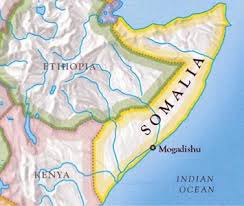
WOMEN TARGETED BY AL SHABAAB IN SOMALIA

Who ordered the march back to the middle ages anyway?


The following is from Shabelle Media Network


Somalia: Al Shabaab Imposes Strict Orders On Women
2 January 2011


Mogadishu — Fighters loyal to Al shabaab, which declared its allegiance to Al Qaeda, have imposed strict orders on Somali women in Afgoye corridor, where hundreds of thousands displaced by Mogadishu's protracted violence live, witnesses said on Sunday.

A witness woman, who spoke on condition of anonymity, told Shabelle the women were ordered to put on good veil that can cover all their bodies even when they are in homes, adding that every one is seen violating that order would be punished.

Early Sunday morning, pick-ups mounted with big speakers could been seen in the villages KM 13, Siinka Dheer, Elasha, Lafole and Arbska where a lot Somali displaced people resorted to lead.

Residents expressed a deep anxiety about the strict rules the Islamic group ordered villagers to put into practice.

Women are also ordered to not come out from their houses without an adult male who can take their responsibility.

IT'S TIME TO LISTEN TO WHAT THE RIVERS OF IOWA HAVE TO SAY

 THE rivers of Iowa have had enough of humankind and they are warning Iowans to get the hell out of the way. More dams are hardly the answer to Iowa's "problems." More dams are part of the problem. 


imgres.jpg

Meanwhile, the Army Corps of Engineers buries its head in the sand.


From the Des Moines Register.

River rage: Why Iowa's flood risk is rising 


BY PERRY BEEMAN • PBEEMAN@DMREG.COM • JANUARY 2, 2011
Changes in Iowa's weather patterns, landscape, cities and farms have rendered some of the state's most trusted flood prevention safeguards outmoded and inadequate, a review by The Des Moines Register shows.

That includes the state's system of dams - including Saylorville upstream from Des Moines - which were designed to meet climate conditions and a lay of the land that some scientists say haven't existed for decades.

That leaves Iowans, their homes and their businesses increasingly at risk for the sort of devastating floods that ravaged the state in 1993, 2008 and again last year, causing damage in the billions of dollars.

• Iowa's rivers and streams are running harder and faster. While the flow varies, the increases in some places are staggering. The Des Moines river is running 137 percent harder at Fort Dodge now than in 1951, according to a Des Moines Water Works analysis. Flow along the North Raccoon is up 60 percent. The projected increases in rainfall by 2040 would boost streamflows by 50 percent, ISU found.To find out why that's happening and what might be done to better predict and prevent future floods, the Register examined climate records, stream data, flood forecasts, weather modeling and dam operations and interviewed scientists wrestling to answer those same questions.

Among the Register's key findings:

• Iowa's rainfall has increased gradually over the past century, and has come more frequently in deluges. According to one analysis, rainfall has increased since 1951 along the Des Moines and Raccoon rivers by 15 to 20 percent. Iowa State University climate researchers expect the trend to continue, forecasting another 21 percent jump in annual rainfall by 2040, a function of global warming.

• Man-made changes to Iowa's landscape also contribute to increased flows and higher flood risk. In rural areas, improved drainage systems divert more water to rivers and streams, and much of the wheat and oats that once slowed runoff are gone. In urban areas, sprawl and large expanses of pavement produce the same effect.
• Computer models used to predict floods and control Iowa's system of dams do not account for the changes. That makes threats such as the double-cresting flood that surprised Cedar Rapids in 2008 and devastated its downtown easier to miss.

• The state's four reservoir dams - which protect the state's largest population centers - were not designed in anticipation of the changing conditions, documents show. Consider the Saylorville Dam near Des Moines. Assumptions in place during initial design work in 1946 led to the dam's design.
Engineers calculated a 14 percent chance that water would top Saylorville's emergency spillway four or more times during the dam's first 50 years. That's already happened six times in the 33 years since the reservoir opened, most recently in July.

Ron Fournier, a spokesman for the U.S. Army Corps of Engineers, which operates Saylorville and the state's other reservoir dams, said the dam was built to withstand what modelers consider to be the maximum possible flood. While the emergency spillway has been topped more often than expected, he said it is highly unlikely the dam itself would ever be topped.
Still, the Corps of Engineers is seeking money to pay for a new study to determine whether the four reservoir dams should alter operations.

David Miller, Iowa's homeland security director, is among those who wonder whether Iowa's system of 3,800 dams, some of which are substandard, are up to the task of handling the pressures posed by a wetter climate and angrier rivers.

"Some of the old models - no pun intended - don't hold water anymore," he said. "Is it time - because of the changing environment, knowing that the old science was used to build the dams - to give them another look? We think it probably is.


"More rain, intensity create new set of risks
Army Corps hydrologists are not convinced that climate change - or anything else - has permanently changed the natural variation in rainfall patterns, said Fournier, the agency's spokesman.

But Gene Takle, an atmospheric scientist at Iowa State University who models climate change, disagrees. While rainfall can vary widely from year to year, the trend in Iowa toward wetter weather is clear, he said.
Not only is the state getting more precipitation than it did just 60 years ago, according to annual rainfall records studied by Takle, it is getting more intense rains.

In Cedar Rapids, for example, there's been a five-fold increase in the number of times that more than 1.25 inches of precipitation have fallen eight or more days annually. That's important, because such rains are not absorbed by Iowa soil and result in significant runoff to rivers and streams.
Perhaps more troubling for flood-fighters: Most of the rain is falling in the first six months of the year, when spring floods loom.

In eastern Iowa, where a dam breach last year drained Lake Delhi, the average annual rainfall has risen at a greater clip than the rest of the state.

Takle said ISU researchers believe increased precipitation forecasted to occur by the 2040s could result in 50 percent more flow in the Upper Mississippi River system.
"The average flows are way bigger than what they have been, and everyone knows that," said Chris Jones, a Des Moines Water Works researcher who has analyzed river flow trends.

Iowa's rivers and streams are also carrying more water later into the summer, extending the potential for flood risk well beyond the usual wet spring months.

The Des Moines River, for example, was measured at 20 times its normal flow in August, when dry conditions have historically prevailed. The Des Moines tripled its previous record flow on Aug. 9. The Raccoon River at Fleur Drive also set a record that day, seven times the record set in 1998.
The rivers remained in their banks, but with far less cushion against floods than would be expected so late in the year.


Changing land uses speed water runoff

Scientists believe Iowa's swollen rivers and streams are not simply the result of more rain.

"We know it's raining more. We know stream flows are up. We know Mother Nature is doing something," said state geologist Bob Libra. "Does that account for what we are seeing? The increase is beyond what it would be for just precipitation."
Part of the answer lies in Iowa's changing landscape, according to Libra and others.

Prairie grasses, oats and hay that might have temporarily held back charging water from streams have largely disappeared.

When the Saylorville Dam was completed in 1977, Iowa farmers grew 1.4 million acres of oats. Last year, they grew 95,000. In the same period, wheat acres fell from 109,000 to 22,000.

Taking their places are more row crops such as corn and soybeans, which are not nearly as efficient at slowing runoff.
Also, grasses and woodlands that once were part of the Conservation Reserve Program have been turned into cornfields as the demand for corn-based ethanol has risen. Iowa has lost enough natural lands over the past 30 years to cover an 8-mile-wide strip stretching from Council Bluffs to Davenport.

Another factor: the drainage systems, known as tiling, that drain excess water from farm fields to streams and rivers. No one keeps data on field tiles, but Dan Lemke of the Iowa Department of Agriculture and Land Stewardship estimates that about 40 percent of the state's 23 million acres of cropland has subsurface drainage.
"We don't believe there are more acres being drained in the past 30 years," Lemke said. "There have been some improvements that moved water slightly faster."

Lemke's department wants to expand the systems to move water even faster, and use wetlands to help slow the flow into rivers and streams. Environmental groups are opposed, and contend increasing the drainage will only worsen floods downstream.

Takle, the ISU climate researcher, believes drainage tiles are likely to be an even bigger deal as rainfall increases by mid-century. A 24 percent increase in precipitation would increase tile flow by 35 percent, and a 32 percent jump would send 80 percent more water through the drainage systems.
The expanding roof lines and parking lots sprouting across Iowa's cities and suburbs also share blame for increased stream flows and flood risk.

In Des Moines alone, the area covered by pavement and other hard surfaces that promote runoff grew 17 percent between 1996 and this year, records show.

Acres of asphalt at such places as Jordan Creek Town Center in West Des Moines can make a difference to a nearby creek's flood habits, but Witold Krajewski, director of the Iowa Flood Center, says the impact is barely a blip in regional flood control models.


Outdated models do poor job of forecasting
Krajewski says the computer models used by the National Weather Service to predict floods are outdated and fail to account for changes in the state's climate and land use.

"Those models are based on fairly crude concepts of how water travels," said Krajewski, who has studied Iowa rainfall and floods for 23 years at the University of Iowa.

The result, he said, is increasingly unreliable assessments of flood risks.
A case in point was the models' failure to pick up the two-crested flood that swamped Cedar Rapids in 2008 and resulted in $5.7 billion in recovery expenses.

"Cedar Rapids was very poorly predicted," he said.

Krajewski also questions the effectiveness of a federal flood control system in which one agency - the U.S. Geological Survey - measures how fast rivers run, another - the National Weather Service - forecasts floods, and a third - the Corps of Engineers - operates dams. They often don't talk to each other enough, he contends.
Krajewski has company in searching for better forecast techniques.

"Better models are needed," said Libra, the state geologist. "The folks at the flood center are working on that. Something bad has to happen before resources are freed up to do something about it."

The National Weather Service, the Iowa Flood Center and others are working to improve and update the models.

It's important work. Beyond predicting floods, the models affect how dams are designed and operated, where homes and businesses can be built and when storm sewers are likely to overflow.
Krajewski and his colleagues at the U of I and ISU are trying to develop models that take into account runoff from big box stores and the loss of grasslands.

"The National Weather Service models don't have those sensitivities," Krajewski said. The Iowa Flood Center has been awarded an $8 million federal grant for pilot projects to study what happens on various landscapes when, say, buffer strips are planted.

"We want to figure out if we can somehow change the land use practices to mitigate this damage from flooding," Krajewski said. "We need to actually do something on the landscape to do this."
Jeff Zogg, hydrologist with the National Weather Service, said Iowa asked for funding to try new flood-forecasting techniques in 10 to 15 cities, but the Federal Emergency Management Agency turned down a grant request.

Zogg said part of the challenge is the intricate system of waterways lying underground in Iowa. It's hard for modelers to know what's down there.

Still, researchers hope new technologies will help tell their computers far more about what is on - and below - Iowa's landscape.
One of those is Lidar, a laser-based imaging method far more detailed than aerial photographs. Another is heliborne electromagnetic mapping, which reveals groundwater systems much as an MRI takes a look at a patient in a hospital.

Krajewski hopes these tools will help better protect Iowa against future floods.

"I'm optimistic. This is an experiment, but an experiment on a national scale. After the '93 flood, there were no special efforts at the state or federal levels. Now, more people are engaged."