Friday, June 01, 2007

THE DEATH OF NATIVE AMERICAN DUDLEY GEORGE LAID AT THE FEET OF CANADIAN POLICE AND GOVERNMENT OFFICIALS


Finally! After years of examining the 1995 death of native protester Dudley George at an Ontario provincial park, commissioner Sidney Linden laid blame on Thursday for the fatal shooting on the police and governments.

This doesn't mean all is well.

"What is missing is a clear commitment from the federal government and the provincial government to implement the findings," said Phil Fontaine, chief of the Assembly of First Nations.

Fontaine also said the report from the Ipperwash inquiry showed the need for Canadians to be educated about the long history of land claims "for a greater understanding and respect between our peoples."

"Canadians should understand that this is not something that we ever wished upon ourselves or brought on ourselves," Fontaine said.

Dudley George was fatally wounded by a police sniper on September 6, 1995 when the Ontario Provincial Police attacked a small group of unarmed protestors occupying Ipperwash Provincial Park.

The protest began in 1993 when Indigenous people from Stoney Point, Ontario occupied part of a military base that had been built on land appropriated from them in World War II.

Two years later roughly a dozen protestors, including elders and children, moved into the neighbouring Ipperwash Provincial Park which contained an unprotected burial ground.

Although there was little apparent threat to public safety, the police responded to the occupation of the park with violent force that left one man dead.

On September 6, 1995 more than 30 Ontario Provincial Police officers charged the protestors at Ipperwash Park. The riot squad was backed by snipers armed with submachine guns.

Cecil George, a band councillor, was badly beaten. Sixteen-year-old Nicholas Cottrelle and 38-year-old Dudley George were shot. Cecil George and Nicholas Cotrelle survived. Dudley George died that night.

The police and the Government of Ontario stated immediately after the shooting that the Indians had fired on the police and the police had returned fire. That was a lie. In response to a query by the United Nations Special Rapporteur on Extra-Judicial, Summary, or Arbitrary Executions in Geneva, the federal government repeated the misinformation about the protesters firing on police.

In its 1997 Annual Report on Human Rights, Amnesty International states that the killing of Dudley George "took place in circumstances suggestive of an extra-judicial execution"

In 1999, the United Nations Human Rights Committee called for "a thorough public inquiry...into all aspects of this matter, including the role and responsibility of public officials."

Dudley's brother Sam George said Friday, "I am asking the people of Ontario through their government to make the commitment in the next few days to return the 109 acres of what was the Ipperwash Provincial Park to full native control." This is the land at the heart of the original protest.

The investigating commission also recommended the protested land be returned to First Nations control, something Sam George said was promised in an 1827 treaty with the federal government.

"Dudley died because that promise was broken, but he passed that task to me and I am repeating his request," George said.

The commission report concluded "the most urgent priority is for the federal government to return" the land to local native bands "immediately."

Commissioner Sydney Linden stated that "Ipperwash is important because it helps us
understand the roots and dynamics of an Aboriginal occupation. The Aboriginal
occupation at Caledonia proves that Ipperwash was not an isolated event.
Understanding Ipperwash can help us to understand how to prevent Aboriginal
occupations and protests in the first place, or how to reduce the risk of
violence, if they do occur.

The following is from the Regina Post.

Shooting blamed on police, governments

FOREST, Ont. -- After years of examining the 1995 death of native protester Dudley George at an Ontario provincial park, commissioner Sidney Linden laid blame on Thursday for the fatal shooting on the police and governments.

And as Ontario's aboriginal affairs minister offered apologies, the commissioner in charge of the Ipperwash Inquiry said: "The most urgent priority is for the federal government to return" the land to local native bands "immediately."

In Ottawa, federal Indian Affairs Minister Jim Prentice pledged to fulfill Linden's recommendation. "We'll do something immediately," he told reporters following question period on Thursday.

"I've made it very clear we intend to transfer the land back to the First Nation. It has to be done in an orderly way, though, where it is safe," Prentice said, citing environmental and other concerns that need to be resolved.

Ontario Provincial Police (OPP) officer Ken Deane shot George on Sept. 6, 1995, two days after protesters occupied Ipperwash provincial park.

"There is no doubt that OPP acting Sgt. Deane shot and killed Mr. George and nothing in the inquiry challenges or undermines this conviction," Linden said Thursday. "However, acting Sgt. Dean should not have been in a position to shoot Mr. George in the first place."

Linden, whose inquiry began in 2003, said George's death occurred as result of a deadly mix of aboriginal frustration over decades of broken federal promises related to confiscated land, the provincial government's desire for a quick end to the park occupation and errors and miscommunications on the part of the OPP.

In the Ipperwash case, which is unresolved, Linden concluded Ottawa's refusal to honour its pledge to return native lands confiscated in 1942 for use as a military base meant the issue "festered for decades" as aboriginal frustration grew.

In 1995, a long-term occupation of an abandoned military base spread to neighbouring Ipperwash Provincial Park on the shores of Lake Huron, the site of a native burial ground.

"The flashpoints for aboriginal protest and occupations are very likely as intense today as they were at the time of Ipperwash," Linden said. "No one can predict where protests and occupations will occur, but the fundamental conditions and catalysts sparking such protests continue to exist in Ontario, more than a decade after Ipperwash. If the governments of Ontario and Canada want to avoid future confrontations they will have to deal with land and treaty claims effectively and fairly."

In Ottawa, Prentice noted the disputed land should have been transferred back to the Stoney Point First Nation years ago, and he apologized that previous governments failed to do it. While Linden exonerates former Ontario premier Mike Harris of allegations he interfered in police operations, he finds Harris did push for a "speedy conclusion" to the conflict.

"The premier could have urged patience rather than speed. These decisions effectively foreclosed the possibility of initiating a constructive dialogue with occupiers or others on ways to end the occupation peacefully."


Linden also concluded Harris had made racist comments, stating he wanted the "f--cking Indians out of the park" during a meeting with senior officials.

Harris denied making the remark when he testified at the inquiry.

Sam George, the brother of the slain protester, called upon Harris to apologize for his role in the protester's death. "We wonder if it might be appropriate for Mr. Harris at this time to apologize to my family," George told reporters.

Peter Downard, a lawyer representing Harris, said the commissioner's report made it clear "that no apology is required." Harris "didn't do anything wrong to effect the death of Dudley George," the lawyer said.

© The Leader-Post (Regina) 2007

TAKE A BREATH, CONDI


In the typical fashion of this bully regime, no sooner does Condolezza Rice arrive in Spain does she criticize the Spanish government for its relationship with Cuba.

Rice also targeted Spain for not doing more in Afghanistan, where it has up to 690 troops at any one time.

"I would like to see all of the allies do more, and Spain is included in that list," she told reporters travelling with her.

Foreign Minister Miguel Angel Moratinos defended his country's policy towards Cuba. He urged Rice to move away from isolating it and adopt Spain's approach of dealing directly with the communist island and its ailing President Fidel Castro.

"She has her reservations, as she has said. I'm sure that, after a little bit of time, she will be more convinced of the fact that the Spanish strategy brings results," he said.

Protests of Rice's visit are in the works.

Meanwhile a Spanish delegation is currently visiting jails in Cuba to speak of Human Rights. It’s the first time such a group has been granted such access.


The following is from Prensa Latina.

Madrid Streets Boil for Condoleezza

Madrid, Jun 1 (Prensa Latina) US Secretary of State Condoleezza Rice is beginning an 8-hour visit to Madrid Friday, with a protest against her interference in Spanish foreign policy as backdrop.

The demonstration, summoned by 36 social, political, trade union, intellectual, humanitarian, and friendship organizations, will be held as the visitor meets with her hosts this afternoon.

According to El Pais daily, Rice will certainly exclude issues linked to journalist Couso s killing in Iraq and the CIA secret flights.

Rice is expected to hold separate meetings with King Juan Carlos, President Jose Luis Rodriguez Zapatero, and Foreign Minister Miguel Angel Moratinos.

Afghanistan, Western Sahara, Kosovo, the Middle East, the Iranian nuclear issue and minor bilateral subjects will be included in the agenda.

Thursday, May 31, 2007

IT'S BEEN MORE THAN A YEAR FOR TREE TOP PROTEST


South Coast IndyMedia is reporting that Camp Titnore in Worthing, West Sussex,(UK) has been celebrating its first anniversary.

And as well as celebrating the achievement of the last year, it is looking ahead by calling for more people to join the occupation and for solidarity action against the businesses threatening to destroy the countryside location.

Formed in January 2002 by a group of Worthing residents concerned over plans that would destroy a unique local area, including ancient woodland. The Protect Our Woodland campaign has captured the mood of environmentalists up and down the country.

Faced with the prospect of a Greenfield site on the outskirts of Worthing being turned into a concrete jungle by road building, a new Tesco Hypermarket and a housing / commercial development, the locals decided on non violent direct action after the democratic process failed them. A treetop vigil started on Sunday, 28 May 2006 and despite a High Court order to quit, campaigners are still high up in the trees.

Titnore Woods are one of the final few remaining ancient woodlands in Sussex: one of only two surviving on the Sussex coastal plain and home to a number of protected species, including newts, bats, badgers, skylarks and corn buntings. Titnore Wood is a designated Site of Nature Conservation importance with oak, ash, birch and willow trees.

Back in the beginning of the tree top protest a spokesman for the campaign group said: "It's a huge juggernaut of property development. It's all about profit. The companies building these houses are huge and they're going to make millions and the landowner is going to make millions and I don't think local people are going to be able to afford to live there. We value green space and countryside more than money."

For more information go to
http://www.protectourwoodland.co.uk/titnore.htm

The following is from the Argus (UK).

Treetop protest is a year old today

Campaigners fighting a large housing development on the outskirts of Worthing are celebrating the end of their first year living among the trees they pledged to save.

Ben Parson spoke to the occupants of the Titnore Woods protest camp and asked how long the stalemate between the builders and the protesters can continue.

It has been a long year in the lives of the treetop protesters of Titnore Woods.

When about 30 campaigners set up camp among the trees outside Durrington, near Worthing, few predicted they would still be there 12 months later.

In that time they have fought and lost a High Court legal battle, gathered hundreds of demonstrators to march against alleged police harassment, come under shotgun fire from youths running amok in a supermarket car park and suffered a harrowing death in their midst.

But the camp's longest-serving inhabitants say their resolve is as strong as ever.

They are fighting against the planned demolition of an area of woodland to build a road to serve a major housing development.

Hollis, a 23-year-old who grew up in Worthing, was among the first to take the trees on the night of May 28 last year.

He told The Argus: "Unless they can think of some other route for the access round, we'll stay here."

The protesters oppose developers' plans for 875 new homes to be built on a 99-acre site east of Titnore Lane in the town.

Shops, sports fields, a library and community centre are all part of the proposed development, which would include 220 low-cost homes.

The West Durrington Consortium, which tabled the plans, is made up of Persimmon Homes, Bryant Homes and Heron Land Developments.

But environmentalists in Worthing formed the Protect Our Woodland group to fight the application.

They focused on the proposal to straighten Titnore Lane and build a new access road with the loss of 275 trees.

The plan attracted more than 1,000 letters of objection, complaining about everything from loss of trees to increased pollution, predicted drainage problems and the impact on animals like dormice, butterflies and bats.

Protect Our Woodland members launched the treetop sit-in last year but their ranks have been bolstered by environmental protesters from all round the country.

Since they woke up for the first time on their makeshift tree platforms exactly a year ago today, the camp has expanded and changed.

A system of rope bridges link wooden tree-houses 20 metres high, covered in plastic sheeting to keep out the elements.

They are ever ready to pull up their rope ladders or manacle themselves to tree-trunks and heavy weights should bailiffs and police arrive to force them out.

They have also constructed underground bolt-holes, creating echoes of the Newbury Bypass protests of the 1990s.

Landowner Fitzroy Somerset and his son Clem - who own 1,700 acres between Angmering and Clapham - were determined to remove the protesters when they moved in last May. The family won the right to evict them in August 2006.

But predictions the winter weather would see them off proved unfounded.

Hollis said: "I have been here on and off since day one.

"It was quite a mild winter.

"We had snow - but that was quite nice because it was an extra layer of insulation for my tree-house."

One of the most upsetting experiences was the death of David Platt, an occasional visitor to the site, who died on a sofa in the main clearing in April.

Other visitors said they thought he was asleep.

The protesters created a small memorial, with tributes and a posy of flowers tied to a tree near the spot.

Hollis said: "It definitely cast a pall over us for a while."

Many townsfolk in Worthing have given the camp their support, supplying donations through dropoff points and a town-centre stall.

They were rewarded on Saturday when the protesters handed out slices of birthday cake, celebrating the camp's anniversary to passers-by in the town centre.

The occupation itself was the climax of years of protest against the scheme.

When Worthing Borough Council gave outline planning permission to the scheme after a four-hour meeting in June 2005, 20 people were removed from the public gallery after noisy protests.

In September 2005 protesters burned effigies of John Prescott - who at that time had the final say in planning decisions - in the middle of Titnore Lane.

The council ruled in September last year that 210 of the 275 trees under threat would not be destroyed because Government advice meant Titnore Lane would not have to be straightened.

But with an access road still planned through the spot where they made their camp, the protesters vowed to fight on to save every last tree.

One 25-year-old Sussex University student who lived at the camp said: "One tree to me is just as important as 1,000 acres."

One demonstrator at a march in October agreed. She said: "We think the people protecting the woods on our behalf are doing a fantastic job.

"They're representing the heart and soul of the people of Worthing."

With the West Durrington Consortium reportedly facing a new round of planning applications after a dispute over the classification of Titnore Lane, the protesters could be at Titnore for some time yet.

And Hollis and his companions are showing no signs of going anywhere any time soon.

CHINESE DEMONSTRATORS PROTEST JAPANESE COURT RULING DENYING COMPENSATION


Demonstrators gathered outside the Japanese Embassy in Beijing on Thursday to protest a court ruling denying compensation to five Chinese forced to work as slave laborers in Hiroshima during World War II.

The Supreme Court of Japan denied compensation claims made by five Chinese wartime slave laborers back in late April, ruling that companies that utilized Chinese individuals were not obligated to provide compensation because the 1972 Joint Communique of the Government of Japan and the Government of the People's Republic of China renounced Chinese claims for war reparations from Japan. The ruling by the top court reversed a lower court ruling that awarded the five forced laborers a total of $230,300 in compensation for their suffering.

Foreign Ministry spokeswoman Jiang Yu in Beijing Thursday told a regular news conference that the impressment of laborers was a severe crime committed by the forces of Japanese militarism during their invasion of China. It is also an issue left over from history between the two countries.

Some 40,000 Chinese were taken to Japan in the early 1940s to work as slave laborers, mostly in coal mines and ports, including about 360 at the Nishimatsu company. Tens of thousands of others from Asian countries were also wartime slave laborers.

The following is from JAVNO.

Chinese Make Rare Protest at Japanese Embassy

A group of about 25 Chinese made a rare but carefully choreographed protest in front of Japan's embassy in Beijing.

A group of about 25 Chinese, including former forced labourers and at least one elderly woman forced into sex slavery, made a rare but carefully choreographed protest in front of Japan's embassy in Beijing on Thursday.
Beijing is wary of any public protests, even if the target is Japan's 1931-1945 invasion and occupation of parts of China, lest they spin out of control and turn against the Chinese government.

Chanting "the Japanese government must provide compensation" and "Japan must apologise", and carrying banners and pictures of Japanese atrocities during World War Two, the small group dispersed within about an hour.

"My leg was broken by them. I never expected that I could still be alive today. Now I am going to sue those Japanese monsters who treated me so cruelly," said Liu Qian, 86, fighting back tears.

"They seized us, took us to their military base and raped us. We were held there for 41 days. After being locked up, we could not even walk, only crawl," said Liu Mianhuan, 81, a former "comfort woman" for the Japanese military.

Police closed off the street ahead of the protest and took down the identities of foreign reporters covering the event, but allowed it to go ahead.

They also warned people queuing for visas at the Polish embassy opposite not to get involved.

A few protesters carried pictures of relatives who had been forcibly shipped to Japan to work in factories during the war, and had later died.

Some former workers who took part were so old and frail they had to be supported by younger protesters.

In 2005, a push by Japan for a permanent U.N. Security Council seat sparked sometimes violent anti-Japanese street protests in cities across China, with demonstrators stoning Japanese diplomatic buildings.

Last month Japan's top court rejected two compensation claims by Chinese who suffered at Japanese hands during World War Two.

Dozens of wartime compensation suits have been filed against the Japanese government and companies associated with its aggression in the first half of the 20th century, but almost all have been rejected by Japanese courts.

Sino-Japanese relations have been icy for much of the past half-decade, largely because of former prime minister Junichiro Koizumi's annual visits to a shrine to Japan's war dead. Beijing sees the Yasukuni Shrine as a symbol of Japan's past militarism because some convicted war criminals are honoured there.

Wednesday, May 30, 2007

JUST MALE BONDING FOR COLLEGE ATHLETES


Two female De Anza college (California) students who witnessed the rape of a 17 year-old high school student at an off-campus party in March will be joined by several national organizations Thursday in a protest demanding that District Attorney Dolores Carr reconsider her decision not to file criminal charges. Both witnesses, April Grolle and Lauren Chief Elk, told authorities that the victim was clearly incapacitated, if not virtually unconscious, at the time of the rape. Yet District Attorney Carr has disregarded this compelling testimony, along with physical evidence including that the victim's blood-alcohol content was .27 more than 24 hours after the assault.

Unless you live in the area you have probably not heard the story about the girl at the booze-sodden March house party attended by De Anza baseball players. You've not heard of the two De Anza students, April Grolle and Lauren Chief Elk, who have reported about how they found the teenager half naked on a bed and barely conscious, with vomit smeared on her face, before they took her to the hospital.

“Sexual assault in social settings is a pervasive and devastating problem in college communities where justice is often elusive with devastating consequences for victims. The DA should open her eyes to the abundance of compelling evidence in this case, including eyewitness testimony, and let a jury hear it so that this victim can get the justice she deserves,” said S. Daniel Carter, Security On Campus, Inc. in a press release from the California National Organization for Women.

“This kind of case highlights the culture around rape that keeps victims from coming forward, rapists from being prosecuted, and society from successfully eradicating violence against women,” said Mandy Benson, President of California National Organization for Women (CA NOW). “We join the call for the pursuit of justice for this young woman, and for accountability for those charged with protecting women’s safety.”

"The District Attorney’s statements have brought into question her dedication to the pursuit of justice. This is one of the few cases of gang rape in which eyewitnesses are present and a solid scientific basis exists for prosecution. In the interest of preventing the brutal act of rape across the country, the DA must reconsider her flawed decision. The perpetrators must be held accountable in order to send a direct message to our society that the accepted culture of rape and the entitled status of athletes will no longer be tolerated," said Katherine Redmond, National Coalition Against Violent Athletes.

Santa Clara County Sheriff Laurie Smith believe that some of the party boys are getting away with sexual assault , she doesn't care if they sue her for saying so. "Bring it on," she told the Mercury News last week.

"We're worried that the message this case sends to the next victim is `Why bother filing a report?'" Sandy Davis, director of the YWCA center, told a reporter for the San Jose Mercury News.

As Sue Hutchinson writes in the Mercury News the case, "...suggests there still is a perception out there that someone who's too drunk to know what planet she's on is capable of consenting to sex. It's not just some guys who don't get that this isn't true. Too many girls are clueless about it, too."

The accusations at De Anza are only the latest to involve college athletes.

Cases have been reported around the country — some prosecuted, most not. There is no way to tell if the crime is increasing because so little information is available and generally, most rapes of all types aren't reported to police at all.

Only about 5 percent of college rapes are reported, according to an analysis of rapes reported to police versus the number reported to the National Crime Victimization Survey, said Mary Koss, a professor at the University of Arizona's College of Public Health, specializing in sexual violence. Victims "think they'll get in trouble or think no one will do anything," she said.

The campus cases "are part of a culture," Katherine Redmond, founding director of the National Coalition Against Violent Athletes said, "a culture where the male athlete believes the women are there for them. It is a form of team bonding for them now."

INFORMATION ABOUT TOMORROW'S PROTEST
WHAT: De Anza Rape Protest of District Attorney Carr’s Decision Not to Prosecute

WHERE: Santa Clara District Attorney’s Office, 70 West Hedding Street, San Jose

WHEN: Thursday, May 31, 2007, 1pm

WHY: To force the District Attorney to reconsider her decision and allow a jury to decide the case. Whether a victim is incapable of consenting should not be a political decision! Also recognizing the brave women eyewitnesses who rescued the victim


The following is from the San Jose Mercury News.

Activists plan Thursday protest on De Anza case

Activists from around the country plan to descend on the Santa Clara County District Attorney's office Thursday to protest the decision to not file charges in a high-profile sexual assault investigation that involved members of the De Anza College baseball team.

"We want to make sure rape cases are being prosecuted," said National Coalition Against Violent Athletes' Katherine Redmond, who helped organize the rally. "We are tired of seeing this happen. We are tired of the culture that allows this to happen."

This is the second protest since District Attorney's Dolores Carr's May 21 announcement that she declined to filed charges in the reported March rape of a 17-year-old at a team party.

Carr's office has come under attack from members of the community who demanded she release more information about the decision and others who wanted her to go forward with charges.

Sheriff Laurie Smith told the Mercury News that someone "got away with" sexual assault the night that at least eight men, some of them baseball players, surrounded the nearly passed out teen as she lay on mattress while another man had sex with her at a party. Three women who attend De Anza College busted into the room as the alleged assault was taking place, scooped up the girl and took her to the hospital. Two of those students are expected to speak at the rally.

Carr responded to the criticism Sunday in a column published in the Mercury News. In it, she wrote that while what happened that night was horrific, witnesses gave too many conflicted statements for her office be able to prosecute the case.

Her office declined to comment on the case Wednesday.

The rally Thursday is organized by Redmond's group; the California National Organization for Women; Stop Family Violence, out of New York state; Pennsylvania-based Security on Campus; and Boston's Victim Advocacy and Research Group.

"The DA should open her eyes to the abundance of compelling evidence in this case, including eyewitness testimony, and let a jury hear it so that this victim can get the justice she deserves," Security on Campus representative S. Daniel Carter said.

THE PRICE OF SOCIAL INJUSTICE


In a country wracked by gang violence, police, and paramilitary murders, thousands have taken to the streets demanding something be done.

Earlier this month Amnesty International said the government's inability to provide security has transformed Brazil's largest cities into a "patchwork of violent fiefdoms" controlled by drug gangs and paramilitary militias.

Amnesty said negligence has left poor Brazilians in the crossfire between police and criminals - the victims of stray bullets, police curfews and extortion by militias and drug traffickers.

"Rio de Janeiro and Sao Paulo have reached a tragic impasse. Criminal gangs ... have rushed to fill the vacuum left by the state, Balkanizing the cities into a patchwork of violent fiefdoms."

Experts say the main culprit is the huge gap between rich and poor. Brazil ranks 10th among countries with the worst income distribution, according to the 2006 UN Development Report.

"Violence is the price Brazil pays for social injustice," said Jayme Benvenuto, coordinator of the human rights group Gajop in Recife.

In Recife, underpaid and corrupt police officers cause as much violence as they repress, experts say.

"Policemen do bank robberies and kidnappings, either they take a cut or do it themselves," said a former police officer, who asked to remain anonymous. "When someone doesn't pay, they take him out."

Police and crime are so entwined that authorities often couldn't tackle crime if they wanted to.

The following little bit of news is from EFE.

Brazilians protest murder epidemic

Brasilia, May 30 (EFE).- An organization on Wednesday here staged an emotional protest against violence and displayed on a central capital avenue 15,000 white handkerchiefs, one for every death registered in Brazil since last January.

The demonstration was organized by the Rio de Paz group, which was founded in Rio de Janeiro, the city that has suffered most this year from the growing wave of violence that has turned that tourist center into a battleground complete with continuous deadly clashes between police and criminals.

SHOE WORKERS KICK SOME BUTT


When was the last time you gave any thought to shoe workers? Well, in southern France shoe workers took action to force their bosses to think about them. The workers were concerned about the loss of their jobs. Who can blame them?

The truth is like all workers those in the shoe industry have plenty to worry about. For example, a study done in the US by the National Institute for Occupational Safety and Health found that shoe workers here found an excess of lung cancer, bronchitis and emphysema.

As the shoe industry moved overseas working conditions were documented as from awful to horrendous. A Russian study for example found "...poor working factors of present-day industry to include high intensity of labour, monotonicity, forced posture, constant wide-range noise, fumes of organic solvents, dust of organic origin, etc." In addition, "There were prevalent acute respiratory diseases, influenza, osteomuscular and connective tissue, hypertensive and ENT diseases in the pattern of mortality with temporary disability. Comprehensive medical examinations revealed high incidence of ENT diseases due to exposure to chemical agents and organic dust."

In Vietnam Corporation Watch reports:

In an inspection report that was prepared in January for the company's internal use only, Ernst & Young wrote that workers at the factory near Ho Chi Minh City were exposed to carcinogens that exceeded local legal standards by 177 times in parts of the plant and that 77 percent of the employees suffered from respiratory problems.

The report also said that employees at the site, which is owned and operated by a Korean subcontractor, were forced to work 65 hours a week, far more than Vietnamese law allows, for $10 a week.


Anyway, I say good luck to these French workers. Maybe they ought to threaten to hold the bosses captive at their plant while they work.

The following comes to us from the Tocqueville Connection.


FRENCH WORKERS LOCK UP MANAGERS OVER RELOCATION PLANS

SAINT HIPPOLYTE DU FORT, France, May 30, 2007 - Shoe factory workers in southern France took four senior managers captive on Wednesday after the firm announced plans to relocate its production to Tunisia.

Managers of Jallatte, Europe's leading manufacturer of safety shoes, told workers early Wednesday they intended to cut 285 out of 336 jobs across its four French production sites.

Furious at the news, union leaders and workers burst into a meeting in the southern town of Saint Hippolyte du Fort, attended by four top executives, including Giovanni Falco, managing director of the company's Italian owner JAL.

The managers were held captive for several hours, until Falco agreed to push back by three weeks a June 6 meeting intended to kickstart the restructuring plan.

Falco was to take part in a round table meeting later with workers and local officials to consider ways of keeping manufacturing jobs in the Gard region, which has been hit by a string of high-profile relocations in recent months, including the stocking maker Well.

The protesting workers had called on President Nicolas Sarkozy to fulfil a campaign pledge to stop French manufacturing from shifting abroad.

Founded in 1947 as a rubber boot manufacturer, Jallatte now produces 1.2 million pairs of safety shoes a year.

HUGO CHAVEZ AND THE RCTV BROUHA


Update: Prensa Latina is reporting that after new calls by Venezuelan authorities to avoid violence in demonstrations, Caracas woke up Wednesday in total calm, with no reports of street disturbances.


Tranquillity prevailed at 10:00 local time today, after three days of protests, especially by students from private universities, against the governmental decision not to renew the license for the private RCTV channel..


Now moving in to the real post here:


While everything in the article below may very well be a fact, I still feel Hugo Chavez's actions in regard to RCTV is a big mistake and wrong. I trust the people of Venezuela to be able to tell fact from fiction, truth from lies. (and indeed they have) without the government shutting down a blatantly opposition TV operation, even one that helped in a coup attempt against him. Having taken the action of non renewal of the stations license only gives strength to the arguments of those who oppose Chavez and the popular government of Venezuela.

It is also true, however, that our own media has totally covered up the nature of the TV station (and others) in question and the very real role they played in attempting to violently overthrow the democratically elected government of Venezuela. It is hard to imagine that anyone can on moral or legal grounds criticize not renewing a broadcasting license for a station that had promoted a coup?

My main opposition is on political grounds. It simply didn't need to be done.

The following article comes VenezuelAnalysis.com

Venezuela, RCTV, And Media Freedom: Just The Facts, Please
By: James Jordan

Lessons In Curtailing Media Freedom

There are a number of ways to curtail press freedom. You can charge a journalist with murder and put him on death row-Mumia Abu-Jamal, for instance. You can grant special favors, privileges, and access to corporate media giants while raiding and shutting down low-power, independent radio stations, which the FCC does with some regularity. You could arrest independent journalists at anti-war demonstrations-again, a regular occurrence. For instance, I recall my friend and Indy journalist, Jeff Imig, who has been repeatedly threatened with arrest, while recording anti-war demonstrations in Tucson, Arizona, for violating the statute against filming federal buildings. Jeff finally got arrested-for jaywalking! Corporate press, on the other hand, seems to have free reign to jaywalk and film federal buildings at these same events-behavior I and countless others have witnessed!

And then there is the Mother of All Media Manipulations: the blackout engineered by the Bush administration which blocks media from showing the arrival of body bags and coffins of newly dead soldiers "coming home" from Iraq.

Those are some pretty good ways of curtailing freedom of speech. And they're each and everyone home grown right here in the good ol' United States of America.

So what's the deal with Venezuela, anyway?

So, pardon me if I'm just a little astounded by all this noise in the media, the Bush administration, the Senate and the House, about how Venezuela is "attacking" free speech and independent media by not renewing the broadcasting license of RCTV. Perhaps even more disturbing is that this ridiculous assertion is being repeated even among some persons on the Left.

Just last week the Senate passed a condemnation of Venezuelan President Hugo Chavez' refusal to renew the license. Senate Resolution 211 was sponsored by Richard Lugar, (R-IN) and Christopher Dodd (D-CT), with vocal, and disappointing, support from presidential contenders Hillary Clinton (D-NY) and Barak Obama (D-IL). Rep. Jerry Weller (R-IL) has introduced similar legislation into the House. Puerto Rico's delegate to the House, Republican Luis Fortuno has outspokenly supported this legislation, which is surprising, considering his complete lack of action or outcry when the FBI was harassing Puerto Rican journalists in 2006.

Anyway, who says bipartisanship is dead?

Joining in these condemnations are a whole host of so-called "press freedom" advocates, lead by the National Endowment for Democracy funded Reporters Without Borders. One would think that the iron hand has fallen and the crackdown has begun in Venezuela.

The facts, please?

Corporate media seems to regularly forget that along with freedom of press is the responsibility of presenting facts to back up their news reporting. Well, dear reader, you are in for a rare treat-a discussion of some actual facts.

The general situation is this: In April of 2002, there was a two-day, illegal coup carried out against Venezuela's electoral government, which involved the kidnapping and jailing of President Hugo Chavez. There were four major media outlets, along with others, who actively aided and abetted this coup (more later). In the intervening five years, none of them were closed, nor were any of their journalists incarcerated. Rather, the Chavez administration met with them, not to change their editorial slant, but to reach agreements preventing a repeat of such anti-democratic measure and the hyperbolic misrepresentation of facts, and also to discourage such continued infractions as the airing of pornography and cigarette commercials.

Another important fact is that the heads of the media-monopoly in Venezuela, including Marcel Granier -owner of RCTV, also participated in the economic sabotage that occurred between 2002-2003. Yet, no one went to prison for endangering the country's social and economic stability.

What is truly amazing is that it has taken five years for the Chavez administration to take action in any way against media that helped carry out this coup. Certainly, if the same thing happened in the United States, it wouldn't be tolerated. Just ask Aaron Burr or Timothy McVeigh what happens when folks plot against the existing, elected government. The fact is.you don't get away with it, you get punished, and pretty severely. Getting their broadcasting licenses renewed would be the least of their problems.

When RCTV's broadcasting license came up for review, Pres. Chavez decided, after exhaustive research and study, not to renew the license. Chavez is legally responsible for renewing such licenses under laws which were enacted before he became president. The reasons given for not renewing the license cite RCTV's participation in the coup, plus the fact that RCTV leads Venezuelan media in infractions of communications laws. RCTV's problems pre-date the Chavez administration, having been censured and closed repeatedly in previous presidential administrations. RCTV leads Venezuela in its violation of communications codes, with 652 infractions.

Another interesting fact is that our corporate media and distinguished Members of Congress have neglected to mention that on April of 2007 the government of Peru did not renew the broadcasting licenses of two TV stations and three radio stations for breaking their Radio and Television laws. It is obvious that Venezuela continues to be a target.

What, then, are the facts behind the charges made by the Chavez administration?

On the morning of April 11th, 2002, the first day of the coup, the anti-Bolivarian opposition had started a march from the headquarters of the state owned oil company. Across town, supporters of the Bolivarian Revolution were gathered outside the presidential palace. Breaking with its previously announced plan, the opposition changed directions and headed to the presidential palace, greatly increasing the chances of a violent confrontation between the two opposing sides.

During the midst of this confusion, shots rang out from the rooftops, where snipers were firing on both crowds, resulting in the deaths of 18 persons, with 150 wounded. Reports on the opposition's four largest TV stations indicated the violence was the result of pro-Bolivarian gunmen, and this became the immediate catalyst "justifying" the coup.

However, the testimony of eyewitnesses and videos taken from other angles show that a much different scenario was actually taking place. The following transcript is excerpted from the video documentary, The Revolution Will Not Be Televised, which was produced for television in Ireland. It sheds important light on the sequence of events. Note particularly the quotation included from RCTV News Correspondent, Andre Cesara.

NARRATOR: The opposition march was fast approaching and some in the vanguard seemed ready for a fight. With thousands of Chavez supporters still surrounding the palace a confrontation seemed imminent. Then at about 2:00 p.m., we saw the opposition march arrive. The army tried to act as a buffer between the two groups. [shouting]

NARRATOR: We moved back into the heart of the Chavez crowds when all of a sudden the firing started. [sirens]

NARRATOR: We couldn't tell where the shots were coming from, but people were being hit in the head. [gunshots]

NARRATOR: Soon it became clear that we were being shot at by snipers. One in four Venezuelans carry hand guns and soon some of the Chavez supporters began to shoot back in the direction the sniper fire seemed to be coming from.

WITNESS (in Spanish): One of the channels had a camera opposite the palace that captured images of people shooting from the bridge. It looks like they are shooting at the opposition march below, but you can see them, they themselves are ducking. They are clearly being shot at, but the shots of them ducking were never shown. The Chavez supporters were blamed. The images were manipulated and shown over and over again to say that Chavez supporters had assassinated innocent marchers.

ANDRE CESARA, RCTV journalist (in Spanish): Look at that Chavez supporter. Look at him empty his gun. That Chavez supporter has just fired on the unarmed peaceful protesters below.

NARRATOR: What the TV stations didn't broadcast was this camera angle which clearly shows the streets below were empty. The opposition march had never taken that route. With this manipulation, the deaths could now be blamed on Chavez.

There is no doubt, and no dispute, that RCTV and the three other largest corporate television stations (Globovision, Venevision, and Televen) aided and abetted the ensuing coup throughout the three day period it was being carried out. They knowingly broadcast false and manipulated information, including the lies that Bolivarian supporters instigated violence against demonstrators, and that Pres. Chavez, as a result, had willingly resigned and left the country. Pres. Chavez had not resigned. He had been kidnapped and was being held prisoner by traitors within the Venezuelan military.

During all this, RCTV hosted coup plotters, including co-leader Carlos Ortega of the corrupt and US government supported labor union, the CTV, and had broadcast Ortega's appeal rallying demonstrators to march on the presidential palace.

RCTV and its partners undertook a complete blackout on reporting any news relating to the more than a million citizens who had taken to the street and surrounded the presidential palace in defense of the democratically elected government of Venezuela. Rather than broadcasting this news, RCTV treated its viewers to reruns of Tom and Jerry cartoons and the movie Pretty Woman. Vice-Admiral Ramirez Perez spoke for all his fellow coup plotters when told a Venevision reporter, "We had a deadly weapon: the media. And now that I have the opportunity, let me congratulate you." His congratulations were premature, however, as multitudes of people in the street, with the aid of truly independent, community based media and patriots within the Venezuelan military were able to defeat this coup without firing a shot, returning Pres. Chavez to his rightful office on April 13, 2002.

On the Job at RCTV-Eyewitness, Andres Izarra Speaks

If any doubts remain as to RCTV's complicity in this coup, the voice of one of its own producers should lay them all to rest. Andres Izarra had worked as the assignment editor in charge of Latin America for CNN before being hired by RCTV as news production manager for Venezuela's highest ranked newscast, El Observador. Izarra says, quite clearly, "We were told no pro-Chavez material was to be screened". Later, RCTV officials would maintain that they could not film pro-Bolivarian demonstrations for security reasons. Even if that were true, Izarra notes, footage of these demonstrations was available from sources such as CNN. RCTV also continued broadcasting reports that President Chavez had willfully resigned and left the country, even though Izarra notes that they were receiving news to the contrary, and that Mexico, Argentina, and France had all issued statements condemning the coup and refusing to recognize the new government. Conversely, the United States welcomed this illegal government.

Izarra says the last straw came for him when, "We had a reporter in Miraflores and knew that it had been retaken by the Chavistas.[but] the information blackout stood. That's when it was enough for me, and I decided to leave". Asked what he thought the response should be to this level of disinformation, Izarra replied, "I think their licenses should be revoked". Having had enough of corporate media's complicity in blocking news reportage, Izarra now serves as head of Telesur, the joint news channel broadcast by the nations of Venezuela, Argentina, Bolivia, and Cuba.

As Patrick McElwee, of Just Foreign Policy, points out: "It is frankly amazing that this company has been allowed to broadcast for 5 years after the coup, and that the Chavez government waited until its license expired to end its use of the public airwaves." Despite their participation in the coup, the Chavez administration entered into repeated negotiations with RCTV and its partners, Venevision, Globovision, and Television to make sure that such crass manipulation of the news would not occur again, and about other infractions. RCTV refused to reach any agreements.

Despite the nonrenewal of its broadcasting license, cable and satellite broadcasts will still be available to RCTV; moreover they will continue to broadcast through their two radio stations in Venezuela. The new broadcasting license is being given to a public station, TVes-Venezuela Social Television, which will run shows produced mainly by independent parties. The station will be controlled not by the government, but by a foundation of community members, with one chair reserved for a government representative. TVes also hopes to reach into some of the most remote areas of the nation, not covered before by RCTV.

The coup government and media freedom-an alternative?

There is, indeed, an example that shows a real alternative to how Pres. Chavez and the Bolivarian movement deals with freedom of the media and freedom of speech. The two-day coup government of Pedro Carmona revealed that alternative.

But, first, let's quickly review the general state of media freedom in Venezuela under the presidency of Hugo Chavez. Shortly after Chavez became president, media law was reformed so that it became legal for anyone who could broadcast to do so. In the United States, many fans of underground and independent radio speak fondly of "pirate" radio-low powered, but illegal stations broadcast from small, "renegade" transmitters. There are no "pirate" radio stations in Venezuela, because such stations are legal. Rather, there is a significant Community Media movement-community based and non-profit media production centers run locally by community volunteers.

Corporate and opposition media also have great freedom in Venezuela. In fact, the radio and television airwaves, and the print media as well, continue to be dominated by corporations which support the opposition. There is no shortage of negative opinions and portrayals of Chavez and the Bolivarian Revolution-in fact, these remain the standard among the for-profit news and entertainment industry. This concept is strange to those of us in the United States, where official party lines and major news sources are virtually indistinguishable from each other.

But while corporate and community media both retain enormous freedoms in Venezuela, the April 11-13th, 2002 coup, and the two day coup government, provide a much different example. Once interloper Pedro Carmona had declared himself President of Venezuela, among the very first actions taken by the coup government involved the suppression of Venezuela's non-corporate media. Police troops answering to Carmona raided and shut down Channel 8, the government TV station. They ordered the Catholic Church's Radio Fe y Alegria to play only music and not report national events, lest they also be shut down. Carmona's raiders also hit a number of Community Media centers, closing down, among others, TV Caricua, Catia TV, and Radio Perola. Fortunately, reporters from Catia TV and Radio Perola were able to escape and recapture their transmitters. Because of this, they were able to provide mobile broadcasts to the people of Venezuela of the news that RCTV and its partners were blacking out.

Another action taken by the Carmona government was to release the persons who had been arrested in connection with the sniper attacks that instigated the coup. Instead, coup forces arrested independent journalist Nicolas Rivera and accused him of participating in these attacks. The only weapon Rivera had had with him during these demonstrations was a tape recorder-obviously considered a threat by coup plotters. Rivera was freed after the two-day coup was defeated and democratic government was reestablished. However, the scars of his detention remained, with his face disfigured by the torture he had endured while incarcerated. Rivera's wife said that the forces that raided their home planted a sack of bullets on Rivera, beat both of them, and threatened to kill their children. Yet despite these attacks and threats to this journalist and his family, not one, single international organization in "defense" of press freedoms spoke out on behalf of Rivera. Perhaps it was in this case that Reporters Without Borders found its border.

Also silent about these attacks on freedom of speech and press were both houses of the US Congress, both parties, the Bush administration..no, there was no resolution of any kind condemning the attacks by the coup government on these freedoms. Could that be because coup leaders were funded by Congress, via USAID and the so-called National Endowment for Democracy, and were aided, abetted, and advised by the Bush Administration, the State Department, and the US military? Just maybe these factors were an influence.

Again: the Facts

While Representatives and Senators weep bipartisan crocodile tears about supposed threats to media rights in Venezuela; while US and Venezuelan corporate press crow about the "unfair" targeting of RCTV; while even some segments of the US Left express "concern" about press freedoms in Venezuela; an examination of the facts leads one to this clear conclusion: these folks are full of a substance that emanates from the hind end of a male bovine.

Fact: not renewing the broadcasting license of coup plotters, lawbreakers, and liars like RCTV is the kind of thing it takes to defend Venezuela and make it the haven of free speech, free media, and participatory democracy that it is today.

Want to learn more about the movement to change US policy toward Venezuela?
Visit www.vensolidarity.org and be sure and join the Emergency Response

Tuesday, May 29, 2007

WE NEED THE BLACK LIBERATION MOVEMENT


Before virtually every progressive political upheaval in US history there was first a profound movement in the African American community. Where is that movement today? I'm a white guy so I don't presume to know the answer to that question or to launch some long spiel about what I think needs to be done. I just know something is missing.

So here is a short spiel.

Today it seems the only black leaders we, at least hear about, are either some fading reverends, or business and professional persons (and in fact the reverends usually also turn out to be businessmen themselves).

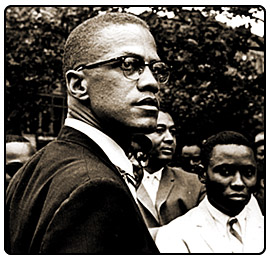
Since the murders of Martin Luther King, and the even more systematic planned destruction of the Black Power and Black liberation movements as represented by the likes of Malcolm X, Roger Williams, Deacons for Defense, SNCC, Dodge/Detroit Revolutionary Union Movement, and, of course, the original Black Panther Party, it has been the sad misfortune that a few mostly show boats generally completely unrepresentative of the Black working class, let alone the poor and unemployed underclasses or youth, has dominated the scene. Mostly they skip here and there for some photo ops, a little electoral politics, and a whole lot of usually worthless meetings. Seldom, if ever, do they risk all and challenge true societal power, and never do they actually attempt to organize within their communities for truly revolutionary changes in the way the system itself actually operates.

Why not? Because that would in actuality be detrimental to their own personal interests. That's why not.

I don't really claim to know, again as a white guy, how real leadership of the type that helped to spearhead the freedom movement, the civil rights movement, the Black Liberation movement can develop or whether leaders are even needed (as it so often seems that most leaders tend to get in the way of the "rank and file"). What I do know is that we all need a vital progressive, even as we used to openly say "revolutionary," movement of African Americans. We need it bad.


Okay, now while I print the article below because I feel it touches upon the questions I raise above, I have to tell you right off that the problem I have with it, the main problem anyway, is that the author while quite concerned with the leadership today seems perhaps without knowing it to be still pointing to a leadership born amongst professionals (notice his emphasis on lawyers, for example). I think true "leaders" are born from and of those they are devoting their lives to advance. They rise to the level of leadership (whatever that may be) through the demonstration of their total commitment to the liberation of their people and to their movement.

Furthermore, most of the issues and demands raised by the author below are still merely reforms of the present system. We need radical change.

The following is from Black Agenda Report.

Black Leadership: Unable or Willing to Address Black Mass Incarceration
BAR managing editor Bruce Dixon

America’s undeclared but universal policies of racially selective policing, prosecution and mass incarceration of its Black citizens have imposed unprecedented strains on the social and economic viability of Black families and communities – of the entire African American polity. This malevolent social policy demands a political response from Black leadership, just as Jim Crow and lynching did in our grandparents’ and great-grandparents’ day. Why is the current crop of Black leaders unable to rise to the crisis of this generation – the fact of racially selective mass incarceration? And if they did, what would such a response look like?

The dismal stats are familiar to us all. America leads the world in numbers of prisons and prisoners, and African Americans, though only one eighth of its population, make up nearly half the locked down. One out of three black men in their twenties are out on bail, probation, court supervision, community service or parole - or behind bars. And the fastest growing demographic of the incarcerated, aside from immigration prisoners, are black women.

America's malevolent social policy of racially selective mass incarceration is so ubiquitous, so thoroughly part of its statutes, courts, its law enforcement apparatus and traditions that it's hard to believe it was enacted in a single generation, since the ending, about 1970 of the black Freedom Movement. But as late as the 1960s whites, not blacks, were the majority of the nation's prisoners. Since 1970 the U.S. prison population has multiplied about sevenfold, with neither a causative or accompanying increase in crime, and without a public perception that we are somehow seven times safer.

The present level of mass incarceration and its deleterious effects for decades to come upon the black work force, on economic and health outcomes, on culture and family formation are facts of African American life that seem to demand a political response, a concerted and long-term effort to change these awful public policies, much like that called forth by lynching and legal segregation. But what passes for today's African American leadership is simply not up to the challenge.

It doesn't take a social scientist, let alone a rocket scientist to spot some key differences between black leadership fifty and sixty years ago and the current crop of supposed African American leaders.

Throughout the 1930s, 40s and 50s, being identified as an active member of the NAACP in the South could cost your livelihood and home, your freedom, even your life. Many whose names nobody remembers served, and quite a few paid that price.

Today's NAACP officials, like their counterparts in corporate America, fly and dine first class --- they hobnob with celebrities and CEOs, and they depend on Disney, Chrysler, Bank of America and Fox TV to broadcast its annual Image Awards, which are handed out to other celebrities and black officials of whichever administration is in power.. The NAACP has in the recent past even chosen its CEO from the ranks of black execs at telecommunications corporations that digitally redline African American neighborhoods.

A significant portion of the black leadership in those days was responsible to black communities alone. They crafted political responses to the public policy crises of that era which they pursued both inside and outside America's legal system, responses aimed at changing public policies that harmed African American communities. Attorneys Charles Hamilton Houston and Thurgood Marshall crisscrossed the continent defending black prisoners on death row and filing cases to overturn legal segregation. It was due to years of these efforts that Thurgood Marshall, in the 1940s became known as "Mr. Civil Rights".

By contrast, a current black elected official like Atlanta's Kasim Reed, whose legal practice consists of defending corporate employers from civil rights and discrimination lawsuits represents himself with a straight face as a "civil rights lawyer". Presidential candidate Barack Obama too, is widely credited with being a "civil rights lawyer" too, despite having tried few or no significant civil rights cases in any court of law.

And of course our parents' and grandparents' generation did not confine their challenges to Jim Crow to the boundaries of the law. Visionaries like James Foreman, Kwame Toure, Ella Baker, Diane Nash, E.B. Nixon and Martin Luther King crafted strategies around mass mobilizations in African American communities, and deliberately, creatively violated the law in order to change the nation's misguided public policies. It was common practice, for instance, in towns and cities where the 1960s Freedom Movement was in high gear, to turn out a city's colleges and high schools for days on end.

Can you imagine the black leadership in your town even talking to high school students, let alone calling them out in the street to accomplish a change in public policy? Can you envision today's celebrity and business-oriented black leadership trying to mobilize black America for anything more radical than watching their TV shows, buying their books, or volunteering and voting in their campaigns for political office. It is hard to construct a scenario in which today's black leaders might be induced to stand up to the crime control industry, to become persistent, forceful advocates of revolutionary reforms which can appeal broadly to the African American community like


sunsetting all two and three strikes laws, and ending indeterminate sentencing

ending the trial and sentencing of children as adults

requiring an ethnic impact statement before the passage of any new sentencing legislation

unconditional restoration of voting rights for all persons who have served their sentences.

restoration of Pell Grants and student financial aid to persons convicted of felonies


Though many of the visionary leaders of that earlier generation were young people it would be a mistake to compare today's youth unfavorably to them. Young would-be movement activists in the 1940s, the 50s, all the way till the early 1970s had at least one key advantage today's aspiring young movement activists do not. They had black news, written in black newspapers. They had black news broadcast on black radio, and with these, this by itself created what media sociologists call a "public sphere", a space in which we could bring our individual and family crises and situations and compare them with those of others, and speculate on the nature of collective efforts to solve what would otherwise be individual problems.

Corporate media has, in the ensuing decades, privatized and commercialized what used to be public space, by virtually eliminating broadcast news on black radio. The black print press confines most of its "reporting" to government and celebrity press releases. Black TV is worse than useless. Activists in earlier eras could find out about each others' affairs on black radio and in the black press. Now that space is reserved only for commercial "entertainment"..

Radical shifts in public policy have never arisen from the pronouncements of public officials, bankers and celebrities. They don't come from the good will of real estate and marketing professionals, or from enlightened decisions on the bench or sermons in the pulpit. They come from widespread discussion and exchange in the public sphere. They come from mass movements which exists outside of and sometimes in spite of the law, and which are able to capture the risk-taking energy and spirit of youth.

Whenever we DO see the beginnings of a mass movement to challenge our nation's misguided policy of black mass incarceration, one that unites our young and our old, our churches and our unions and the people on our street corners it won't be led by the folks we think of as black leaders today. And until the policy of mass incarceration is transformed into an explicitly political issue and directly challenged, black youth have little reason to listen to those leaders.

Black leadership has yet to rise to the challenge of the current generation of black youth-- ending our nation's public policy of mass imprisonment. And until they do, there will be no resumption of a mass movement, and little or no real progress.

OPERATION FIRST CASUALTY


In an effort to illuminate the true reality of the conflict in Iraq, members of Iraq Veterans Against the War (IVAW) engaged in a series OF street theater actions around the New York City area on Sunday, May 27. Veterans of the conflict in Iraq played the part of American service members – with reenactments that highlighted various aspects of life in combat in Iraq. Local activist volunteers acted as civilians in the realistic portrayals of actual interactions between U.S. troops and Iraqi civilians.

One of the vets said conventional methods of getting their message out have not succeeded. They hope Operation First Casualty will break through. The name recalls the adage that truth is the first casualty in war.

"We believe that this is bringing the truth of the war here, the reality of the war here," said Demond Mullins, 25, of Brooklyn, New York, who served in Iraq as an infantryman with the Army National Guard in 2004 and 2005. "We should be ever mindful of the troops who are giving their lives, and we should be ever mindful of the dishonesty, the absence of truth that has caused us to engage in this war."

Thomas Brinson, 64, of Long Beach, New York, dusted himself off in Union Square after playing the role of Iraqi civilian, face down on the pavement with a bag over his head.

He told media representatives, "I'm a Vietnam veteran, and what's happening today in Iraq is exactly what happened 40 years ago when I was in Vietnam."

The following is from the Iraq Veterans Against the War (IVAW).


NYC Operation First Casualty a Success!

“Truth is the first casualty of war. We’re bringing the truth of the war home.”
-Demond Mullins, member of Iraq Veterans Against the War NYC Chapter


New York, NY – Today members of Iraq Veterans Against the War (IVAW) staged simulation military operations throughout the New York City area to give fellow Americans a glimpse of the day-to-day realities of the Iraq War.

“By reenacting what we’ve been through in Iraq we hope to inspire more of our fellow Americans to act to end the war now,” said IVAW member Adam Kokesh. Actual veterans of the conflict in Iraq played their part of American service members, dramatically interacting with non-veteran supporters playing civilians.

In full uniform IVAW members performed searches, detentions, squad patrol, and crowd control operations in locations that included Central Park, Times Square, Union Square and Grand Army Plaza. They also stopped at Ground Zero for a solemn ceremony.

This day coincides with a national observance of Memorial Day (Monday, May 28), which bears particular significance in the midst of the fifth year of a war that has claimed the lives of over 3,300 American service members and over 655,000 Iraqis.

“This Administration should expect to see more of us – soldiers and veterans tired of the lies. We’re going to make the truth of this war visible,” said IVAW member and Operation First Casualty participant Paul Abernathy.

Saturday, May 26, 2007

JUST SOME GUYS COMING BACK FROM IRAQ


I happened to be at the airport this morning picking up someone. While I was waiting just outside the terminal I noticed all these guys returning from Iraq were coming out. I shook hands with several and welcomed them home. Although I hate this war (just as I hated the Vietnam War) I do not hate the men and women who have to go be in the middle of it.

Anyway, as I greeted them (to which universally I got a polite "thank you sir" and a smile in return), I couldn't help but notice that they were all so young and not one appeared to be greeted by a family which could be described as well to do.

It must be so strange to be in Iraq one day and in an airport in the heart of America the next.

These guys were the "lucky ones" who came back in one piece and they are the "unlucky ones" whom Bush and his cronies will send back to Iraq again soon.

So young, just regular guys...it's ridiculous.

American Deaths
Since war began (3/19/03): 3444
Since "Mission Accomplished" (5/1/03) 3305
Since Capture of Saddam (12/13/03): 2983
Since Handover (6/29/04): 2585
Since Election (1/31/05): 2007
American Wounded
Total Wounded: 25549 (official) 23000 - 100000(estimated)

I know the numbers of Iraqi's killed and wounded far exceeds the above, but for today I'm just reporting on the Americans. These are the one's you'd think even the stupid Bushies would care about. But I honestly don't think they do, not really.

Friday, May 25, 2007

REGULAR FOLKS RILED UP ABOUT THE END OF THE WORLD AS WE KNOW IT


Maybe, just maybe, those regular folks you hear so much about are finally ready to do something about global warming besides buying new light bulbs.

Below you will find a story from the London Times expressing concern that the "public" may be joining up with those nasty "radical protesters." Wouldn't that be nice? Before you get to that artcile,I'm printing just below the call from Climate Action that has the staid British media concerned:


The Camp for Climate Action 2007
Tuesday 14th August to Tuesday 21st August

Eight days of low-impact living, debates, learning skills, and high-impact direct action tackling the root causes of climate change. Why?

Scientific analyses show that we have 10 years to save the world from catastrophic climate change. We must act now to both take action against the worst polluters and create real sustainable futures. The fate of life itself for generations to come is in our hands. The time to act is now.


2007 location announced!
Camp for Climate Action comes to Heathrow this summer.

Aviation is the fastest growing source of greenhouse gas emissions in the UK, and all our efforts to tackle climate change in other sectors are undone by the massive growth in air travel. Holding the camp at Heathrow aims to highlight the lunacy of the government's airport expansion plans, target industry giants profiteering from the climate crisis, and raise awareness of the need to fly less. The camp will also support local residents in their long-term struggle against the building of a third runway and the destruction of their communities.

There will be a day of mass direct action aiming to disrupt the activities of the airport and the aviation industry, but in the interests of public safety there will be no attempt to blockade runways.

Although the location is different, the philosophy of the camp remains the same: to be a place for the burgeoning network of people taking radical action on climate change around the country to come together for a week of low-impact living, education, debate, networking, strategising, celebration, and direct action. The camp will feature over 100 workshops covering topics such as climate change impacts, carbon offsetting, biofuels, peak oil, permaculture, practical renewables, campaign strategy, skills for direct action, and much more. Run without leaders by everyone who comes along, it will be a working ecological village using renewable energy, composting waste and sourcing food locally.

It all comes down to us, now. We are the last generation that can do anything about climate change. In 20 or 30 years' time, should we not change our ways, we'll be committed to emissions increases that will see forests burn, soils decay, oceans rise, and millions of people die. If we don't get this issue right, so much else is lost too.

We still have time, but not for long. Make it count.


Another London newspaper blames the whole thing on some guy they describe as "veteran anticapitalist protester " who used to be in Reclaim the Streets.

We all remember those nasty outside agitators who sneak into town late at night and get the locals all riled up about this or that.

It couldn't be, after all, that just plain people are pissed off about their "rulers' destroying their future and their planet.

It couldn't be that.

The following article is from the Times of London.

"Revolting middle classes join eco-warriors"

Members of the public are set to join forces with radical protesters in unprecedented campaigns of direct action if the Government persists with proposals for the biggest reform of planning for 20 years.

As climate change campaigners announced plans to set up a protest camp at Heathrow this summer, mainstream environmental groups, which usually frown on such tactics, insist that plans to restrict public consultation on major developments will lead to a dramatic increase in direct action and civil disobedience.

Moderate groups such as the Campaign to Protect Rural England (CPRE), the Ramblers Association and the RSPB have formed a “planning disaster coalition” to campaign against ambitious proposals to fast-track the construction of nuclear plants, airports, motor-ways and waste incinerators, and allow the spread of out-of-town shopping centres.

They argue that plans to set up an independent commission to take the final decision on major developments, outlined in the Government’s White Paper on Monday, will remove parliamentary accountability, cut out consultation at local level and make it far easier for controversial projects to go ahead.

Friends of the Earth, which usually eschews direct action, is predicting a return to “Swampy tactics”. Swampy, real name Daniel Hooper, became a media darling in 1996 when he was the last “mole” to be forcibly removed from a tunnel dug to protest against the planned Newbury bypass in Berkshire.

Marina Pacheco, head of planning at the CPRE, said: “We are having a fortnight of direct action this summer. We are suggesting to our branch members that they get creative to raise the profile of the White Paper.

“We are suggesting that they hold events in areas at risk. Our membership is quite middle class so I don’t think there will be anything really extreme.”

Patrick Grady, countryside campaigner for the Ramblers Association, said: “We usually encourage people to get involved in local campaigns, but if decisions are going to be centralised we will want to mobi-lise members in conjunction with other organisations. The coalition is hopeful that the Government will listen to us before this becomes a Bill.”

Christine Shilling of Notrag, No Third Runway Action Group, says it could be forced to rethink its policy of refraining from direct action in its campaign against Heathrow’s expansion.

She said: “We view this as one of the most dangerous pieces of legislation ever contemplated in terms of civil liberties and individual human rights.

“Notrag is not involved in this camp at Heathrow as we have always ruled out direct action, but if our rights are taken away and we have no opportunity to voice our opinions then we’d have to think again.”

The Heathrow protest is being organised by The Camp for Climate Action, which was behind a 600-strong protest against the Drax power station in North Yorkshire last summer. Its organisers insist that the week-long Heathrow camp between August 14 and 21 will be peaceful, although some are said to be planning disruption inside terminal buildings.

OLYMPIC CONVERGENCE CALL


The following announcement is from the web site No 2010 Olympics on Stolen Native Land.

Anti-Colonial - Anti-Capitalist - Convergence 2010

Calling on all native warriors, anti-capitalists, anti-poverty activists, environmentalists, and concerned individuals, to convergerge against the the 2010 Winter Olympic Games.

In February 2010 the Winter Olympic Games and its supporters will be converging on Vancouver, Whistler, and surrounding unceded native land in Coast Salish Territories.

Let them know that it will not be business as usual and that where ever the neo-colonial beast spreads its parasitic tentacles that the people will rise to sever them.

Converge against the Olympics and let our voices be heard!

No Olympics on Stolen Native Land!
No Social Cleansing!
No Environmental Destruction!

For more info:
convergence@no2010.com

DOC TAKES ON POLICE BRUTALITY IN JAMAICA


About a month ago the news broke in Jamaica that Jephthah Ford (pictured here as he left the hospital), a prominent medical doctor known for giving free treatment to members of the Jamaica Constabulary Force (JCF), was in the Kingston Public Hospital (KPH) on 24-hour observation after being beaten by three policemen. Dr. Ford was described as being in serious but stable condition.

Dr. Ford is out of the hospital now and he is dead set on doing something about police brutality on the island.

A 2007 Amnesty International report on Jamaica read:


Reports of police brutality continued. At least 138 people were allegedly killed by police during the year. Impunity for police abuses and a complete lack of accountability in the security and justice systems remained the norm.

The following comes from the Jamaica Gleaner.

Alliance against brutality launched

The National Action Coalition (NAC), an activist organisation that speaks out against police brutality and other forms of injustices, will be officially launched on Wednesday, May 30.

The NAC is the brainchild of Dr. Jephthah Ford, who was himself badly beaten by several members of a police party on April 9, following a at a dance at the Fun Citi establishment he operates along the Port Henderson Road in St. Catherine.

Unable to practise

The well-known medical practitioner, who is also a politician and businessman, has not been able to practise since the incident, having suffered severe injuries to his head, ear, hands and chest.

A long-time supporter of the police, his father having been a policeman, Dr. Ford has decided to act on behalf of the disadvantaged.

"It (the NAC) is not just against police brutality but against injustice in whatever shape or form," he told The Gleaner yesterday.

The first order of business for the NAC will see Dr. Ford attending a post-mortem on behalf of Pauline Cunningham of Waltham Park Road, Kingston 13, whose 16-year-old son Jaughvanie Burton was one of three men who were shot and killed by the police under controversial circumstances on May 6, inside the Chinese Cemetery on Waltham Park Road. The post-mortem is scheduled for next Wednesday at 10:00 a.m.

Dr. Ford explained that the NAC will represent the family of anyone killed under questionable circumstances by members of the security forces. He revealed that the NAC already has 87 members, including 12 attorneys-at-law.


Copyright Jamaica-Gleaner.com

UPDATE: ILLINOIS GOVERNOR SIGNS LAW ENDING HORSE SLAUGHTER


The following comes in from Society for Animal Protective Legislation and was made known to me by an OD reader who commented on yesterday's story.

FOR IMMEDIATE RELEASE May 24, 2007

Gov. Blagojevich signs legislation banning the slaughter
of horses in Illinois for human consumption


SPRINGFIELD – Governor Rod R. Blagojevich today signed legislation that bans the slaughter of horses in Illinois for human consumption. House Bill 1711, sponsored by State Rep. Robert S. Molaro (D-Chicago) and State Sen. John Cullerton (D-Chicago), bans importing or exporting horsemeat if any horsemeat will be used for human consumption.

“It’s past time to stop slaughtering horses in Illinois and sending their meat overseas. I’m proud to sign this law that finally puts an end to this practice,” Gov. Blagojevich said.

The Governor announced his support for the legislation after hearing from advocates, including Bo Derek, actress and longtime activist for the protection of horses, in April. Violations of the new state law are punishable by up to 30 days in jail and a fine of $1,500.

“People were selling horses not knowing that they were being used and treated like livestock and ended up on the slaughter room floor,” said Sen. Cullerton. “This bill will ensure that using horses for the purpose of human consumption is illegal throughout the State of Illinois just as it is in 48 other states in the nation.”

“I am grateful to my colleagues and the Governor for joining with me in ending this shameless slaughter of these beautiful animals for the sole purpose of ensuring fine dining in European restaurants,” said Rep. Molaro.

“There is no domestic market for horsemeat and, therefore, no need for this practice to continue in Illinois,” Agriculture Director Chuck Hartke said. “Meat from the slaughtered horses is being shipped overseas to places like Belgium, France and Japan.”

Illinois is home to the sole remaining horse slaughterhouse in the United States, Cavel International in DeKalb. Two other horse slaughterhouses in the country, both in Texas, closed earlier this year after an appellate court rejected their appeals of a lower-court ruling that the plants were operating in violation of Texas state law.

“As both a horsewoman and a compassionate person, I applaud the resolve of the people of Illinois to end the cruel, bloody trade in horsemeat,” said actress Bo Derek. “My family hails from the State of Illinois and I know they would be proud of the actions taken on behalf of our horses by Governor Blagojevich, Representative Molaro and Senator Cullerton.”

“With a stroke of his pen, Governor Blagojevich has brought the brutal slaughter of horses in the United States to an end. Hereafter, may we only hear of horse slaughter recounted in history books as a sign of how we have progressed in our treatment of these majestic animals,” said Chris Heyde, deputy legislative director for the Society for Animal Protective Legislation.

“On behalf of our national coalition that includes thousands of Illinois horse owners, we are deeply grateful to Governor Blagojevich, Representative Molaro, Senator Cullerton, and all members of the Illinois General Assembly who have worked so hard to pass this essential legislation to protect horses from the cruel practice of horse slaughter,” said Gail Vacca of Top of the Hill horse farm in Wilmington. “Illinois horse owners are proud today in the knowledge that our state legislature has set the bar in raising the standard for the humane treatment of our nation’s horses.”

Thursday, May 24, 2007

ILLINOIS HORSE SLAUGHTER CHALLENGED


I'd like to think that if Americans knew what was going on they would display their disgust about the slaughter of horses in this country. The pro horse slaughter forces have depended on the secrecy of horse slaughter. In recent years, in large part due to the Internet, the existence of horse slaughter has begun to be revealed to the American public.

The Equine Protection Network (EPN) says horses of all ages and sex are slaughtered including pregnant mares and foals. Former racehorses, show horses, pleasure horses, carriage horses, Amish work and buggy horses, summer riding camp horses, police horses, former therapeutic and handicapped riding horses, lesson horses, rodeo horses, wild mustangs, broodmares, mares used in the production of Premarin and the foals that are the byproduct of the production, and companion horses all have been purchased and sent to slaughter.

The Illinois Senate last Wednesday approved a bill to ban horse slaughter for human consumption, and activists believe horse slaughter in the state will soon end.

Governor Rod Blagojevich supports the bill, which was approved in April by the state’s House of Representatives. If signed, the bill would force Cavel International in DeKalb, Illinois, to cease horse slaughter.

However, the bill remains unsigned and activists are in Dekalb trying to save the horses from a grusome fate.

Charlie Stenholm of Texas, the former ranking Democrat on the House Ag Committee (and not surprisingly now lobbies on behalf of the Livestock Marketing Association told a Congressional panel earlier this month that banning horse slaughter is "a slippery slope" that could lead to the curtailing of the property rights of all livestock owners and producers. And Stenholm said he had a problem with that.

"I respect the rights of those who you will hear from who basically want to eliminate horse slaughter as an option," said Stenholm. "I respect their right to that opinion, but I do not respect their right to take that away from me as a horse owner or my fellow horse owners."

Cavel manager Jim Tucker insists that there is another side to the debate which is rarely addressed.

"They are livestock and livestock can be sent to slaughter," he said.

Thank God, most people do not agree with Stenholm or Tucker.

"It's a bloody and barbaric industry," according to Wayne Pacelle, with the Humane Society of the United States. "We want to see it stopped because it's so inhumane."

One hundred percent of the horse meat processed in the United States is shipped overseas to countries like Japan, Belgium and France, where it is eaten like beef.

To which, as a vegetarian, I would add, too many people who are up in arms about slaughtering horses have little to say about slaughtering other animals. Hey folks, none of it is good. They don't call it "slaughtering" for nothing.

The following is from the Chicago Tribune.

Activists seek to head off horse slaughter

Activists were at a horse slaughterhouse in DeKalb this morning trying to avert the butchering of truckloads of the animals, as a state bill barring the business moves closer to becoming law.

Members of the groups Field of Dreams and Friends of Barbaro were trying to buy horses directly from the drivers of trailer trucks as they pulled up to the Cavel International plant to unload live animals. The groups said they had raised $14,000 on short notice to buy the horses and save them from slaughter.

But the groups said they were being rebuffed by the drivers because the plant had bought the animals in advance. The groups said their next move was to try to strike a deal with the plant manager.

The Cavel plant manager said the company would have no comment on today's action by the groups.

The Illinois General Assembly this spring approved a bill barring the slaughter of horses for human consumption. Gov. Rod Blagojevich is expected to sign the measure into law.

Sen. John Cullerton (D-Chicago), the bill's sponsor, has said that as soon as the bill is signed, Illinois' last remaining slaughterhouse would have to close.

Illinois Department of Agriculture Director Chuck Hartke, who supports the ban, has said there is no domestic market of horse meat for human consumption and therefore no need to continue the practice in Illinois. Most horse meat is exported to Europe, where some still consider it a delicacy.

According to the U.S. Department of Agriculture, 100,800 horses were slaughtered in the United States for human consumption in 2006, but the last two U.S. slaughterhouses besides DeKalb, both in Texas, closed under a court order earlier this year.

Two months ago, the Cavel plant, which was shut for a month as a result of a lawsuit by the Humane Society of the United States, was allowed to reopen by a federal appeals judge.

The society now is working with Congress to ban horse slaughterhouses nationwide and to prohibit the exportation of horses to slaughterhouses in Mexico and Canada.

KOREAN TREE SIT ENDS


Reverend Yun In-jung (see picture) who has been waging a protest atop a pine tree on Mt. Gyeyang in Incheon for a hell of a long time has come down. The protest is against a plan to build a golf course on the mountain. Shin Jeong-eun, an official of Green Incheon, an environmental activism group behind the demonstration, took herself to the top of the pine tree on October 26 last year and started the sit. Rev. Yun took her place in the branches of the tree on December 20. The demonstration is aimed at stopping Lotte Engineering & Construction’s plan to "develop" the mountain.

The following is from the
Hankyoreh. The Hankyoreh is an intersting story in itself by the way. The newspaper is an independent operation founded by a group of journalist looking for journalistic freedom. Among them were dozens of former journalists who had been ejected from their jobs due to their roles in promoting freedom of the press and democracy. Their long-cherished dream of beginning an independent newspaper came true through successful fundraising, which began shortly after popular uprising against the military dictatorship in 1987. The Hankyoreh was inaugurated on May 15, 1988.

The Hankyoreh describes itself as "...a progressive newspaper, decisively committed to journalistic freedom, democracy, peaceful coexistence and national reconciliation between South and North Korea..."


210-day protest atop tree ends; activists say victory nigh

Environmentalists have ended their 210-day treetop protest against a construction project, saying that a large percentage of area citizens are now against the plans.

Two activists took turns sitting atop a tree on Mt. Gyeyang, Incheon, in a protest which started on October 26 last year against Lotte Engineering & Construction’s plan to build a golf course on the mountain. The protest ended on May 23.

A citizens’ committee formed by civic, social, and environmental organizations in the Incheon area against the golf course project said in a press release on May 23, "Since more than 80 percent of the citizens are opposed to the plan to construct a golf course, and the health of Reverend Yun In-jung, who had [been atop the tree] for the past 155 days, had worsened, we decided to stop the protest."

In a statement, Reverend Yun said, "If the connections and circle of living things are broken, life also will be put to an end. Let’s leave beautiful Mt. Gyeyang and its pine trees to our children and future generations."

Shin Jeong-eun, an environmental activist of Green Incheon, waged a demonstration atop the pine tree for 56 days and Rev. Yun took her place on December 20 last year.

The site around the tree became a venue for cultural performances, prayer meetings, ecological and environmental education for children, and research by college students. Major religious figures, including Rev. Kwon O-seong of the National Council of Churches in Korea and a number of lawmakers such as Hong Mi-young, Moon Byung-ho, and Woo Won-shik of the pro-government Uri Party and Dan Byung-ho of the Democratic Labor Party visited the site to support persons taking part in the demonstration.

Han Seung-u, an official of Green Incheon, said that his group would stage more powerful citizen protests until the golf course construction plan is cancelled. In this way, he said, the demonstration atop the pine tree could be recorded as a historical event that played a role to preserve Mt. Gyeyang eternally and make the mountain a natural inheritance for citizens.

Lotte, however, still is resolute to push ahead with the planned construction of an 18-hole golf course and Incheon mayor Ahn Sang-soo officially supports Lotte’s plan, so controversy over development of the mountain is expected to continue.

Julia Butterfly Hill, a U.S. environmental activist, set a record by waging a protest atop a cedar tree for 738 days in 1997 to protect the 900-year-old conifer. In Korea, there was a successful 17-day demonstration atop a tree to save Mt. Daeji in Yongin, Gyeonggi Province from development in 2001.