Wednesday, January 06, 2010

Burning the Roma


The Roma People, whom many describe as the most discriminated against people in Europe, are literally being burned out of Italy.

The following is from Everyone.

Rome, where the Roma people continue to burn to death

Surrounded by hatred and prejudice, the Roma people continue to perish in fires. Sometimes it is their poverty that kills them, that forces them to warm themselves in the harsh winter with dangerous means: old heaters, candles, spirit stoves.

Sometimes they meet their deaths at the hands of racists. On December 26th, a young woman from the Roma ethnic group was burnt to death on the Via Ardeatina, where she was living in a makeshift shelter. The area had already been targeted for ethnic cleansing operations by the authorities and intolerant acts from neo-Nazi groups. A group of Roma from a nearby camp alerted the Carabinieri. The planks of the makeshift dwelling caught fire for reasons the authorities later defined “an accident caused by negligence”.


The authorities investigating the violent deaths of the Roma people are the same authorities that use violence against the Roma, intimidating and driving them out of their camps like the sheriffs of the Old West. The Roma die from desperation, indifference, irrational fears, and ignorance which turns to propaganda and cruelty. The fire department arrived on the scene of the fire on the Ardeatina around 10 p.m. They found the charred body of the victim lying on one of the two camp beds in the hut. The fire followed a blaze that broke out in Via Candoni, (again in Rome) on December 11th : this time the flames destroyed forty huts.

Several others fires – which were put out by the Roma themselves - have “broken out” in smaller settlements over the last month, and in the early hours of December 21st 70 huts in the Via della Martora camp were destroyed and many people received burns. It was only the courage of a young Roma man who helped many of his sisters and brothers to escape unharmed from the burning shelters that a disaster was avoided. At the same time, a blaze spread through a Roma settlement in the Montemario area. Eight huts were destroyed along with the Romas’ meagre possessions and means of survival.

“I don’t know whether it was a case of arson or whether it was an accident,” says Albert, a Romanian Roma, “what I do know is the authorities continue to spy on us, even at night, and they are continuing to destroy our poor homes and our heaters. Dumping grounds and tips have received orders not to supply Roma citizens with discarded building materials, which makes it impossible for us to build more resistant shelters with safer means of heating. In spite of the days spent rebuilding our makeshift shelters in more isolated and hidden places, it gets harder and harder to get hold of suitable materials. Living outside in this freezing weather leads to hardship and death, but trying to warm ourselves with spirit stoves and illuminate a hut made from wood and cardboard with a candle also places our lives in danger”.


This is Rome, this is today’s Italy, where it seems a modern Herod has made his appearance, hunting out the Roma families with his willing brutes. When, by a miracle, (considering the antiziganism rife in Italy) Roma citizens do manage to find employment, it then proves hard for them to find a dwelling that possesses the certificate of habitability which will allow them to obtain a residence permit.

In the meantime the Roma are constantly being expelled from Italy, the charges based on crimes such as “bothersome begging”; causing a din; resistance to authority and insulting a public official: the same crimes thought up by the National Socialists to label the Roma and Sinti people as “asocials” and therefore to be persecuted. Other causes of prefectorial expulsion decrees are the conditions of poverty and hardship they live in, and the lack of assistance they receive - a fact considered by the authorities as conclusive evidence that the Roma have to survive by committing criminal activities.

British Fascists at Each Others Throats, Play Make Believe, and What It Means for Anti-Fascists


The fascist British National Party and the English Defence League like to pretend that they are becoming mainstream and are no longer anti-Jewish by carrying around Israeli flags (as seen here). They also have announced what they call a more inclusive and non racist approach to organizing. We know it's all bull. However, other fascists don't like it one bit. The New National Front, British Patriot Party and Column 88 have denounced their fellow nazis as sell outs. Anti-fascist organizers must be aware of all this, understand what's going on, and utilize these splits in their organizing. We must also be absolutely aware that neither grouping is a friend of the Palestinian People, no matter what they say about Israel.

The following is from Socialist Resistance.

New Challenges Face Anti-Fascists

By Alf Filer

The spectre of fascism continues to haunt Britain as the recession and crises of capitalism worsen. In the past year the British National Party (BNP) have been following the electoral strategy of their leader Nick Griffin in a bid to make fascism appear more “appealing” and “legitimate”. In spite of their Euro election successes last year the BNP have recently suffered some setbacks in council elections and failed to build on their previous wins.

The storm troopers of the English Defence League (EDL) have tried to engage in the battle of the streets, initiating demonstrations against “Islamification” and linking up with the openly Islamaphobic group Stop Islamisation of Europe (SIOE). However, across the country they have been effectively challenged by anti-fascists, led by Unite Against Fascism.

Today, in opposition to Griffin’s approach, the re-emergence of the National Front reflects disaffection and splits within the ranks of the modern day Nazis. Groups such as the British Patriot Party, New National Front and Column 88 are lashing at the bit to challenge for leadership of the British far right.

While the BNP and EDL wave the Israeli flag in an attempt to show that they are no longer anti-semitic, and have adopted a so-called non racist, inclusive approach for electoral and legal reasons, other Nazi groups openly reveal their true colours.

According to the National Front website the NF is to hold what it calls a keynote rally in central London in February plus other events elsewhere over the coming months. One of the main speakers at the meeting is Dr Tom Sunic, a former US professor in political science, translator, author and former Croat diplomat who warns of the “threat” posed by “Jewish influence” and “crucial role of Jews” in opinion-making in Western societies. Norman Lowell, a Malta-based banker and author of Imperium Europa, is the other keynote speaker. He longs for some reborn Aryan master race ruling on a world scale, which he claims can be achieved by 2012!

Unlike the BNP, which claims to be changing its constitution in order to accept non whites, the NF declares on its website, ‘We are fighting on behalf of the White people of this country every hour of every day!’ The group advocates “reclamation” of Britain’s towns, streets and estates through “mass political street action” which it predicts is set to increase.

In countering those fascists who try to deny their anti-semitism by waving the Israeli flag, the NF leaders refuse to recognise the “bandit state” of Israel. Their opposition to the Zionist state should be seen for what it is - a cover for crude anti-semitism. They are not the friends of oppressed Palestinians, far from it.

None of the opportunistic tactics of different far right groups are fooling anti-fascist campaigners. Last December in Harrow, West London, for example, Jews, Muslims, Hindus, Christians, Buddhists, gays, women, young and old, black and white, stood together in opposing all fascism and will continue to do so.

Campaigners agree that the rise of the extreme right along with growing Islamophobia and recent homophobic attacks represent a threat that must be challenged at every opportunity. Unite Against Fascism must continue to be vigilant and active in leading the fight against the BNP, EDL and any other fascist group. As SR went to press UAF was preparing its national conference to debate how to take this fight forward in the run-up to the general election and beyond.

UAF National Conference 2010, Saturday 13 February, 9.30am-5pm, TUC Congress Centre London WC1B 3LS. More information www.uaf.org.uk

Fighting Fascism – the next steps

The following model resolution for the Unite Against Fascism national conference offers proposals for discussion by the anti-fascist movement as a whole.

‘We note that the rise of various fascist and racist groups in the UK over the past few years has become an increasingly growing concern, especially given the electoral wins of the BNP in the Euro and council elections.

The increase in racist, Islamaphobic and homophobic attacks, along with the attempts by groups such as the EDL, SIOE and others to demonstrate on the streets has raised new challenges to the anti-fascist movement.

The impact of the worsening economic crises, rising unemployment and cuts in public services has provided a breeding ground for the racists and fascists to use scapegoats to blame the crises on. We put the blame squarely on those who pursue profits at the expense of working people.

We further note that over the past year, thousands of anti-fascists have been mobilised across the country to successfully oppose the BNP and their allies. The support of the organised labour movement, trade union branches, student organisations, women’s organisations, faith based organisations, ethnic based groups, gay groups and many others have come together to say, “they shall not pass”. We remember Cable Street and Lewisham, where the fascists were sent packing. There is no place for these Nazis.

The UAF has played a key role in providing support, resources and leadership in the various anti-fascist campaigns. In ensuring that the BNP and others are defeated in the General Election and challenged effectively where ever they raise their message of hatred, we call on the UAF to:

a. To continue to mobilise mass action on the streets and elsewhere in denying the fascists and racists any opportunity to spread their message of hatred and division.

b Organise a representative delegate based conference open to all who are actively supporting the struggle against fascism and racism.

c. Adopt a democratic national and regional structure which is made up of elected delegates and representatives from the whole of the movement.

d. Encourage UAF groups to be established within unions, workplaces, campuses and community groups.

e. To arrange regional and national conferences with workshops to discuss wider issues related to the fight against fascism and racism.

f. To jointly sponsor an international conference uniting the wider international struggles against fascism both in the UK and elsewhere. ‘

Battle at Sea

A Japanese whaling ship has rammed the anti-whaling ship Ady Gil which belongs to the Sea Shepherd Conservation Society. Video shows the ramming appeared to be purposeful.

The following is from Green is the New Red.


Whalers Ram Sea Shepherd Ship, Ignore Distress Call of the Crew

New video shows Japanese whalers changing course to intentionally ram the Sea Shepherd’s Ady Gil as the high-tech ship sat idly in freezing waters.

The ship was destroyed and a Sea Shepherd crew member suffered cracked ribs, according to news reports. What’s even more disturbing is the Japanese ship, which was many times the size of the Ady Gil, refused to acknowledge a distress call from the environmental activists.

According to the Japan Times:

Watson, speaking from aboard the ship Steve Irwin, also said Sea Shepherd put out a mayday distress signal “but the Japanese fleet refused to acknowledge that and just kept going. It was a hit and run.”

sea shepherd ady gil hit by whalers
The Japanese whalers have long been attempting to label the Sea Shepherd Conservation Society as an “eco-terrorist” organization because of its campaigns to directly intervene in the illegal slaughter of whales. They have gone so far as to call Animal Planet a terrorist organization, for airing a TV program about the group called “Whale Wars.” And even when they shot Captain Paul Watson, they still maintained that it was the environmentalists, not the whalers, who were the “eco-terrorists.”

This is perhaps the most disturbing incident to date of the reckless violence of the whalers, not only against the whales but against anyone who tries to halt them. They directly threatened the lives of non-violent activists, destroyed their ship, then left them in freezing waters and ignored a distress call.

Which is the terrorist organization, again?


Tuesday, January 05, 2010

Buried in Cages of Cement and Steel


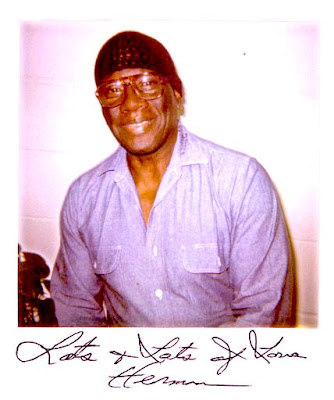
I get sick and tired of posting stuff about men and women being held with no justice in America's prisons, but the truth is the stories are just too numerous. Herman Wallace is one such man. Herman Wallace should be free.

The following is from Infoshop News.

Southern Injustice: Herman Wallace of the Angola

By James Ridgeway and Jean Casella
Mother Jones

For the better part of four decades, Victory Wallace, 70, has made a monthly trip from New Orleans to the Louisiana State Penitentiary at Angola to visit her brother Herman, who just turned 68. The 140-mile journey has shades of Heart of Darkness, following the course of the Mississippi River to a remote prison colony from which most inmates never return. At the dark heart of this former slave plantation, Herman Wallace has lived most of the past 37 years in solitary confinement, imprisoned alone for 23 hours a day in a 6-by-9-foot cell.

When Herman was moved in the spring of 2009 from Angola to Hunt Correctional Center near Baton Rouge, Vickie's trip got a bit shorter. But what she found when she arrived on her most recent visit was even worse than usual. Because of a disciplinary infraction, Herman had been placed in "extended administrative lockdown." That meant Vickie was denied a contact visit, and was permitted to see her brother only through a glass partition as they spoke over a telephone. His hands were shackled to the table. (Other recent visitors reported that the shackles made it hard for him to hold the phone to his ear, while his hearing loss made communication over the telephone difficult.) Herman complained to Vickie that he was cold, and she thought that he had lost weight. His spirits, she said, were not the best.

For years, Herman Wallace's hopes have ridden on two cases that are inching their way through the courts—one challenging his conviction, the other challenging his long-term solitary confinement. Now, after a decade of starts and stops, obstacles and delays, both cases are advancing toward conclusions that will determine how he spends what's left of his life.

With the exception of a few brief intervals, Wallace has been living in lockdown since 1972, when he was accused of murdering a young Angola prison guard. Along with another inmate named Albert Woodfox, he was tried, convicted, and sentenced to life without parole. Wallace, Woodfox, and a third longtime prisoner called Robert King—who are known as the Angola 3—are also plaintiffs in a federal lawsuit alleging that their unparalleled time in solitary violates the constitutional ban on cruel and unusual punishment. The case [1]—which could potentially affect the estimated 25,000 American prisoners living in long-term lockdown—is expected to come to trial in the US District Court in Baton Rouge in early 2010.

Since 1990, Wallace has also been appealing his criminal conviction in the Louisiana state courts. He believes that he was targeted for the guard's murder because of his involvement in Angola's chapter of the Black Panther Party, which had been organizing against conditions in what was then known as "the bloodiest prison in the South." Wallace contends that the prosecution's witnesses—all of them fellow Angola prisoners—were coached, bribed, coerced, or threatened into giving false testimony against him by prison employees bent on revenge. "If they could have hung and burned the guys involved they would have," one inmate witness later told Wallace's lawyers. "But there was too much light on the situation." Documents and testimony that have surfaced since the trial show that prosecutors knew a good part of their case was unreliable or manufactured. The state's own judicial commissioner, assigned to study the case in 2006, recommended that Wallace's conviction be overturned. Even the prison guard's widow has publicly stated that she now doubts [2] the guilt of the two men convicted of her husband's murder, and still wants to see his killers brought to justice. But the Louisiana courts, one after another, have rejected his appeal, providing no reasons for their decisions.

Now, Wallace has turned to the federal courts. On December 4, he filed a petition for a writ of habeas corpus—basically, a plea for a reversal of his wrongful conviction. It is his last chance to win a new trial, and possibly his freedom. On his side are a team of skilled pro-bono attorneys who have assembled a brief full of evidence that was hidden or suppressed 35 years ago during his original trial. Against him is an increasingly conservative federal court system, along with two of the most powerful figures in Louisiana criminal justice: Angola's famous warden, Burl Cain, and the state's ambitious attorney general, James "Buddy" Caldwell, both of whom appear determined to fight to the bitter end to ensure that Herman Wallace never again sees the light of day.

The incident that condemned Herman Wallace to a life in lockdown took place at a particularly explosive time in Angola's notoriously violent history. In the early 1970s, Louisiana's 5,000-man penitentiary was the nation's largest prison; it was also notorious for its high rates of murder, rape, and assault. The former slave plantation's 18,000 acres were farmed by prisoners working up to 96 hours a week, overseen by armed inmate guards, known as "trusties." The trusties also oversaw gambling, drug-dealing, and a monstrous system of sexual slavery—sanctioned by some of the all-white corrections officers, who were referred to by staff and inmates alike as "freemen."

"Angola in those days was life and death, buying and selling people, and the officers knew it was happening," Howard Baker, a prisoner who testified at Wallace's trial, stated in a subsequent affidavit. "There was a goon squad of guards. If they came after you, you could get anything from a beating to being killed, and they'd call it being killed by trying to escape." In addition, Baker said, "Physical conditions were about as bad as you can get: hot, dirty, overcrowded. Weapons were everywhere. You could shake down for weapons one night and have just as many the next. I saw as many as four stabbings a week, week after week."

It was also a time of simmering tensions between longtime employees—many of whom had grown up in the staff community on the prison's grounds—and Angola's new "reformist" leadership. A few years earlier, Warden C. Murray Henderson and Deputy Warden Lloyd Hoyle had been brought in from out of state to "clean up Angola." As Wallace's habeas petition states:

Their arrival at Angola disrupted [the Louisiana State Penitentiary's] existing leadership, most of whom had worked their way up the ranks at Angola. Associate Warden Hayden Dees and the old-guard leadership notably resisted their reform efforts, particularly those aimed at ending racial segregation and those directed at according inmates in extended lockdown, known as CCR (closed cell restriction), with due process. Associate Warden Dees in particular believed that "a certain type of militant or revolutionary inmate, maybe even a communist type," should remain under lockdown conditions at all times; he wanted nothing to do with documenting decisions about who went into lockdown and for how long in compliance with federal court requirements.

Among the "militant" inmates were Herman Wallace and Albert Woodfox, both serving time for armed robbery. After they arrived at Angola they became active members of the prison's chapter of the Black Panther Party. This cadre of inmates organized petitions and hunger strikes to protest the horrendous conditions at the prison, and helped new inmates, known as "fresh fish," protect themselves from sexual assault and enslavement. For their efforts, some of the Panthers were placed in solitary confinement to suppress what was viewed as a threat to prison authority.

On April 17, 1972, 23-year-old guard Brent Miller was found in front of an inmate dormitory, stabbed 32 times. Investigators initially had no suspects, but they soon zeroed in on the activists. In a written description [3] [PDF] of his case, Wallace stated that Hayden Dees, the associate warden, "went well out of his way to tie us in with the death for his own political gain. He claimed that Henderson and Hoyle were responsible for Miller's death by releasing the 'militants' (he linked me and Woodfox to those released)."

Statements from Henderson and Hoyle confirm that some of the guards considered them complicit in the killing. Three days later, Lloyd Hoyle, the deputy warden, was called from home to a meeting of staff members, who accused him of turning loose Miller's murderers. Hoyle was assaulted and pushed through a plate glass door, and nearly bled to death before one of the guards decided to drive him to the hospital.

Wallace was thrown into lockdown the day of Brent Miller's murder. Within a few days, officials had obtained the evidence they needed to charge Wallace and three other so-called "militants"—Woodfox, Chester Jackson, and Gilbert Montegut—with the crime. They were indicted by an all-white, all-male grand jury in nearby St. Francisville, Louisiana, which was home to many prison staff, their families, and friends.

A river town near the Mississippi border, St. Francisville proudly advertises itself as plantation country. It was also Klan country, and until the civil rights movement and the FBI arrived in the early 1960s, no African American had registered to vote in the parish in more than 60 years. The defendants in the Miller case contested the indictment on the grounds that women and blacks had been systematically excluded from the jury pool. They were subsequently re-indicted by another grand jury, chosen through "the same or substantially the same grand jury selection procedures," according to Wallace's current brief.

Albert Woodfox was convicted of Miller's murder in a separate trial in 1973. After being granted a change of venue, the three remaining defendants—Wallace, Jackson, and Montegut—stood trial in East Baton Rouge in January 1974—before yet another all-white, all-male jury. The prosecutors in the case presented no physical evidence to tie the three men to the crime. Although bloody fingerprints had been found near the guard's body, they matched none of the defendants'. According to evidence presented in Wallace's petition, no effort was made to match them to any of the 5,000 other inmate prints on file. A bloody knife, likewise, could not be connected to any of the men on trial. The evidence against them consisted entirely of testimony by other Angola prisoners obtained under highly dubious circumstances.

The prosecution's star witness was Hezekiah Brown, whose eyewitness testimony was indispensible to its case. An aging prisoner serving a life sentence for aggravated rape, Brown said that he had been in the dormitory on the morning of Brent Miller's death, and had seen the defendants stab the guard repeatedly. Former Angola prisoners have said in interviews that Brown was a notorious snitch. But it would be nearly 25 years before proof emerged [4] showing just what happened behind the scenes to secure his testimony.

In 1998, lawyers for Wallace's co-defendant, Albert Woodfox, succeeded in obtaining previously suppressed witness statements, taped interviews, and other documents from the murder investigation carried out by prison officials, the county sheriff's office, and local prosecutors. These materials, supplemented by testimony by Warden Henderson and others, show that Hezekiah Brown was encouraged, if not coerced, to identify the prisoners already chosen as suspects. Henderson admitted he promised to seek a pardon for the lifer if Brown helped them "crack the case." A series of letters to judges, pardon board members, and the secretary of corrections shows that Warden Henderson kept his word, though it would be more than 10 years before Brown's pardon came through. In the meantime, Brown benefitted from an array of special favors, including reassignment to a private room at the low-security "dog pen" where the prison's bloodhounds were trained and a carton of cigarettes, the crucial prison currency, every week.

Another inmate witness, Joseph Richey, placed Wallace and the others at the scene of the crime; he was later found to be a schizophrenic who was heavily medicated with Thorazine. After the trial, Richey was transferred to a plum job at the governor's mansion and given weekend furloughs (during which he robbed several banks). Previously suppressed documents, obtained through the discovery process by Albert Woodfox's lawyers in 1998, show that Angola officials didn't believe Richey had seen anything. The state possessed these documents at the time of Wallace's trial, and presented his possibly perjured testimony nonetheless.

Howard Baker, yet another prisoner who testified at Wallace's trial, has since sworn an affidavit completely recanting his testimony. Baker had initially been a suspect in Miller's murder, and may have been seeking to protect himself. In the affidavit, Baker states:

So I looked at the situation like this, I got 60 something years, and I got a chance to help myself – so I was going to do something to help me get out of this cesspool….So, I gave a statement on 10/16/72, to Warden Dees, which was a lie. And my testimony based on that statement was a lie. I really thought this would help me because Dees told me my statement would get my sentence commuted….It was all over the penitentiary that they [Wallace and Woodfox] were the ones that administration thought was involved. So I gave a statement.

The state played its ace-in-the-hole in the middle of the trial, when one of the four co-defendants walked in after a recess and sat down at the prosecution's table. Chester Jackson had turned state's witness, and would now testify against the others. The defense attorney, Charles Garretson, later testified that he "was in a complete state of shock…it took everything I could glean together to maintain professionalism and sanity and intelligence to go forward after this lunch break." The court gave him less than 30 minutes to prepare to cross-examine his own former client. Although he denied it on the stand, Jackson had clearly cut a deal; shortly after the trial, he would plead guilty to manslaughter. Garretson later said that he felt he was "the only one in the courthouse that didn't know this. I felt that—I know all the deputies knew it. I felt the judge knew it."

These allegations of widespread and deliberate suppression of evidence form the core of Herman Wallace's current appeal. His habeas petition states, "Mr. Wallace's defense strategy was to show that the State's inmate witnesses must be either mistaken or lying. Although the State possessed precisely the information Mr. Wallace's defense counsel sought—material which would show that the State's witnesses lacked credibility and the State's prosecution lacked integrity—the State disclosed none of it." This withholding of evidence, Wallace says, violated his constitutional right to due process.

Wallace's remaining co-defendant, Gilbert Montegut, had a prison guard to confirm his alibi, and was acquitted. Herman Wallace was convicted of the murder. His conviction happened to fall during a brief period when the Supreme Court had effectively struck down capital punishment—had it come at any other time, Wallace would likely have received a death sentence. Instead, he got life without parole and was placed in lockdown, along with Woodfox. The reason given for their confinement in solitary was the nature of the crime—the murder of a guard, which rendered them a threat to others in the prison community. Both Wallace and Woodfox remain there, ostensibly on the same grounds, 35 years later.

If the story of Herman Wallace's trial reads like a study in Southern justice, its sequel shows what has changed in Louisiana in the intervening decades—and what has remained the same. Wallace and Woodfox now have a small legion of active supporters and an impressive team of lawyers renowned for their death penalty appeals, including Nick Trenticosta, director of the Center for Equal Justice, in New Orleans, and George Kendall at the pro bono unit of Squire Sanders & Dempsey in New York. But even good lawyers can't vitiate the Louisiana justice system's apparent determination to keep Wallace and Woodfox locked up and locked down, for reasons that appear to go far beyond the facts of the 1972 murder of Brent Miller.

The two men believe that they were originally targeted for the murder because their political beliefs and activism represented a threat to the absolute power of prison authorities. Statements from Angola's current warden, Burl Cain, suggest they are being kept permanently in solitary for much the same reason. Cain has been widely celebrated [5] for "transforming" Angola, largely through the institution of Christian "moral rehabilitation," which he sees as the only path to redemption for the sinners in his charge. There is no room, either in Cain's worldview or on his prison plantation, for people who question authority like Herman Wallace and Albert Woodfox have.

In a 2008 deposition, Cain declared, "The prison operates with one authentic authoritarian figure, the warden and the rule book." He also said that Woodfox's lack of deference made him a dangerous man: "The thing about him is that he wants to demonstrate. He wants to organize. He wants to be defiant. He wants to show to others that he is powerful and strong."

Woodfox's lawyers have pointed out that he had no record of violence and few disciplinary infractions in the past 20 years. They documented a similar record for Wallace in a 2006 deposition [6] [PDF]: "Mr. Wallace's most recent disciplinary report for institutional violence occurred some 22 years ago," it said, and in recent years, Wallace's handful of infractions included "possessing handmade earrings and a poem, 'A Defying Voice'"; "wearing a handmade necklace with a black fist"; and "possessing the publication, It's About Time, a Black Panther publication 16 containing articles/photos on the Angola three, characterized as, quote, 'racist literature' by security personnel." His most recent disciplinary report "was December 2005, when he was found in the possession of excess number of postage stamps, for which he received thirty days cell confinement."

But Cain believes "It's not a matter of write-ups. It's a matter of attitude and what you are." And to Cain, what Woodfox and Wallace are and will always be is Black Panthers. Associate Warden Hayden Dees previously said that "a certain type of militant or revolutionary inmate, maybe even a communist type" was dangerous enough to be kept in permanent lockdown. In 2008, Cain said that Woodfox belongs in solitary because "I still know that he is still trying to practice Black Pantherism, and I still would not want him walking around my prison because he would organize the young new inmates. I would have me all kind of problems, more than I could stand, and I would have the blacks chasing after them."

Wallace says [7] that Cain at least once offered to release the two men into the general population if they renounced their political views and accepted Jesus Christ as their savior. He refused. Cain declared that "Albert Woodfox and Herman Wallace is locked in time with that Black Panther revolutionary actions they were doing way back when…And that's still their motive and that's still their goal. And from that, there's been no rehabilitation."

Louisiana's attorney general, Buddy Caldwell, also appears determined to keep the two men in prison at all costs—a vow that he will likely try to uphold even if Wallace's case succeeds in federal court. Caldwell's resolve has already been tested in the case of Woodfox: When a federal judge overturned Woodfox's conviction in 2008 and ordered him released on bail, the attorney general sprang into action—filing an emergency motion to keep him behind bars, sending fearmongering emails to the community where Woodfox was planning to stay with his niece, and telling the press that he was "the most dangerous person on the planet." Persuaded by Caldwell's plea and Cain's testimony about his dangerous nature, the federal appeals court granted the motion and denied Woodfox bail; he remains in lockdown, awaiting his appeal. In a recent letter, Wallace wrote of Caldwell, "Like most prosecutors, he will never admit he made a mistake, he's fighting to keep us imprisoned. The reputation of the Louisiana justice system is at stake here. If we gain our freedom it would expose the corruption that is rampant throughout the system."

The fate of both Wallace and Woodfox ultimately lies in the hands of the federal Fifth Circuit Court of Appeals in New Orleans—and here, they are worse off than they might have been 40 years ago. In the 1950s and 1960s, a small group of Fifth Circuit judges—mostly Southern-bred moderate Republicans—won a reputation [8] for advancing civil rights and especially school desegregation. But today the Fifth Circuit, which covers Louisiana, Texas, and Mississippi, is among the most ideologically conservative of the federal appeals courts. It is notable for its overburdened docket and for its hostility to appeals from defendants in capital cases, including claims based on faulty prosecution and suppressed evidence. In particular, the Fifth Circuit has kept the gurneys rolling in Texas' busy execution chamber. The court has even been reprimanded by the US Supreme Court, itself no friend to death row inmates: In June 2004, Justice Sandra Day O'Connor wrote [9] that in handing down death penalty rulings, the Fifth Circuit was doing no more than "paying lip service to principles" of appellate law.

It will almost certainly be years before Herman Wallace's criminal appeal is finally resolved. While their case is exceptional, Wallace, now 68, and Woodfox, 62, are in certain respects emblematic of an entire generation of prisoners who came of age in a time of lengthening sentences and tightening parole restrictions—spared execution to live out their lives in prison, sometimes in complete isolation. "I'm in this cell or in the hall 24/7, 23 hours in the cell, one hour on the hall,'' he wrote in a letter earlier this year. "Either way you look at it I am locked up with no contact with any others. I use stacks of books for exercise and thereafter I am either writing or reading.'' Wallace keeps himself together by concentrating on his case. "I have no time for foolishness," his letter continues. "I am in a struggle against the state of Louisiana on two strategic fronts, and hear me when I tell you they are not fighting fair."

Perhaps the ultimate irony of Woodfox and Wallace's predicament is that while their political beliefs may have doomed them to a life in lockdown, these same beliefs have also given them the strength to endure it. In his New Yorker piece on solitary confinement as torture, Atul Gawande describes how frequently prisoners have mentally and physically disintegrated in such conditions. What is remarkable about Wallace and Woodfox is how lucid and resolute they remain. They stay in close touch with their supporters. They know every detail of their cases, and when they find the opportunity, they provide counsel to other prisoners. They take pride in refusing to submit to the dictates of the state or of the warden, to accept anyone else's rules or anyone else's god. It's what keeps them sane, and perhaps what keeps them alive.

Herman Wallace writes dozens of letters each week. He composes poems and makes drawings and elaborate paper flowers. For the past five years, he has also been collaborating on a project with Jackie Sumell, a young artist who first contacted him in 2002 with the question "What kind of a house does a man who has lived in a six-foot-by-nine-foot cell for over 30 years dream of?" Together they designed a home [10], which Sumell has translated into architectural plans, models, a traveling exhibit, and a book of drawings and letters called The House That Herman Built. Wallace describes a house with "a swimming pool with a light green bottom and a large Panther in the center. I want flower gardens surrounding the house enclosed. A garage for two cars. A large tree in the backyard under which will be my patio.''

"To build this house is to build my soul," Wallace wrote in a 2006 letter to Sumell. He continued, "I'm often asked what did I come to prison for; and now that I think about it Jackie, it doesn't matter. It doesn't matter what I came here for, what matters now is what I leave with. And I can assure you, however I leave, I won't leave nothing behind."

Among the activists who took up the cause of the Angola 3 were the late Anita Roddick [11], founder of the Body Shop (and a former Mother Jones board member), and her husband, Gordon. The Roddick's family charity, the Roddick Foundation [12], contributed funding for this story.

--This article was first published by Mother Jones. Permission is granted to reprint in full as long as Mother Jones is cited as the original source.


Anti-Obama Racism Mirrors American Society

As many of you know, I'm not a huge fan of President Obama who I find to be merely another moderate Democrat. However, the race hatred directed against our first African-American President is just more proof of the endurance of the white supremacy and racism which lies at the core of this country. It hasn't gone away folks...from the Tea Party fools to the KKK, from the mainstream to the fringe. Well, the fight against white supremacy and racism isn't going away either.

Long live the spirit of John Brown and Malcolm X.

The following is from Metro.co.uk

Barack Obama protesters hang a black doll

An effigy of US president Barack Obama has been found hanging in the hometown of former US leader Jimmy Carter.

obama family Barack Obama, first lady Michelle Obama and their two children, Sasha (far left) and Malia, at the Honolulu Zoo in Hawaii

TV footage showed a large black doll dangling from a noose in Plains, Georgia. A sign near the effigy said: ‘Plains, Georgia. Home of Jimmy Carter, our 39th President.’ Witnesses said the effigy, above a shop in the main road, had Mr Obama’s name on it.

The protest against America’s first black president was not a surprise, said Dr Anthony Samad, an associate professor of African American studies. ‘I think there’s this notion that we’re in a post-racial period in America because of the election of the first African American president,’ he added.

‘However, this president has received more death threats than any other president.’ Trevor Sims, who lives in the town of 700 people, said: ‘It’s wrong with what they did to Obama but I’m not shocked. It’s a nice place to live but some people out there still don’t like it.’ Secret Service spokesman Ed Donovan said the agency was investigating.


Afghanistan: Down the Rabbit Hole


From the tragic to the absurd. That is the story in present day Afghanistan where a barber finds himself in jail because he couldn't make it to a judge's house to trim his beard.

The following is from RAWA News.

Afghan barber is jailed for refusing to visit judge's residence to trim his beard

by Hadi Ghafari

BAMYAN CITY: A high court chief in central Dai Kundi province has put a barber behind bars for refusing to visit his residence to trim his beard. Syed Ahmed, 38, a barber in the provincial capital of Nilli, ended up in jail for disobeying the order of Judge Daud Bakhtiyari. Ahmed's wife told Pajhwok Afghan News on Tuesday: "Four days back, the judge called my husband to his house to give him a haircut. But my husband could not go to the judge's residence because of the heavy workload at his shop." As a result, she said, her husband was ordered jailed by Bakhtiyari for not giving him prompt tonsorial services. The local police officials, who exhibited remarkable alacrity in arresting the hairdresser, argued he had committed contempt of court. General Muhammad Nader, a police official in the province, confirmed Ahmed's arrest and explained the coiffeur had been in jail for the last four days in line with instructions from the high court. "We are duty-bound to implement court directives. Whenever it orders someone jailed, we are forced to take action," the cop added while defending the arrest. In response to a query from this news agency, Bakhtiyari warned: "Whoever (including Pajhwok's reporter) attacks my dignity or commits contempt of court, I will put him in jail." Refusing to go into details of the case, the judge thundered: "No one except the chief justice has the right to ask me questions about the arrest." He reiterated his warning: "Anyone defying me or the court will be handed down a similar punishment." The barber's father, who had come to the high court along with elders to have his son bailed out, said: "The judge has refused to free Syed Ahmed before he serves a week's time in prison." He insisted Ahmed had committed no offence in failing to give the judge a haircut and trim his beard at his residence. He also linked his son's failure to the multiplicity of customers at his shop.

Monday, January 04, 2010

Canadian Women Want Action


Wouldn't you think 500 missing women would be cause for some action. Women in Vancouver are tired of waiting for the Canadian government to investigate just why so many cases of missing women go unsolved. They want action from the Federal government. They want something done. Yesterday some of them gathered in a public park to demand a public investigation.

The following is from Kelowna.com.

Protesters demand inquiry into missing aboriginal women

Monday, January 4th, 2010 | 4:00 am

Canwest News Service

VANCOUVER – More than 100 women rallied in Crab Park in Vancouver’s Downtown Eastside Sunday to demand the federal government listen to their plea for a public inquiry into the more than 500 missing and murdered aboriginal women cases across Canada.

“We’ve asked and asked again but there is no answer,” said Bernie Williams, a native elder and activist.

There are 520 cases of missing or murdered aboriginal women in Canada, according to the Native Women’s Association of Canada.

The smell of smudged sage filled the cold January air as the women lit 520 tea light candles and placed them in a circle around a stone memorial erected in memory of Vancouver’s missing women.

Many women shivered in the cold as they held hands in a circle around the memorial as a sombre native drumbeat cut through the silence.

Dressed in a red and black robe, native elder Eunice McMillan came to march and play a traditional drum song.

“We want to know why so many of the missing women cases in Canada remain unsolved,” said McMillan.

Williams co-founded an organization called Walk 4 Justice, an annual long- distance walk to Prince Rupert from Vancouver to raise awareness about the unsolved cases of missing and murdered women from northern B.C. in an area that has been dubbed the Highway of Tears.

Despite their many efforts to raise awareness, the women say the government is indifferent to their plight.

“I can’t even begin to estimate how many more women have gone unnoticed. Why has it taken Canada so long to act?”

Williams said she was at Crab Park Sunday to honour her niece, Tamara Chipman, who is one of the 18 victims on the RCMP’s Highway of Tears list. The mother of a toddler was last seen in 2005.

“You see so much sadness, and that sadness in your heart really gets you angry,” said Williams.

She also wanted to pay respect to several of the women she knew from the Downtown Eastside who were on the missing women list linked to the Robert (Willie) Pickton case.

Shelly Gershuni, 21, of Johannesburg, South Africa was visiting her friend Erin Duiron, 19, in Vancouver and thought it was important to show support for the women.

“These are strong women fighting for a good cause,” said Gershuni.

The women ended theirrally by marching to Main and Hastings from Crab Park.

Last fall, the Manitoba government created a task force to investigate cases of missing and murdered women. The UN Committee on the Elimination of Discrimination against Women in 2008 also voiced concern about hundreds of unsolved cases of missing aboriginal women in Canada.

ticrawford@vancouversun.com

Racist Killings Continue in Melbourne


What the hell is going on down under. Why have the police lost interest in racist attacks against Indian students in Melbourne. Nitin Garg's (seen here) murder last Saturday was only the latest in a long line of such violent assaults. The twenty-one year old was stabbed bt unidentified assailants in Melbourne on Sunday while on his way to work at the the fast-food joint Hungry Jack's Restaurant. A spokesman for the Federation of Indian Students of Australia said he believed Mr Garg's killing was racist. "There was no robbery, nothing taken. What other motivation is there to stab someone with a 14-inch knife?" Guatum Gupta said. "Australia has a real problem with racism. While the majority of Australians are welcoming, there is a significant minority of hard-core racists who like to go 'curry-bashing' and boast about it."

The following is from The Times of India.

Calling off police drive led to Oz fatal attack?

NEW DELHI: Nitin Garg's murder in Melbourne last Saturday wasn't an isolated incident. Attacks on Indian students in Australia have increased in the last two-three weeks since a special police operation launched to secure the physical safety of students in August last year was withdrawn in December.

"Since this operation was launched following external affairs minister S M Krishna's visit to Melbourne, the attacks against students had gone down by 15-20%. The operation entailed extra police force in different areas and vigorous vigilance. But the operation's withdrawal has led to increase in attacks," says Gautam Gupta secretary, Federation of Indian Students of Australia (FISA) over phone from Melbourne.

Gupta has been getting many calls from concerned parents in India who have their wards studying Down Under. "In the last two days I've been getting many calls from parents especially from Delhi asking what they can do to help. One even suggested a day of prayer to ease the tension. I told them go ahead if it gives you peace of mind," he says.

Rajneesh Kapoor's son Aditya is a final year information technology student at BIT Melbourne. The 49-year-old from Delhi's Pitampura was extremely disturbed after coming to know about the attack on Nitin and has asked his son to take precautions and not venture out in the night. "These attacks have dissuaded many kids from going to Australia. But those who are already there have no option but to be careful. The Australian government is not doing enough to provide security to students despite getting huge amounts of money from them. It's their duty to see that they are safe," he said.

In Melbourne, there is also anger among Indian students over the Saturday night attack, which led to Nitin's death. "Many have volunteered to work for FISA to build a strong support group," says Gupta. These students, mostly in their early Twenties, want to help assault victims by offering medical and legal aid. They also want to become sounding boards for young students to vent their insecurity and frustration over the attacks," says Gupta, who feels these young students need a mentor.

Gupta also wants cricketing icon Shane Warne to come forward in a pro-active manner to denounce the attacks. "Since Shane understands Indian culture and has millions of fans in both countries, he can act as a bridge. He can educate Australians about Indians who are basically peace-loving people. His saying so in a campaign will have a positive impact," says Gupta.

Meanwhile in Melbourne, they are waiting for Nitin's cousin to arrive to hand over the body. Nitin, 21, lived with five friends in Newport, Melbourne. He was stabbed to death by unidentified attackers in a park on Saturday night on way to work at Hungry Jacks restaurant.

BUILDING A MASS MOVEMENT: SAVE THE PLANET, FIGHT RACISM


This "Call" is actually from me.

The accompanying image was taken from the article, "It's Time to Build a Mass Movement" by Bruce Dixon which appeared in the Black Commentator. I would recommend reading it as well.

BUILDING A MASS MOVEMENT: SAVE THE PLANET, FIGHT RACISM

I've spent forty years of my life as a serious activist. I've been to prison as a result and I've also had fun. I've been involved in one way or another in about every "issue" to come down the left wing pike during that time. I've seen some changes. I haven't seen nearly enough. I'm tied of hearing about past movements. Though I was there, I'm tired of hearing about the 60s. The suggestions I'm about to make are aimed at folks one hell of a lot younger than me. Young activists have the energy, the spirit, the strength to make things happen. Young activists have not become cynical like so many of my compatriots.

I should note that I come from a framework which I would describe as anti-racist, anti-imperialist, and Marxist. For me, what we used to call the primary contradictions are race and class. It is through that prism that I view the world.

TOO MUCH THIS AND THAT
Today we have people working on a multitude of different issues. Most of them are perfectly worthwhile, need to be dealt with and all that. However, when we focus all of our energy on our own particular cause we are spread too thin. We accomplish too little. We need to create a mass movement. We need a couple of major causes upon which to concentrate. This doesn't mean you, your friends, or your organizations cannot continue to work on and organize around your own issue whatever it may be. Not only can you, but you must. Again, there is much to be done. However, to build a real mass movement that results in sustained change we need to line up on a few core issues. I'm suggesting two major causes that all of us can organize around.

WHAT THAT SOMETHING IS NOT
It is not the anti-war movement. Why? Unlike the anti-war movement during the Vietnam era, today there is no good guy. Back then, we could all rally around the struggle of the Vietnamese people for national liberation. Well, hopefully we are not about to rally around the Taliban or Al-Quieda. Not too many people are going to sign up for that assignment, including me. This, of course, does not mean we should stop calling for US troops out of Afghanistan, but it does mean we aren't out chanting "Tal, Tal, Taliban is gonna win." If anything, we should be supporting some sort of true liberation movement in Afghanistan, a progressive one. If it isn't there, it isn't there. The people of Afghanistan, of course, deserve OUR support. Unfortunately, at the moment, they don't have anyone substantial in the fight, so to speak. It is going to be impossible to build a huge anti-war movement when neither side of the warring parties offer anything progressive. We can't create a progressive struggle for liberation in Afghanistan, but we can encourage one and that is what we should be doing while trying to get foreign troops the hell out.

It could have been anti-globalization. I think it almost was. The evil of globalization was something to build a militant international movement upon. The only problem was that it was pretty complex for a whole lot of people to understand – most especially Americans who like things very simple. Still those organizing around the issue did a hell of a job and were making tremendous headway creating a truly international movement. Then, however, just as that movement was gaining real strength along came the invasion of Iraq and the anti-war movement which ended up sucking the life out of the anti-globalization movement. Had the anti-war movement latched onto and become a part of the anti-globalization movement something very interesting might have resulted.

This isn't to say there should not be an anti-war campaign. Of course there should. This isn't to say there should not be an anti-globalization campaign. Of course there should.

However, in my humble opinion, it is going to be impossible to build THE MOVEMENT upon these smaller movements.

SO
As I said, I am going to present you with two major causes with which to rally around. These causes are distinct, yet must be linked.

Fighting racism is a cause we must all embrace. Until we confront all forms of racism, until whites confront their white skin privilege, nothing we do is ever going to be truly revolutionary or even progressive. Until our movement confronts racism and white supremacy there will never be real change. Racism is engrained in our psyche, in the fabric of our being. In the U.S. at this time in history we must continue to and increase the struggle against racism. This is simply our duty. Without confronting racism and white supremacy any mass movement we create will degenerate and become reactionary.

In America, it is racism directed at African Americans that has been most primary. We cannot forget this. We cannot pretend it is no longer true. We are not living in some post racial America.

At the same time as their population increases in the U.S. we are and will continue to see increasing racism directed at Hispanics. The anti-immigration forces are merely the beginning of what is no doubt to come.

Whites must act under the leadership of people of color in this aspect of the struggle. African Americans don't need whites to organize them, neither do Hispanics, or American Indians or any other people of color. White people must strive to become "race traitors." White people must strive to learn from the likes of John Brown. Whites must organize other whites. White people must be on the front lines fighting white supremacy, everyday, everywhere.

So what is this other big issue you ask me? I am talking about global warming and the environmental destruction of our planet. It will eventually devastate us all, whites, Blacks, Hispanics, Asians, Indians, all of us. Men and women, gays and straights all of us. And not just us. All the free wild animals of the planet are being destroyed right alongside us. It is the creatures of the planet, the fish of the sea, the birds in the air, the great cats, the wolves, the bears that are the ones dying off right now. Not tomorrow, right now. They are being poisoned today. Their habitats are drying up, melting, dying even as I write this.

This is an issue tinged with all the others as well. Who is and will suffer first and the most amongst us – people of color, the indigenous, people in the developing countries, working people, the poor. Who will suffer last amongst us? You guessed it – white folks, the wealthy, the United States, Western Europe. Who causes most of the suffering – the rich, the powerful, the huge corporations, mostly white, mostly men, mostly the big developed countries. What has to go to save the planet? Capitalism has to go, traditional states have to go, racism has to go, the way we organize our societies has to go, our current way of thinking itself has to go. We have got to understand that ultimately we, and the animals, the plants, and water and the air – we are all connected, all essentially one. We all live or we all die.

I am not for going quietly into the night. The movement we build must be one that convinces more and more people to look beyond tomorrow morning and beyond the end of their nose. That is particularly difficult here in America. But we, you and I, must know time is simply running out. We either get this done in the next few years or we might as well throw in the towel. It is possible we are already too late. I'm 60 years old. I'll probably live a relatively normal life span (which doesn't mean I don't care about what happens, which doesn't mean I don't want the Earth to live on after me). I'll tell you what, if you're twenty, if your two, if your one of the famous unborn, well, you ought to be mad as hell at the rest of us. And you sure as hell will be one day. Only it may be when it is hot and dry, when there isn't much to eat or drink. It may be while wars and civil wars rage across the planet as nations and regions run out of water, or food, or land, or power. When it gets like that people will fight back and with each other. However, it'll be for nothing then.

And by the way, the future is now. People are starving now. Islands are sinking now. Coastlines are going away now. Deserts are expanding now. Rainforests are disappearing now. The ice caps are melting now. Greenland is becoming green now. We can no longer look at record floods in the north of England and say, "well you can't blame any one incident on global warming." The "one incidents" are adding up too quickly. We can't just shrug off the fact that every fish in the damn world is carrying carcinogens in their systems right now. We can't shrug off the fact that mother's milk is turning to poison right now. We can't pretend that the great aquifers under the Great Plains States are drying up now. Tomorrow is today.

We must act now.

WHO SHOULD BE ON BOARD

All progressive forces should be on board – whether you call yourself a revolutionary, a communist, an anarchist, a socialist, a liberal, a pacifist (or not) – this movement needs you. There is no room in such an undertaking for anti-communism and there is no need that everyone subscribes to the exact same "line." The truth is that debate within the movement is a good thing, not a bad one. The truth is that a little ideological struggle is not something to fear. The truth also is that all of us have to be willing to understand who are our friends, who are on the same side as us. We have to realize that in a mass movement no one grouping can hold sway over everyone else. That just won't work.

Further, no one has to stop doing what they are doing now. No one has to stop being an animal rights activist, no one has to stop fighting for gender equality or gay rights, no one has to give up the class struggle or the women's movement, no one has to stop fighting police brutality, no one has to stop trying to abolish the prison industrial system, no one has to stop organizing workers, and no one has to stop trying to free political prisoners. All of that needs to be done. I believe that a mass movement will actually benefit every one of these battles and more. If we can build one large mass movement based upon the issues I am putting forward, each of us will also be aided in our own individual work. I've seen it happen. It has happened. It always happens.

However, I'm not talking about the smallest common denominator politics here. I'm not for rallying everyone around the lowest level that we can find. One of the problems encountered by the anti-globalization movement was the troubling reality that there were those on the right, even racists, who latched on for their own reasons and with their own agendas. We do not want those people with us. Just because someone says they are against global warming does not make them our friend. Just because someone is against globalization, does not make them our friend. We must be watchful and we must make constantly clear that we are about justice, freedom, equality. We must be clear that we are against racism, nationalism,sexism, religious bigotry, exploitation, big power hegemony and what I would call imperialism (but you may call something else). We are against needless wars.

SOMETHING IS MISSING
Some of you have probably noticed that I have not discussed tactics. That is intentional. There are a number of reasons why I have made that choice. They include:
• The internet is no place for such a discussion.
• In earlier drafts I did in fact include a section on tactics. What resulted was the centering of the discussion on tactics at the expense of everything else. That was my fault, but it was not something I wanted to happen.
• In all honesty, I am not that comfortable with my ability to develop a rational position on tactics. I believe that future conversation with many more people involved will be necessary to even begin that discussion.
• We do not need to decide tactics right now.

When the discussion of tactics does happen what we need is to find ways to effectively organize and educate ourselves and others in a manner which can most effectively at this time move forward the agenda of fighting racism and saving the earth.

FINALLY
What I have presented here I present with all humility. I could be way off base. I recognize that. What I most want to do is get the discussion to move forward on how to build a true mass movement so that we can begin creating it. I do not believe that discussion can last forever. I believe that time is crucial.

If you have other ideas, and I'm sure you do, you should put them forward.

REG
December 1, 2009

Sunday, January 03, 2010

From the Worker-Communist Party of Iran


I'm just re-printing a couple of items from the Worker-Communist Party of Iran about the current uprising.

Class character of the current revolution
This resolution was adopted at the 7th congress of Worker-communist Party of Iran earlier in December 2009

1- The movement that began June 2009 in Iran, and goes on strongly as ever, is a revolution aimed at bringing down the Islamic Republic to reach freedom, equality and welfare for all. As far as its genuine content and the objective circumstances that have given rise to it are concerned, the present revolution has its origin in the class opposition between the bourgeoisie and the working class, and can be victorious only by ending the former's political and economic domination.

2- The formation of the current revolution per se is indicative of the working-class horizon, or alternative, enjoying the upper hand over right-wing scenarios such as "reconstruction", "gradual transformation", "regime change", and other nationalist-ethnic-religious alternatives. The formation of the revolution confirms and firmly establishes the working-class perspective with respect to the most fundamental transformation of the status quo. It also bears out the fact that revolution is the most desirable as well as viable way to destroy the regime of Islamic Republic and liberate the whole society from political and economic domination of the bourgeoisie. The formulation and publicization of the said perspective as well as ceaseless practice for its realization by the workers' class-political representative, i.e., Worker-communist Party of Iran, has itself been instrumental in the formation of the current revolution.

3- The formation of revolution in Iran opens an active and effective front for beating back such reactionary movements as political Islam, the militarism of the Western's bourgeoisie, and the corresponding socio-political theories like cultural relativism, multi-culturalism, and so on. The Iranian revolution turns the human being and the universal humanist values into the focal point of the class struggle between the world proletariat and the world bourgeoisie, and thus presents the honorable, civilized people of the world with a bright, promising perspective. The current revolution enjoys therefore a high capacity for enlisting the support of the world working class as well as the public opinion of the freedom-loving people across the globe.

4- The working class is the only class that is both willing and able to bring the present revolution to victory. For, on the one hand, the emancipation of the working class from exploitation and the domination of the bourgeoisie is objectively, actually, pending the emancipation of the whole society from the prevailing poverty, suppression, discrimination, oppression, and repression. On the other hand, the people's demands, their ideals, namely women's liberation, emancipation from the clutches of religion, cultural emancipation, modernity, unconditional political and social freedoms, eradication of poverty and securing welfare for all are represented only by the working-class perspective, [reflected in] the working class [party-political] program. The demands and ideals of the citizens at large are, for all practical intents and purposes, achievable only through the realization of the socialist objectives, the socialist program, of the working class. In the process of the present revolution the working class can, and should, rally onder its standard the great majority of the citizens, overthrow Islamic Republic, and realize [the slogan] "freedom, equality, welfare".

5- The working class can position itself at the head of the current revolution only through its political party. Advancement, deepening, radicalization and the eventual victory of the revolution is pending the people embracing the party of the working class as the representative of the masses' critique, their dissatisfaction with, and their objections to, the status quo, as well as accepting it as the leader of the mass struggle for the overthrow of Islamic Republic. Such a party should, firstly, represent the political and social objectives of the revolution, and make its presence felt in the field of the fight over the political power, and, secondly, be accepted as the leader by the society. Under the political circumstances in Iran, Worker-communist Party of Iran enjoys the said characteristics, and possesses the necessary capabilities to obtain the position of the leader of the revolution.

6- Worker-communist Party of Iran fights with all its might to advance, strengthen, organize, lead and bring to victory the present revolution. The Party calls on all activists in the workers' movement and all revolutionaries in the student and women's liberation movements, as well as in all other protest movements of other sections of the society to get actively involved on the basis of the Party's policies, and to join its ranks.

-----------------------------------

Manifesto of the Iranian Revolution

The revolution that has started since June 2009 is the outburst of the repressed anger of the people against the criminal Islamic regime of Iran. This is a revolution for liberation from a corrupt system, for smashing a machine of murder, plunder, ignorance and lies which has been wrecking the lives of the people for thirty years. This revolution will not stop until it has crushed the entire inhuman system in power.

But this revolution is not just about the liberation of the people of Iran from the Islamic nightmare. It is not even just a source of hope and inspiration for the people in Islam-stricken regions. This revolution speaks from the heart of the people of the world. Fundamentally, it is a revolution against a dark period identified by the offensive of the New Right and the New World Order; September 11 and the rise of political Islam; and the War on Terror and conflagration of the world in the war of terrorists. A period which by the metamorphosis of the human being through religion, ethnicity and nationality, by defining the relations amongst members of humankind as the Clash of Civilisations, and by denying the universal rights of the human being by the notion of Cultural Relativism has in fact imposed a Postmodern Middle Ages on humanity. The Iranian revolution is in fact the voice of the Third Camp against this regression of the bourgeoisie of our age. It is a voice that shouts “Freedom, Equality, Human Identity”. It is for this reason that songs have been written for this revolution from around the world, and Neda has become a hero of the people of the world.

The Iranian revolution is, first and foremost, against religious and Islamic rule. It is deeply secular and opposed to the rule of ignorance, superstition and the clergy. In this respect it is pursuing, in a radical way, the unfinished, or forgotten, tasks of the French Revolution. With the victory of this revolution, not only will religion become completely separate from the state and the educational system, but any privilege, law and tradition giving the religious apparatus the right to interfere in social life will also be abolished. Religion will be pushed to the sphere of voluntary choice and private beliefs of adults. Official religion will be abolished, and the hold of religion on society and social affairs will be ended. Thus, for the first time, genuine freedom to have or not to have a religion will be established. The Iranian revolution has already, in a practical way, delivered its severe censure on the appeasement of political Islam by European and Western governments and the shameless reversal on secularism. The anti-religious revolution in Iran is the beginning of a new Renaissance in human history.

The present revolution in Iran is a “women’s revolution”, not only because it is immediately against sexual apartheid and a misogynist government, and not only because women and girls are at its forefront in fervent demonstrations and street battles, but also because the maxim “women’s freedom is a measure of society’s freedom” is increasingly etched in the consciousness of the masses of the people. The unconditional equality of women is the inviolable decree of the present revolution. This revolution is another step forward in the efforts of modern humanity for liberation from vile gender slavery. From the October 1917 Russian revolution to the women’s liberation movement in the West; from the women’s demonstrations in Iran against the veil in March 1979 to thirty years of women’s resistance and protest against Islamic veil, discrimination and humiliation – these make up the backbone and inspiration of the present revolution in Iran. The victory of the present revolution will not only have a phenomenal impact on the status and struggle of women in Islam-stricken countries, but will also advance the women’s liberation movement in the world as a whole.

The revolution in Iran is about freedom. The realisation of the most radical and human definition of individual, civil, cultural and political freedom is the immediate task of the ‘Twitter’ and ‘Facebook’ generation which has risen up in revolt. It does not accept any restriction on freedom of expression, assembly, strike and organisation or other political freedoms. It does not recognise any boundaries for the freedom to criticise “sanctities”. It does not accept any censorship on culture, art, literature and human creative activity. It is against any interference of the state or any official authority in the private lives - including in the sexual relations and preferences - of members of society. Not only should political prisoners be freed, but the very notion of political prisoner should be abolished. This is a revolution against the death penalty and all brutal or Islamic punishments. It is not only against Kahrizak, but also against Guantanamo and its corresponding political culture - from shock therapy to rape and torture, which have been elevated to official tools of the state. This is a revolution not only for cultural liberation from Islam, dictatorship and any backwardness and recourse to “one’s own culture”, but stands for a global, human and modern culture. In this sense, the nearest counterpart of the Iranian revolution are the 1960s’ and 70s’ civil rights movements in the USA and Western Europe, with the difference that this revolution along with Marx goes further than “civil society”, and aims for a “human society” or “social humanity”.

This revolution is the powerful response of a poverty-stricken society to the ruling parasites. It is a revolution for abolishing poverty, unemployment and the appalling gulf between the life of a billionaire minority and that of the great mass of deprived people living under the poverty line. This is a revolution not only against non-payment of wages of millions of workers, but in essence against the very sale and purchase of human creative power and the rule of blind and brutal market laws on people’s lives. This is a revolution for putting an end to drug addiction, prostitution, the plight of working street children, homelessness, depression, suicide and all that is the result of the poverty running amok in Iranian society. This is a revolution for “livelihood and dignity”, for “bread and roses too”.

Thus the present revolution in Iran is about the liberation of the human being in all political, social, intellectual, cultural and economic dimensions. This is a revolution against all false identities for the human being, be it religious, ethnic or national, and ultimately for putting an end to the division of people into classes. This is a revolution for human dignity, for happiness, freedom, welfare and equality for all in the enjoyment of the material and intellectual riches of social life. It is indeed a revolution for reclaiming the will of the human being, in both individual and social capacities. In one word, as we said from day one, this is “a human revolution for a human rule”. Thus the revolution in Iran links up with great efforts in history – from Spartacus to the Jacobins of the French Revolution, from the Paris Communards to workers of Petrograd, from the councils of the 1979 revolution in Iran to the anti-capitalist movement at the start of the third millennium, stretching from Seattle to Rome. The Iranian revolution is fundamentally against modern wage slavery, whose time has long been up, and which for its survival has needed to resort to religion, superstition, torture, prison, terror, and the nuclear bomb. This slogan of Tehran’s students expresses the foundations of the Iranian revolution: Socialism or barbarism!

The triumph of the revolution of the people of Iran over the Islamic Republic will open up a new chapter in the world and will be a new stepping stone for putting an end to class history and for the start of genuine human history. The Seventh Congress of the Worker-communist Party of Iran calls on the people of the world for a more enthusiastic and resolute support of the Iranian revolution and people. The Congress sends its greetings to women, youth and workers in Iran and calls on them to join the ranks of the Party for the victory of this revolution and realisation of this Manifesto.

Adopted unanimously by the Seventh Congress of the Worker-communist Party of Iran, 5-6 December 2009.

Gaza Women Do Not Need Islamic Law Imposed on Them


Don't go there! Don't implement Islamic law in the Gaza! Although Hamas says they are doing no such things, there is increasing evidence to the contrary. "There is an Islamist movement in power here, and it seeks to reflect that on our political and social systems," women's right activist Zainab Al-Ghonaimi said recently. Jeez, that's all the women of Gaza need next.

The following is from Xinhua.

Hamas encourages Gaza women to follow Islamic code


GAZA, Jan. 3 (Xinhua) -- Aya Rachi, a 11-year-old girl from Gaza, did not pay much attention to the female preacher's speech. Wearing a worn-out sweater, she seems to be only interested in receiving robes and headscarf for free.

"I want to receive a veil just like all the other girls, and I will wear a Hijab (headscarf) with it," said Rachi, one of the girls and women who get veils and robes for free under the Hamas Islamic veil project.

"I came because I can't afford new garments," she said.

Rachi's case is very common in the Hamas-ruled Gaza Strip. Having been under a tight Israeli blockade for more than three years, people living there are suffering from poverty.

Hamas movement has recently initiated a project in cooperation with the Association of Young Muslim Women, to give away free robes to girls in secondary schools according to their residence areas.

Since the Islamic Hamas movement has seized control of the Gaza Strip in June 2007, and routed secular President Mahmoud Abbas security forces, Hamas has been trying to implement the Islamic law in the Gaza Strip, mainly at schools, institutions and courts by imposing the Islamic dress or Hijab on women.

The first two neighborhoods that Hamas began with, were al-Tuffah and Sheja'eya in eastern Gaza City, where girls gathered and were taught about the necessity of wearing the Hijab to conceal their bodies.

Within brief moments, al-Tuffah sports hall was packed. Middle aged women came with their young daughters to receive long robes and dresses promised by Hamas.

Safaa Shallah, a board member of the Young Muslim Association affiliated with Hamas, said that "the goal of this project is to disseminate the Islamic dress code and effectively eliminate the wanton behavior."

She said that the project will be implemented at two stages, the first stage which started this week, would include the distribution of 600 Islamic uniforms in the two neighborhoods, adding that next week another 600 uniforms will be distributed forfree at al-Daraj neighborhood in central Gaza city.

Huda N'eim, a Hamas activist told Xinhua that "wearing the Hijab will be the first step towards implementing the Islamic law," adding that "the Western communities disapprove women who wear the Hijab in a bid to prevent women from wearing it in their own countries."

However, the deposed government of Hamas movement has officially denied that it is trying to implement the Islamic law in the Gaza Strip. But the campaign of Islamic virtue carried out and supported by officials in Hamas government had drawn concerns over the Islamization of Gaza.

Asmaa al-Ghoul, an activist in women's rights in Gaza, said that "human beings have the freedom to express their opinions and beliefs."

Al-Ghoul, who had faced troubles with Hamas security officers last summer when she walked on Gaza beach without covering her head with a scarf, went on saying that "if religion is used to exploit one's mind and impose certain policies on individuals, then it is unacceptable."

Nour el-Masri, who also lives in Gaza city and wears a veil, said governments and institutions should not impose certain values on people.

"If the government or any benevolent society wants to help the people, they should do it without expecting political returns," said el-Masri.

Gaza: More of the Same the Old Same Old


A year after the invasion, after numerous international promises, many solidarity marches, intermittent fighting, visits by diplomats, public outcry, various ceasefires, the misery continues in Gaza.

The following is from Relief Web.

A new year for Gaza? Waiting for a miracle
Source: Oxfam
Date: 01 Jan 2010


This entry was posted by Karl Schembri on January 1st, 2010 at 8:00 am and is filed under General, Humanitarian, News Blog.

One year since Israel's 22-day assault on Gaza, the coastal strip is still struggling to survive under a crippling blockade. Karl Schembri writes about the hardships the 1.5 million people of Gaza are still being forced to endure in this cruel and protracted man-made crisis.

A stone's throw away from the Israeli border in Shajaiya, a group of young men are rummaging among the steel and concrete that remains of the Sarayo Biscuits Factory.

Hasan Ahmed Al Awadi, who worked here as a watchman, now sits looking at the rubble. He is using part of the former offices to raise some poultry.

"I can't give you biscuits but I have some chickens," he tells me smiling.

A year ago, Israeli tanks and fighter planes reduced the factory to rubble, leaving 50 workers jobless and Hasan's colleague dead.

Further down the road, Al Wafa Hospital has just managed to get a consignment of cement and glass smuggled from the tunnels to be able to repair the extensive damage to the new state of the art four-storey building for physical rehabilitation and the elderly.

"We had a totally new building that was meant to be inaugurated in January 2009," says the head of rehabilitation, Dr Kamees Al Issi. "The Israelis 'inaugurated' it for us. Not one window pane was left intact."

Facing the hospital is the Gaza juice factory. The cold store was totally burnt down and most of the equipment destroyed. The factory now employs half of the 100 workers it had before the war, and they are manually capping and labelling bottles through new equipment they managed to get through the clandestine tunnels under the border with Egypt.

In Zeitoun, Sameh Sawafiri had a poultry farm of 30,000 chickens providing most of Gaza's supply of eggs. Israeli soldiers flattened them all in their cages with their tanks. Now he has managed to reopen with one-third of the chickens had a year ago and a lot of debts.

The owners of El Bader Flour Mill in Beit Lahiya were not so lucky. Israeli planes targeted the central nerve of the mill, leaving it totally out of action.

"Since the war we had to stop completely," says Hamdan Hamada who still pays 25 of the 85 workers in the hope they will be able to resume work soon. "We need iron, cement and equipment, but Israel is not allowing us to get anything. We are waiting for a political decision from Israel to get the material to reconstruct our flourmill. So far we only got promises."

A year since the war on Gaza, most of the coastal strip is still at a standstill, waiting for a political decision from Israel, and for pressure from the rest of the world, for the blockade to be lifted. Billions of dollars pledged for reconstruction remain out of reach, making significant reconstruction and recovery impossible.

Driving through the streets of Gaza, the rubble is still everywhere, with many of the bombed buildings still standing like skeletons, memorials to destruction. In some parts, the rubble has started being cleared in the last few weeks, but Israel's and Egypt's ban on construction material makes it impossible to rebuild the 3,535 homes that were totally destroyed last January.

Mohammed Zaid Hader's family from Izbet Abed Rabbo is one of around 1,000 still living in tents. It is their second winter facing the cold and the rain. Left totally impoverished since his four-storey house was destroyed, he has become one of the 80% of Gazans dependent on humanitarian aid.

Nawer Thabet from Juhor Ad Dik lost her mother and only sister when their house was shelled. One year on, she is still in trauma, recounting, in tears, how she is unable to go back to the house where her mother always welcomed her. (Read Nawer's blog)

"I remember this tragedy everyday, I can't get it out of my mind. I still can't go back to our house in Johr Al Deek, I can't face it," she says.

Everyone says they were used to attacks from the Israeli army, but this was something else altogether. The attacks were coming from everywhere, leaving nowhere to escape as people were forbidden to leave the Gaza Strip to seek refuge far from the conflict zone.

Children are perhaps paying the highest price. The war taught them that not even their homes were safe, and not even their parents could protect them. Ahmed Hdeir, father of six from Beit Lahiya, told his children the war was just a computer game.

"But when they hit our house I couldn't keep up that story," he says.

They still suffer from nightmares and he takes them to psychologists for counselling every week. During the Eid festival in late November, thousands of children were playing in the streets with toy guns. Gazan psychiatrists are concerned about both the widespread trauma and the potential radicalisation of those that may now choose the path of the martyr when everything is lost.

A whole generation of children has never been out of Gaza. Unlike their parents, most of whom used to work in Israel and have Jewish friends, the only Israelis they have seen were armed soldiers keen on destroying their houses and killing their relatives.

Now, the Egyptian government is reportedly erecting yet another wall in Rafah - an iron barrier meant to stop tunnel smuggling. Tunnels are the only lifeline left for Gazans, and in their resourcefulness they might also find a way around this latest obstacle.

Gazans are known for their resilience and creative ways of getting by against all odds, but they are paying a very high price. Even before the war, the blockade was collectively punishing an entire population, leaving scars that will take decades to heal. But the healing cannot begin until Gazans are given that chance, until the blockade comes to an end.